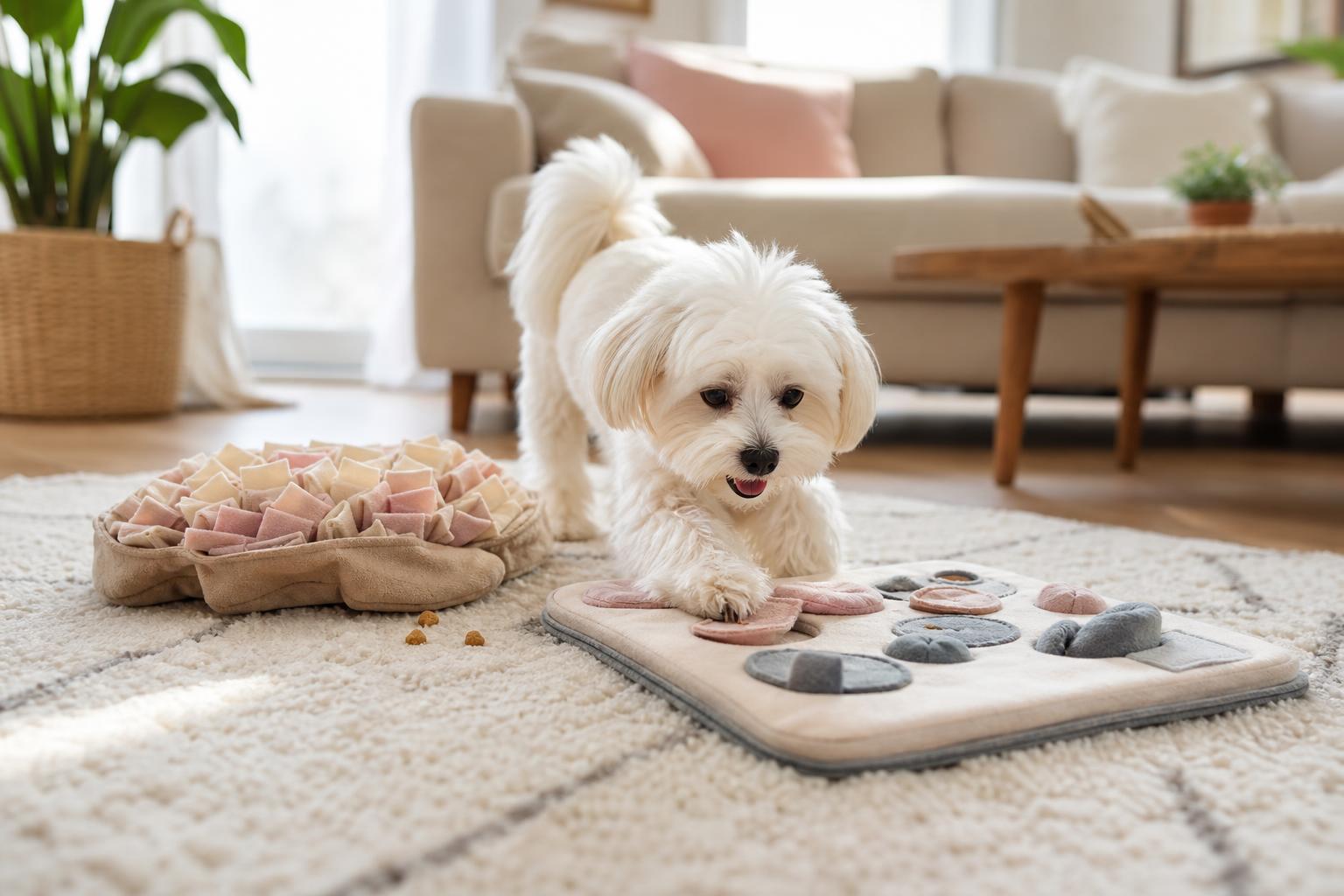
Indoor activities can give a toy dog chances to search, move, and solve simple problems when outdoor time is limited. Choose materials and difficulty that suit the individual dog's size and experience.
That matters even more when you are raising a dog as a companion, exploring therapy dog potential, or laying down the kind of manners and confidence that support service work foundations. Indoor activities for toy dogs are not just a way to pass a rainy afternoon. They are part of shaping a stable, content little dog that can settle in the home, greet the world with confidence, and avoid the nuisance habits that spring from boredom.
Why Indoor Enrichment Matters for Toy Dogs
Toy dogs often live close to their people. They ride in arms, curl under blankets, and follow from room to room like shadows with fur. That closeness is a blessing, but it can also create problems if a dog never learns how to think independently, solve simple problems, or rest after healthy stimulation. When a toy dog is underworked in the mind, you may see barking, clinginess, pacing, destructive chewing, or that sharp edge of nervousness many small dogs unfairly get blamed for.
Indoor play gives you a chance to direct that energy. A short, thoughtful session inside the house can tire a toy dog better than aimless activity in the yard. These dogs are quick studies. They notice patterns, they read body language, and they thrive when a person turns everyday space into a useful training ground.
That is especially valuable for households interested in therapy dogs or service dog basics. Confidence on slick floors, comfort around unusual household sounds, patience during quiet routines, and the ability to focus in close quarters all start at home. Indoor activities build those traits in a practical, low-pressure way.
Turn the Living Room into a Scent Game Field
If you have ever watched a dog truly use its nose, you know there is old magic in it. Nose work is one of the finest indoor activities for toy dogs because it fits their size, sharpens focus, and builds confidence without rough physical strain.
Start simple. Let your dog see you place a treat beneath a small towel or behind a table leg, then release them to find it. Once they understand the game, hide rewards in safe places around one room. Use furniture edges, cardboard boxes, or a folded blanket. The point is not to trick the dog into failure. The point is to let them succeed often enough that their tail stays up and their mind stays engaged.
Why Nose Work Helps Nervous Small Dogs
Scent work rewards independent problem-solving. A toy dog that startles easily or depends too heavily on being carried can gain real confidence from learning to search, discover, and earn praise on its own. The game teaches patience too. Instead of spinning in excitement, the dog learns to slow down and investigate. For companion dogs and therapy prospects alike, that calm problem-solving is gold.
Gentle Tug and Retrieve in Small Spaces
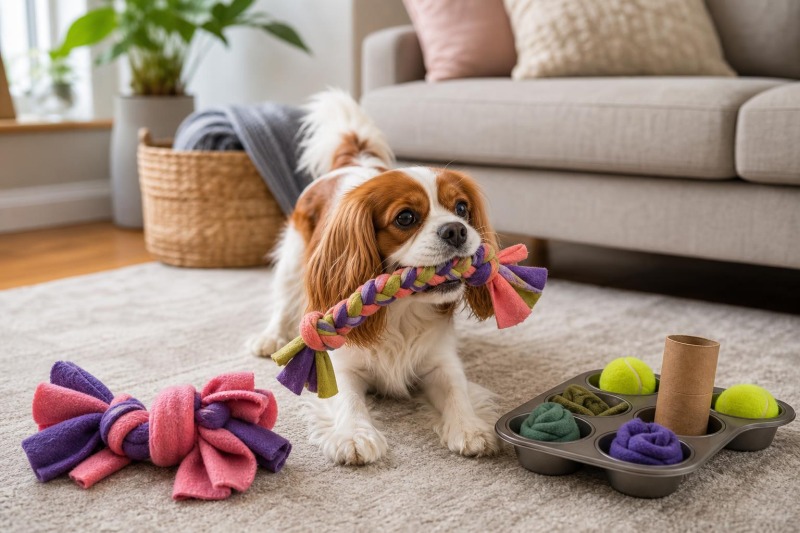
People sometimes assume indoor games must be quiet and passive for toy breeds, but many little dogs have plenty of spark. The trick is choosing activities that protect their bodies. A light tug toy, used with care, can become a fine way to burn energy and reinforce impulse control. That teaches the dog that excitement does not cancel manners.
Soft retrieves down a hallway can work well too, especially with plush toys sized for a small mouth. Keep the distance short and the footing safe. You are not training for field trials. You are giving the dog a controlled outlet and a reason to engage with you. A few smart repetitions are worth more than a wild session that leaves a small dog overstimulated.
Keeping Toy Breeds Safe During Indoor Play
A seasoned dog owner learns to respect structure and size. Toy dogs can be bold enough to forget they are small, so it falls to us to use common sense. Avoid slippery surfaces when possible, skip high-impact jumping from furniture, and choose toys that will not strain the jaw or neck. The best indoor activities for toy dogs leave them pleasantly tired, not physically stressed.
Short Training Sessions That Build Real-Life Skills
There is no finer indoor occupation for a dog than learning something useful. Five minutes of focused training can shape behavior far beyond the time invested. Teach a reliable hand target, a settle on a mat, a stand for grooming, or a calm wait at the door. These are not flashy tricks for show alone. They become part of daily life and make a toy dog easier to live with in every setting.
For families interested in therapy dog pathways, indoor training should include relaxed exposure to household movement, handling practice, and calm acceptance of odd but harmless sights. A hat, a cane, a rolling cart, or a blanket draped over a chair can become part of confidence-building games. Pair each new sight with praise and reward. Let the dog investigate at its own pace. Steady nerves are not built by force. They are earned through repetition, trust, and fair handling.
Service dog foundations, though more specialized, also begin with these same habits. Focus, recovery from distraction, body awareness, and handler engagement all grow stronger in a home where training is woven naturally into the day.
Puzzle Feeding and Mealtime Work
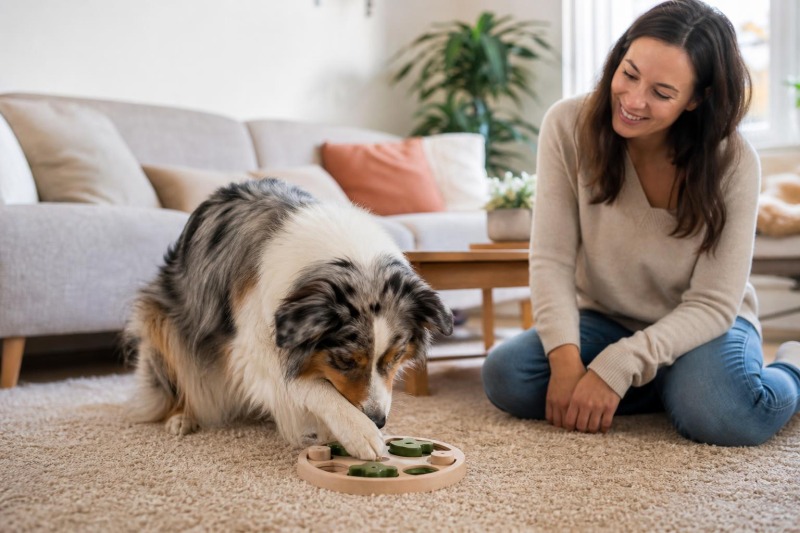
One of the simplest ways to enrich a toy dog indoors is to stop serving every meal in a plain bowl. A portion of kibble can be scattered across a snuffle mat, tucked into a safe puzzle feeder, or hidden in folded towels for supervised search games. Mealtime work slows fast eaters, occupies active minds, and makes ordinary feeding feel like a task completed rather than a dish emptied.
It scratches an instinctive itch. Even the most pampered lap dog still carries the heart of a creature built to seek, find, and earn. When we honor that instinct indoors, behavior often improves across the board.
Using Food Games Without Creating Overexcitement
Keep the setup calm. Ask for a brief sit, place the puzzle down, and release the dog with a consistent cue. When the game ends, pick it up quietly and move on. That clear beginning and end helps toy dogs avoid frantic anticipation. Structure matters, especially for small breeds prone to vocal habits or anxious attachment.
Build Confidence with Obstacle Paths at Home
You do not need an agility course to give a toy dog body awareness. A folded blanket can become a surface change. A broom laid flat on the floor can teach the dog to step carefully over an object. A sturdy cushion can serve as a place to pause with all four feet. What you are after is not speed, but balance, attention, and trust.
That is useful for any companion dog, but especially for therapy prospects who may encounter elevators, narrow hallways, polished floors, and unfamiliar spaces. A dog that learns to navigate simple home obstacles without alarm is often better prepared for the wider world.
Quiet Bonding Activities for Days When Energy Runs High but Space Runs Short
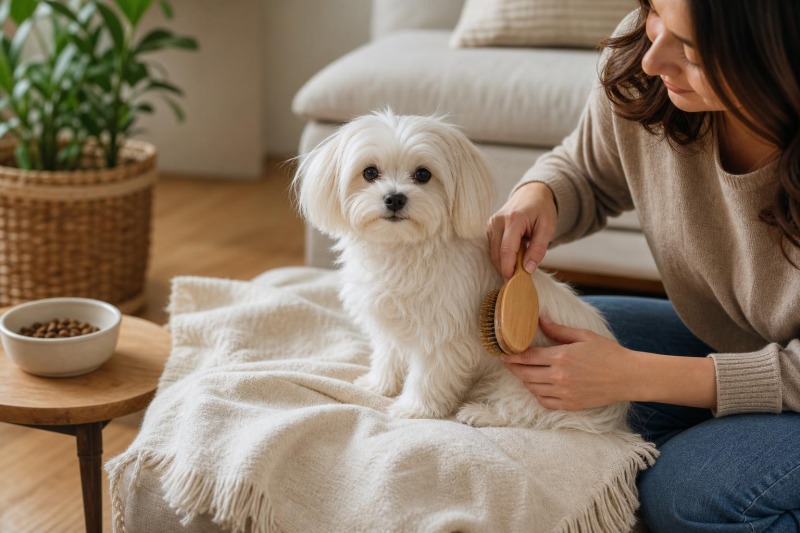
Not every indoor activity has to look like play. Some of the best work happens in stillness. Grooming practice, massage, cooperative handling, and mat relaxation are all valuable forms of engagement. For toy dogs, which often need regular coat care and close physical handling, these routines can be as important as games.
There is a certain satisfaction in teaching a little dog to breathe easy while you check paws, brush ears, or wipe eyes. It reminds me of tending gear after a hunt, not because the actions are the same, but because the principle is. Careful habits, practiced often, make the next outing smoother. A dog that learns to accept gentle handling indoors is easier to travel with, easier to care for, and more likely to remain calm in public settings.
How Indoor Activities Support Companion, Therapy, and Service Dog Development
Whether your toy dog is first and foremost a beloved companion or a possible candidate for more structured work, indoor enrichment lays the groundwork. A companion dog benefits from reduced boredom, stronger household manners, and a deeper bond with its family. A therapy dog prospect gains confidence, focus, and comfort with varied handling and environments. A service dog in early foundation work develops attention, composure, and responsiveness in tight spaces where precision matters.
None of this requires turning your home into a training hall or drilling a tiny dog until the joy leaves its eyes. The best progress comes from short, consistent sessions woven through ordinary life. A scent game before lunch, a hallway retrieve in the afternoon, a settle exercise while supper cooks, and a puzzle feeder in the evening can change the whole rhythm of a dog’s day.
A toy dog may fit in a small bed and travel in a small crate, but its need for purpose is not small at all. These dogs are bright, responsive, and often tougher in spirit than people give them credit for. Treat them like fragile decorations and you will often get fussiness and bad habits. Treat them like capable little partners and you may be surprised by how much steadiness, intelligence, and heart they show you.
The finest indoor activities for toy dogs are the ones that respect both their size and their instincts. Let them sniff, search, learn, carry, solve, and settle. Give them work that fits the home and guidance that comes with patience. Do that consistently, and you will have more than a busy little dog. You will have a better companion, and maybe, in time, a dog ready for the calm, close work that therapy and service roles demand.