AI tools may assist with records, video review, or training reminders, but their usefulness depends on validation and careful oversight. Predictions should be distinguished from established training outcomes.
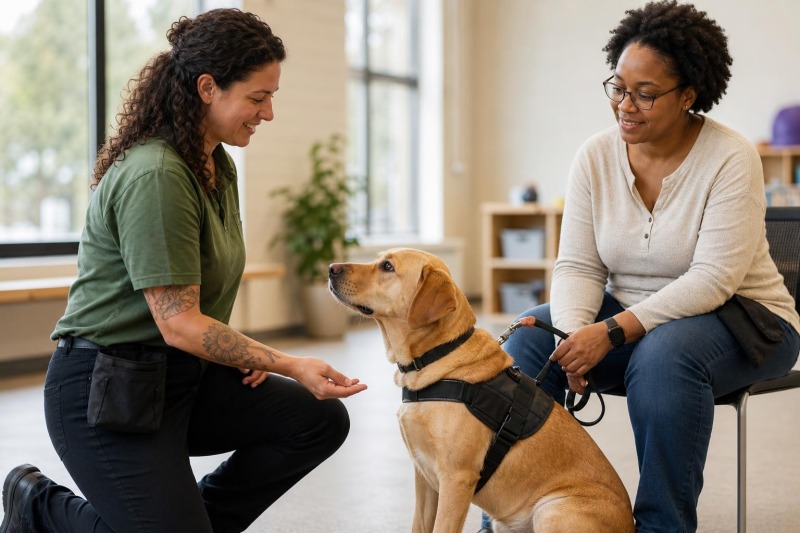
For folks looking into a service dog, therapy dog, or dependable companion dog, this topic matters more than it may seem at first glance. Service dog training has always demanded high standards. A dog must learn complex tasks, stay steady under pressure, and work as a reliable partner in everyday life. AI may help trainers spot patterns faster, monitor progress more carefully, and tailor lessons to the needs of each individual dog. But like any tool, it can help or hurt depending on how it is used.
Why Service Dog Training Is So Demanding
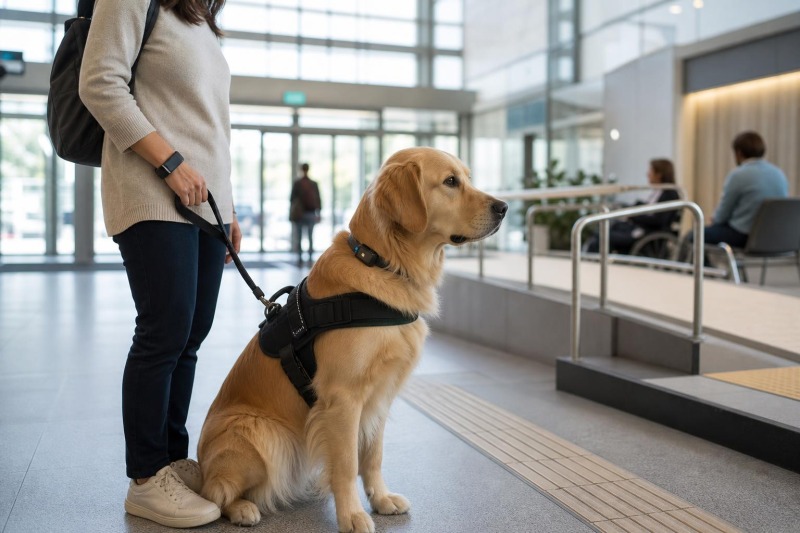
Before talking about technology, it helps to understand the weight of the work. A true service dog is not just a well-mannered pet. That dog may guide a person through a crowded street, alert to a medical condition, interrupt a psychiatric episode, retrieve needed items, or create stability in moments when life turns rough. The margin for error is small. That means training must be thorough, realistic, and deeply individualized.
One pup may be sharp and eager but too quick in the head. Another may be steady as an old oak but need more encouragement to engage. Good trainers notice those details early. AI may eventually help with that process by collecting and interpreting information that the human eye might miss in the day-to-day grind.
How AI May Improve Observation and Data Tracking
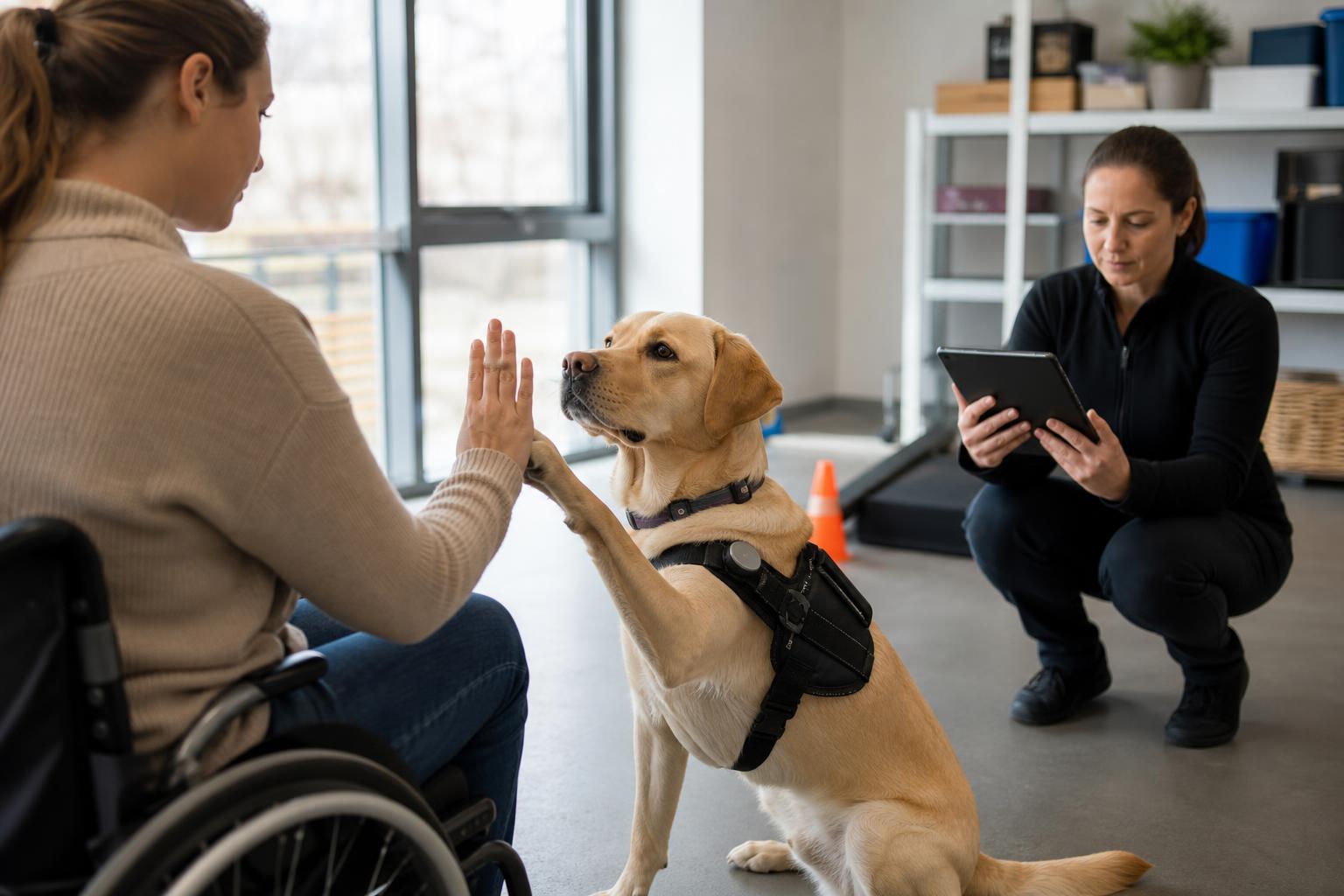
One of the biggest ways AI may impact service dog training is through better observation. Trainers already keep notes on obedience, task work, distractions, confidence, and temperament. AI tools may take that further by analyzing video footage, wearable sensor data, and behavioral patterns over time. Instead of relying only on handwritten notes or memory after a long day of training, a trainer may be able to review objective trends.
Imagine a young prospect working public access sessions in busy places. On the surface, the dog looks fine. He heels nicely, holds a down-stay, and responds to cues. But maybe his heart rate spikes in certain environments, or maybe his body language shifts in subtle ways before a mistake. AI systems could identify those stress indicators earlier than a person might. That kind of insight may help trainers step back, adjust the pace, and build confidence before a small problem grows into a career-ending issue.
For service dog programs, this could mean better recordkeeping and more informed decisions about which dogs are ready to advance and which ones need more time. It may also help reduce emotional decision-making. Anyone who has trained dogs for serious work knows it is easy to get attached and hope a dog will come along. Reliable data can offer a clearer picture.
Personalized Training Plans
Not every service dog learns at the same speed or in the same way. AI may help create customized training plans based on each dog’s progress, sensitivities, strengths, and weaknesses. If a dog tends to struggle with noise but excels in task repetition, a smart system may suggest more environmental exposure while keeping task work sharp. If another dog learns new cues quickly but has trouble generalizing them in public, the training plan may shift toward more varied real-world practice.
That kind of personalization matters. A dog trained for mobility support may need a different approach than one being prepared for psychiatric service work or diabetic alert. AI may help organize that complexity, especially for larger programs training multiple dogs at once.
Health Monitoring and Early Intervention
A dog cannot do service work well if the body is not holding up. Soundness, stamina, and physical comfort are part of the foundation. AI may play a growing role here through smart collars, gait analysis, and health-monitoring wearables. These tools may identify changes in movement, rest patterns, stress levels, or recovery before the signs become obvious.
That could be a real advantage in service dog training. A dog that suddenly seems less focused may not be stubborn or distracted at all. He may be uncomfortable. He may be fatigued. He may be telling us something in a whisper instead of a shout. AI may help catch those whispers.
For owner-trainers and families, that sort of support may be especially helpful. Not everyone has the trained eye of a seasoned professional. If technology can flag concerns early, handlers may be more likely to seek veterinary guidance or adjust the training routine before deeper issues set in.
The Role of AI in Task Training
Some people hear “AI” and assume a machine will somehow train the dog on its own. Dogs learn from timing, reward, repetition, and relationship. Still, AI may support task training by helping break complex behaviors into measurable steps.
For example, if a service dog is learning medication retrieval, door nudging, or alert behavior, AI-assisted video review may help trainers analyze exactly where confusion enters the picture. Maybe the dog understands the search but hesitates on the hold. Maybe the alert behavior is clear at home but inconsistent in public. The more precisely a trainer can spot the gap, the more effectively the dog can be helped through it.
There may also be future tools that simulate environments or scenarios in a structured way, helping dogs prepare for common situations before stepping into the full chaos of real life. That does not replace field experience, but it could make training more efficient and less overwhelming for some dogs.
How AI May Help Handlers, Not Just Trainers
One overlooked piece of this conversation is the handler. A service dog team succeeds when the human partner understands the dog, uses cues consistently, and maintains the dog’s training over time. AI may make that easier. Apps and digital coaching systems may remind handlers about training schedules, flag slips in consistency, suggest maintenance exercises, or even analyze videos of the team working together.
That could be powerful for first-time handlers. Plenty of folks receive a well-trained dog and then discover that living with a working animal takes ongoing skill. If AI tools can provide gentle guidance and practical feedback, they may help preserve training quality long after placement.
For families exploring therapy dogs or companion dogs, some of these same tools may carry over in useful ways. While the standards differ, the need for clear communication and good behavior remains. Technology that helps people understand canine stress, routine, and learning may improve outcomes across the board.
The Limits of Artificial Intelligence in Dog Training
For all its promise, AI has limits, and some of them are serious. A dog is not a spreadsheet. Service work depends on nerve, resilience, heart, and connection. Those things do not always show up neatly in data points. A system may measure movement, response speed, and frequency of errors, but it may still miss the deeper feel of a dog that truly wants the work and settles into it with confidence.
Human judgment is still essential. A seasoned trainer notices the way a dog recovers after a startling noise, the way he checks in with his person, the way pressure either sharpens him or wears him thin. That kind of reading comes from experience, not just software.
Ethics, Privacy, and Access
There are practical concerns too. If AI tools rely on large amounts of data, people will have to ask who owns that data and how it is used. That matters when the information involves disability support, medical routines, or videos taken in private settings. Service dog handlers deserve privacy and respect, not intrusive monitoring dressed up as innovation.
Cost is another factor. Advanced AI systems may benefit large training organizations first, while smaller trainers and owner-trainers struggle to afford them. If that gap widens, access to quality service dog training could become even more uneven. The best future would be one where useful technology supports people without turning good training into a luxury item.
The Human-Dog Bond Still Comes First
The strongest part of service dog training is not artificial at all. It is the bond between dog and handler. It is the dog who learns not just commands but purpose. It is the handler who trusts that dog in the middle of a hard moment. You cannot automate that. You build it one repetition, one outing, one quiet success at a time.
Used wisely, it may sharpen observation, support decision-making, and help maintain higher standards. Used poorly, it may tempt people to chase efficiency while forgetting the soul of the work. Service dogs are living partners, and they deserve training built on patience, ethics, and respect.
What the Future May Look Like
So how AI may impact service dog training will likely come down to balance. The best programs may use technology to catch early warning signs, personalize training plans, monitor health, and support handlers after placement. At the same time, the strongest trainers will keep relying on hands-on experience, calm judgment, and a deep understanding of canine behavior.
If you are someone interested in learning about therapy dogs, service dogs, or companion dogs, this is a good time to pay attention. The tools may change, but the standards should not. A reliable service dog must still be stable, healthy, responsive, and suited to the person depending on that work. AI may help us get there with more clarity. It just should never make us forget what makes a dog worth trusting in the first place.
Like a good hunt, good training is never only about gadgets. It is about reading the conditions, knowing your partner, and doing the work honestly. If AI can help us do that better, then it may earn its place in the training shed. But the leash should stay in human hands.