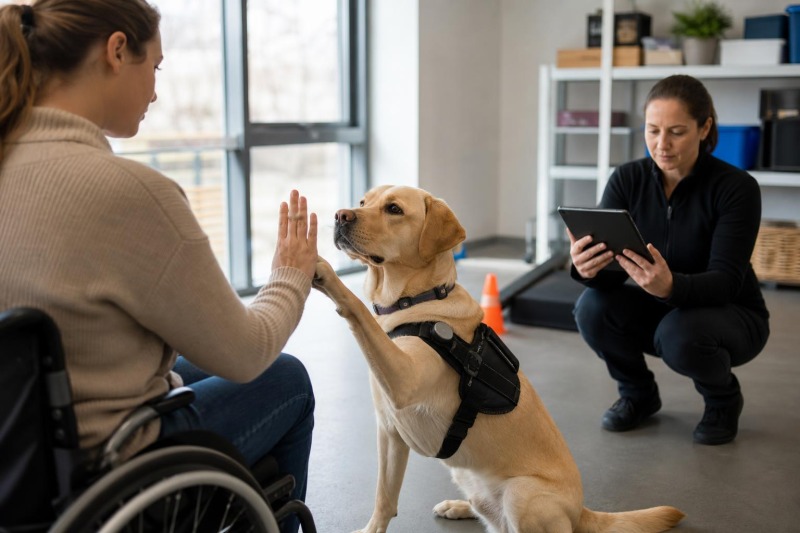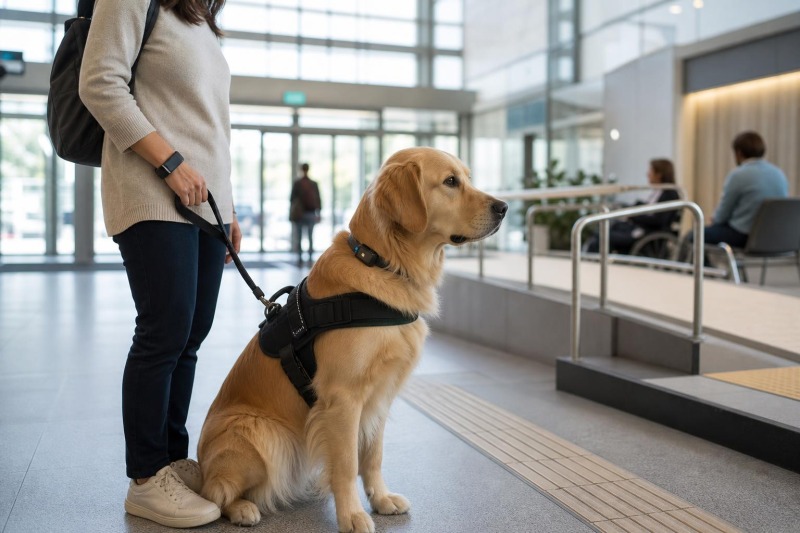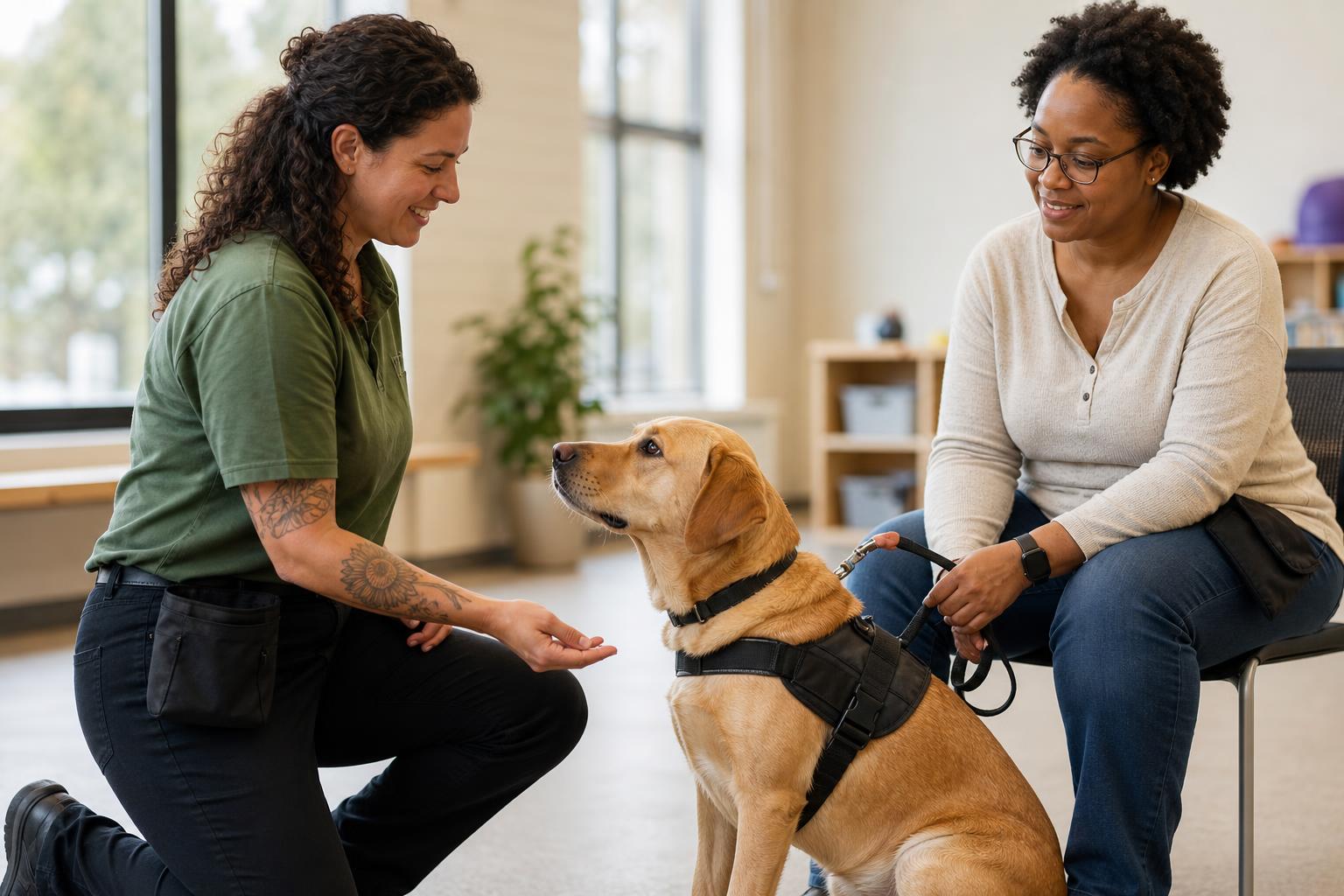
Ethical service-dog training considers the welfare of the dog alongside the handler's needs. Appropriate tasks, humane methods, realistic assessment, and a plan for dogs that change roles belong together.
You see it in a hunting field at dawn, when a dog works cold air, wet grass, and a hard trail because it trusts the person behind the whistle. That same principle applies in service dog work. Trust, welfare, honesty, and sound judgment have to come before convenience or profit. When trainers, organizations, or owners cut corners, the damage reaches farther than one dog. It affects handlers who rely on these animals, businesses trying to respect access laws, and the public’s understanding of what a real service dog is.
The Dog’s Welfare Must Come First
The first ethical question is the simplest one, and it ought to guide every other decision: is this training in the best interest of the dog? A service dog may be capable, steady, and willing, but that does not mean every dog should do the job. Temperament matters. Health matters. Confidence matters. A dog that startles easily, shuts down in busy environments, or struggles with physical discomfort should not be pushed into service work because somebody wants it badly enough.
That can be a hard truth for families who have their heart set on one particular dog. Still, ethics means telling the truth even when it disappoints people. Some dogs are better suited for companion roles. Others may thrive as therapy dogs, where the work is different and the expectations are not the same. A trainer with integrity recognizes that service work demands unusual stability. If a dog is not genuinely comfortable with the pressure, forcing the issue is unfair and potentially dangerous.
Humane methods sit at the heart of that welfare question. Ethical service dog training should build clarity and confidence, not fear. Dogs learn best when they understand what is being asked and when success is made possible. Heavy-handed corrections, intimidation, flooding, or pain-based methods may produce outward compliance in some cases, but they can also create anxiety, suppression, and brittle behavior that falls apart when real stress arrives. A dog that obeys because it is afraid is not the same thing as a dog that works because it is stable, engaged, and secure.
Training for reliability without cruelty
They were brought along with patience, structure, and consistency. Ethical training does not mean permissive training. Standards still matter. Reliability matters. Public safety matters. But there is a world between holding a dog accountable and making that dog carry confusion or fear. Service work requires precision, and precision is best built through repetition, timing, reward, and fair guidance.
Honesty in Evaluation and Placement
One of the biggest ethical failures in the service dog world happens before a vest ever goes on. Some dogs are sold, labeled, or represented as service dog prospects when they should never have been put on that path. Sometimes it is ignorance. Sometimes it is wishful thinking. Sometimes, if we are being plain about it, it is money. That kind of dishonesty can cost a disabled handler precious time, hope, and resources.
Ethical trainers and programs must evaluate dogs honestly and continuously. Not every pup with a sweet face and a calm week at six months will mature into a public-access-ready service animal. Dogs change as they grow. Hormones shift behavior. Health concerns emerge. Sensory sensitivity or environmental stress can show up later. The ethical thing is not to pretend a dog is “almost there” when it is not. The ethical thing is to reassess, communicate clearly, and release a dog from service training if the role is not right.
Placement ethics matter just as much. Matching the right dog to the right handler is not a quick transaction. It is a serious responsibility. A high-drive dog may be a poor fit for someone who needs calm, quiet support in a low-energy household. A large mobility dog may not be practical for a handler’s home, vehicle, or strength. A dog that excels at task work but struggles in dense public settings may not suit a handler whose life depends on daily urban travel. Good placement is not about getting dogs out the door. It is about making partnerships that can stand up to real life.
The Human Need Is Real, but It Does Not Justify Everything
Here is where ethics gets complicated. There are people whose need for a service dog is genuine, urgent, and life-changing. That need deserves respect. But even a very real need does not justify placing impossible expectations on a dog or lowering standards until everybody is at risk. A handler may desperately want a dog to succeed, and a trainer may feel pressure to make it happen. That pressure can lead to bad decisions, such as advancing a dog too quickly, excusing unstable behavior, or ignoring signs of burnout.
A service dog should improve a handler’s life, not add unpredictability and stress. If a dog is not safe or not ready, calling it a service animal anyway is unfair to the handler and to the public. It also harms people with legitimate service dogs by fueling skepticism and backlash. Ethics requires a hard backbone here. Compassion for handlers must be paired with honesty about what a specific dog can and cannot do.
When washing out is the right decision
“Wash out” sounds harsh, but sometimes it is the kindest outcome available. A dog that leaves service training is not a failure. It may become a terrific companion dog, therapy candidate, or beloved family member. Ethical trainers know that success is not measured only by placement numbers. Sometimes success looks like recognizing early that a dog would live a happier life outside demanding service work. There is dignity in that decision when it is made for the right reasons.
Public Access Ethics and Community Trust
A true service dog is granted extraordinary access because it performs essential tasks for a disabled handler. That access depends on trust. The public expects the dog to be under control, house trained, and behaviorally sound. Businesses expect minimal disruption. Other disabled handlers depend on that standard being upheld. Once poorly trained dogs start lunging, barking, soiling floors, or menacing legitimate service teams, everybody pays the price.
This is why public access training is not just a skill issue; it is an ethical issue. Trainers and handlers must be honest about readiness. If a dog cannot settle under a restaurant table, ignore distractions, ride calmly in elevators, and remain neutral around people and dogs, it is not ready for broad public access. There is no shame in taking more time. There is shame in pretending readiness because someone wants the appearance of legitimacy before the dog has earned it.
There is another side to public access ethics too. People need to understand that service dogs are working dogs, not public entertainment. Ethical handling means protecting the dog from excessive interaction, petting, and disruption. It also means reading the dog well. Even the best dog can have an off day, especially if it is unwell, overtired, or under stress. Respecting the animal’s limits is part of honoring the partnership.
The Problem of Profit, Trends, and False Promises
Any field built around hope is vulnerable to bad actors. Service dog training is no exception. There are flashy websites, social media promises, and miracle claims that can lure in families who are scared, desperate, or simply new to the process. Ethical concerns rise fast when trainers guarantee outcomes, skip proper screening, sell certificates as if they prove legal status, or market ordinary pet obedience as full service dog training.
The truth is plainer and slower. Good service dogs take time. Good training takes consistency. Proper evaluation takes experience. A trainer with ethics does not promise that every dog can do the work. They do not suggest that a vest creates legitimacy. And they do not leave handlers underprepared once the dog goes home. Service dog work is a long road, not a quick sale.
Transparency is vital. Costs, timelines, training methods, follow-up support, and realistic outcomes should all be explained clearly. If an organization or trainer gets cagey when asked about standards, washout rates, health testing, or how dogs are selected, that should give people pause. Ethical professionals welcome informed questions because they know trust is earned.
The Lifelong Responsibility to the Dog
One thing often missed in these conversations is that ethical service dog training does not end when the dog can perform tasks and walk politely through a store. The dog’s welfare remains a lifelong duty. Working dogs age. Their joints stiffen. Their hearing or vision may fade. Stress tolerance can change. A dog that once moved through airports like flowing water may, years later, find hard floors and long outings more tiring than folks realize.
Retirement is an ethical issue. Dogs are not tools to be used until they break down. A good handler watches closely and listens to what the dog’s body and behavior are saying. Sometimes retirement comes gradually, with shorter outings and lighter work. Sometimes it needs to come sooner than expected. However it happens, the dog deserves comfort, dignity, and continued care after a working life spent serving someone else’s needs.
That same principle applies during training. Young dogs need rest, play, and time to simply be dogs. Every minute does not need to be productive. Constant drilling can sour even a talented animal. Balanced work, decompression, and a stable home life all contribute to sound behavior. The dog is a partner, not a project piece on an assembly line.
Ethics Protect the Future of Service Dog Work
Ethical service dog training is about stewardship. It is about guarding the bond between dogs and people from carelessness, vanity, and shortcuts. It asks trainers to be truthful, handlers to be realistic, and the public to understand the seriousness of the work. It asks us to remember that these dogs are not just useful. They are sentient, loyal, and deeply responsive to how we treat them.
But admiration alone is not enough. We owe these animals fairness. We owe disabled handlers standards that mean something. And we owe the broader service dog community the kind of integrity that keeps trust intact. If we do this right, service dog training remains what it ought to be: not a shortcut, not a trend, but a respectful partnership built on skill, compassion, and ethical responsibility from first assessment to final retirement.