A therapy dog's exercise routine should support health without leaving it tired or overstimulated before a visit. Balance movement, sniffing, rest, and the demands of the actual assignment.
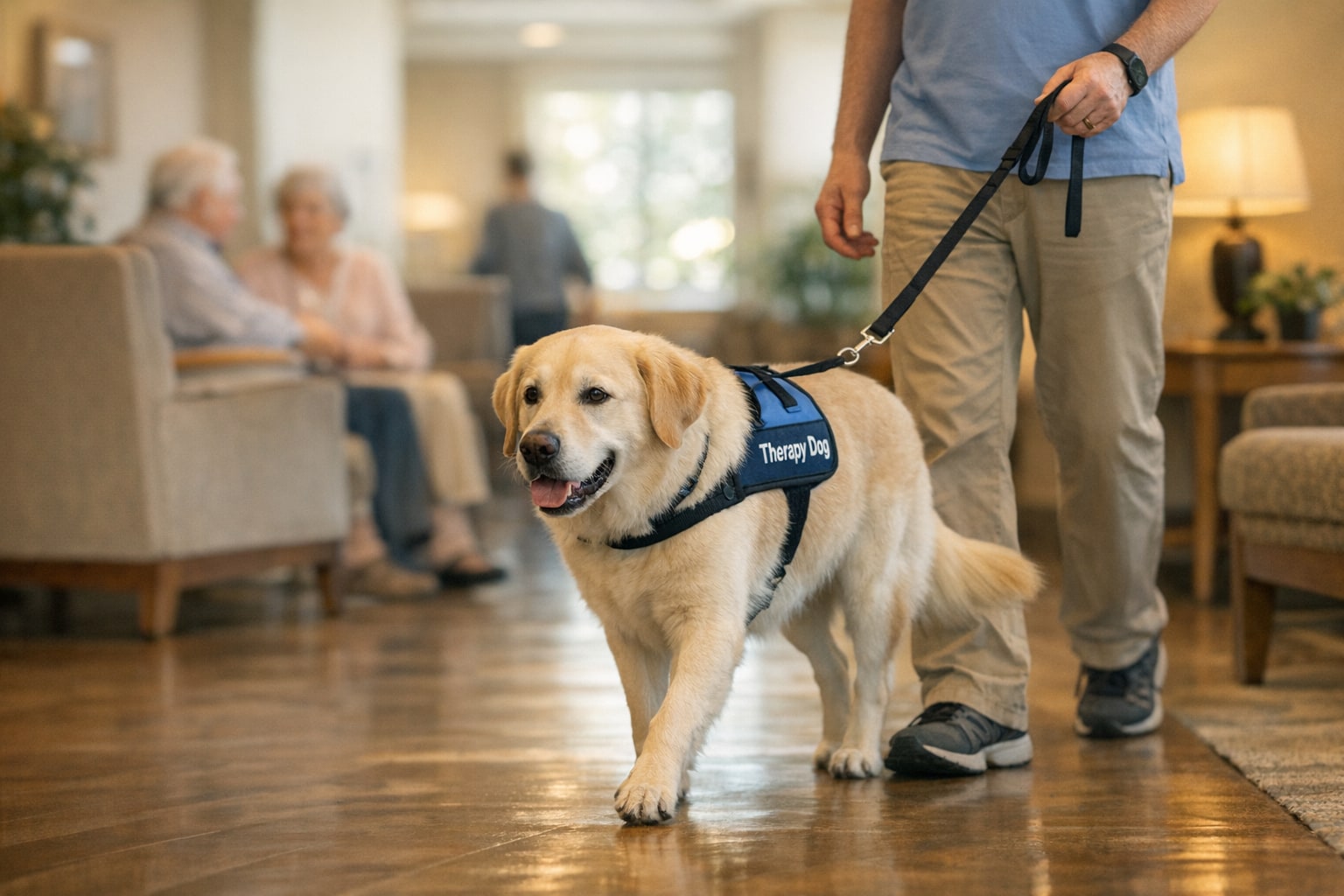
Exercise needs of therapy dogs are not one-size-fits-all. A young Labrador visiting a children’s hospital will not have the same routine as an older Cavalier comforting residents in assisted living. Breed, age, health, temperament, and workload all matter. Still, one thing holds true across the board: a therapy dog needs a balanced exercise program that keeps the body fit, the mind clear, and the nerves settled. Not overcooked, not underworked, but tuned just right.
Why Exercise Matters for Therapy Dogs
That is the sweet spot. Too little exercise and a dog can become restless, mouthy, anxious, or hard to settle. Too much hard exercise without enough recovery can leave a dog sore, overstimulated, or mentally frayed. Therapy work asks a dog to be physically present and emotionally available. That takes stamina of a different kind.
Regular exercise supports strong joints, a healthy weight, good cardiovascular function, and muscle tone. Those things matter more than some people realize. A dog that tires easily or carries extra pounds may struggle to stand, walk gently, or remain comfortable through a visit. Beyond physical health, exercise also helps regulate behavior. Dogs are animals built to move, sniff, explore, and engage. If those needs are ignored, the pressure tends to come out sideways.
For therapy dogs in particular, exercise is part of emotional maintenance. A well-exercised dog often transitions more smoothly into calm environments because he is not dragging a wagonload of unused energy behind him. He can focus on the handler, respond to cues, and settle into the slow rhythm therapy work often requires.
How Much Exercise Does a Therapy Dog Need?
Most therapy dogs do well with at least 45 to 90 minutes of total daily activity, though that can be split across the day and adjusted to the individual dog. Some small or senior therapy dogs may need less. High-drive sporting or herding breeds may need more. The real question is not only how long the dog moves, but how that movement is structured.
A short leash walk at the same slow pace every day may not be enough for an active dog. On the other hand, endless high-speed fetch can build an athlete who struggles to switch off. Therapy dogs need a combination of steady physical exercise, decompression time, and mental engagement. Think of it as building a dog who can go from movement to stillness without falling apart in either direction.
Age, Breed, and Energy Level
Puppies and adolescent dogs often have bursts of energy and shorter attention spans. They need carefully managed exercise that does not stress growing joints. Adult dogs in their prime may thrive on brisk walks, retrieving games, and structured training sessions. Senior therapy dogs may still enjoy daily activity, but they often benefit from gentler walks, swimming, and mobility-friendly conditioning.
Breed plays its part too. A Golden Retriever, Poodle, or Labrador often needs more consistent activity than a toy breed used in quieter therapy settings. That does not mean small dogs need little exercise. It simply means their routine may look different. The best measure is the dog in front of you. A good handler learns to read the signs: is the dog calm and responsive after exercise, or still buzzing? Is he content at home, or pacing and inventing trouble?
Best Types of Exercise for Therapy Dogs
Not every form of exercise prepares a dog for therapy work. The goal is not to create the fastest dog at the park. The goal is to build a dog who is healthy, adaptable, and composed. Some of the best exercise for therapy dogs looks simple on the surface, but it does a lot of heavy lifting.
Leashed Walks with Purpose
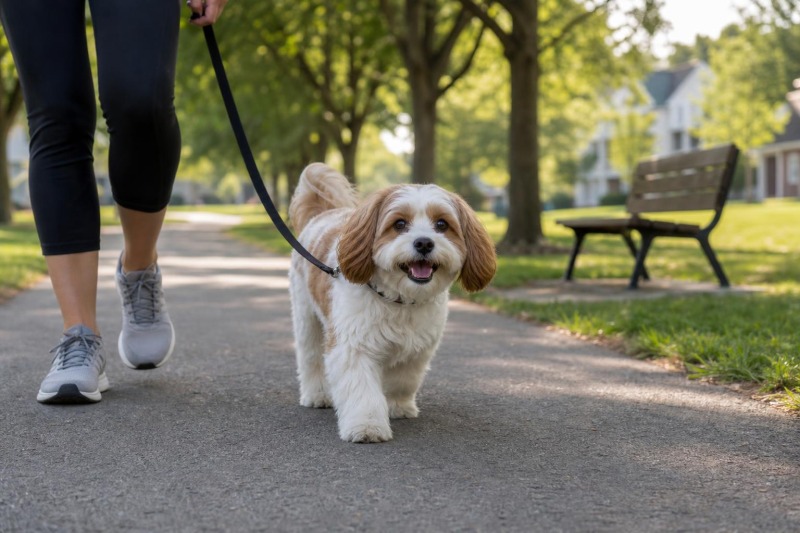
A solid daily walk is the backbone of many therapy dog routines. Brisk walks build endurance, keep weight in check, and give the dog a chance to take in the world. Letting a dog sniff within reason is valuable too. Sniffing works the brain and can lower stress. A therapy dog that never gets a chance to move naturally and investigate his surroundings may become stale or frustrated.
Good walks are not just about mileage. They are opportunities to practice loose-leash skills, handler focus, polite greetings, and calm responses to distractions. In that sense, every walk can support therapy work.
Play That Builds Control
Fetch, tug, and chasing games can be useful if they are done with manners and limits. A controlled retrieve session can burn energy and reinforce cues like sit, wait, drop, and come. Tug can teach engagement and impulse control if the dog knows how to start and stop on command. The trick is moderation. Too much high-arousal play can create a dog that arrives at visits too revved up to settle.
You want that dog breathing easy, muscles loose, mind settled, ready to lie down if asked.
Mental Exercise Counts Too
Physical movement is only part of the picture. Therapy dogs need mental exercise in a big way. Training sessions, scent games, puzzle toys, and gentle exposure to new environments all help build confidence and resilience. Ten focused minutes of obedience or scent work can tire some dogs more than a long wander with no direction.
This matters because therapy dogs work with their minds as much as their bodies. They need to ignore dropped food, wheelchairs, sudden laughter, medical equipment, and unfamiliar people. A mentally engaged dog is often better prepared for that kind of challenge than one who only gets physical exercise.
Balancing Exercise Before and After Therapy Visits
Timing matters. A therapy dog should not show up for a visit bouncing off the walls, but he also should not arrive exhausted. Before a therapy session, many dogs benefit from a moderate walk or a brief training outing. Enough movement to take the edge off, enough structure to get the brain online. That might be a 20- to 30-minute walk with a few obedience cues mixed in, depending on the dog.
After a visit, some dogs need decompression. Therapy work can be quiet, but it still asks a lot from a dog. He may have spent an hour holding position, meeting strangers, ignoring distractions, and soaking up emotion from the room. A relaxed sniff walk afterward can help him unwind. Some dogs come home and nap hard after a good visit, and that is no accident. Emotional labor is still labor.
Signs Your Therapy Dog Needs More or Less Exercise
A dog getting too little exercise may pace, bark for attention, pull on leash, struggle to settle, chew household items, or act overly excited in public. During therapy work, he may appear distracted, sloppy with cues, or unable to remain calm near people. On the other hand, too much exercise can be just as unhelpful. An overworked dog may move stiffly, lag behind, seem reluctant to engage, or show irritability and poor focus.
Watch the whole dog, not just the calendar. Appetite, sleep, recovery time, enthusiasm, and behavior all tell the story. The best routine is one that keeps the dog eager to work, physically sound, and emotionally steady.
Creating a Healthy Routine for Long-Term Success
If you want a therapy dog to last, build a routine you can maintain in all seasons. Some days will allow long walks across open ground, with the dog stretching out and taking the wind. Other days, weather or schedule will pinch things tight. That is when indoor training, hallway games, nose work, and short structured outings earn their keep.
Consistency beats occasional extremes. A dog does better with regular daily activity than with five quiet days followed by one marathon at the park. Keep exercise predictable, varied, and appropriate to the dog’s condition. Pair that with quality food, veterinary care, rest, and ongoing training, and you have the makings of a trustworthy therapy partner.
They do best when their lives make sense. They need movement, purpose, guidance, and enough peace to recover. Therapy dogs are no different. Their work may be soft-eyed and gentle, but it still rests on a strong foundation.
The exercise needs of therapy dogs come down to balance. These dogs need enough physical activity to stay fit and enough mental stimulation to stay steady, but not so much chaos that calm becomes impossible. Whether your dog visits schools, hospitals, nursing homes, or counseling offices, exercise is not separate from the job. It is part of what makes the job possible.
A well-exercised therapy dog is more than tired. He is settled. He walks into difficult spaces with a clear head, a loose body, and the kind of quiet confidence people can lean on. For families choosing a future therapy dog or handlers hoping to improve their current routine, that is the mark to aim for. Build the dog in front of you, pay attention to what he tells you, and you will be a long way down the right trail.