Trust develops through repeated, predictable experiences rather than a deadline. Offer a rescue dog comfortable rest, manageable choices, and a routine that can be adjusted as you learn about it.
If you want to build trust with a rescue dog, the first thing to understand is that trust is earned in layers. It does not come from one grand gesture. It grows from many small experiences where the dog learns, day after day, that your voice is steady, your hands are gentle, and your home is predictable. That is true whether you are hoping for a quiet companion dog, a therapy dog prospect, or a service dog with the right temperament and training potential. Before a dog can learn a task, settle in public, or offer comfort to others, that dog has to believe it is safe with you.
Why Rescue Dogs Struggle to Trust
Some rescue dogs have been neglected. Some have been bounced from home to home. Some were loved, then lost everything familiar in one hard turn of life. Even a well-cared-for dog can feel shaken by a shelter environment, transport, strange scents, barking runs, and the simple fact that nobody asked whether it was ready for change. A dog that shuts down, avoids eye contact, or freezes at the doorway may be carrying just as much worry as the one that barks and pulls away.
That matters because many new owners take mistrust personally. Why doesn’t it love me yet?” But trust is not a debt a rescue dog owes you. It is a relationship you build. The dog is not being stubborn or ungrateful. It is trying to survive with the information it has. Your job is to give it better information.
Fear, Stress, and Misread Signals
A rescue dog often speaks in body language long before it uses behavior big enough for a person to notice. Lip licking, yawning, turning away, lifting a paw, pacing, whale eye, tucked tail, and stiff posture all tell a story. If you miss those early signs, the dog may feel forced to escalate into barking, growling, or snapping just to create space. That is one reason patient observation is worth more than pushy affection. A trustworthy owner pays attention before the dog has to raise its voice.
Start with Calm, Not Pressure
Too much, too fast, and you can set yourself back. A rescue dog needs room to take in the lay of the land. Set up a quiet resting place, keep traffic low, and let the dog watch before you ask much of it.
That first stretch should be simple. Food at regular times. Fresh water. Short potty breaks. Gentle, low-pressure walks if the dog is ready. A calm tone of voice. No roughhousing. No forced cuddling. No testing the dog with strangers. Predictability is one of the strongest trust builders you have, because routine tells the dog your world is not ruled by chaos.
Let the Dog Come Forward
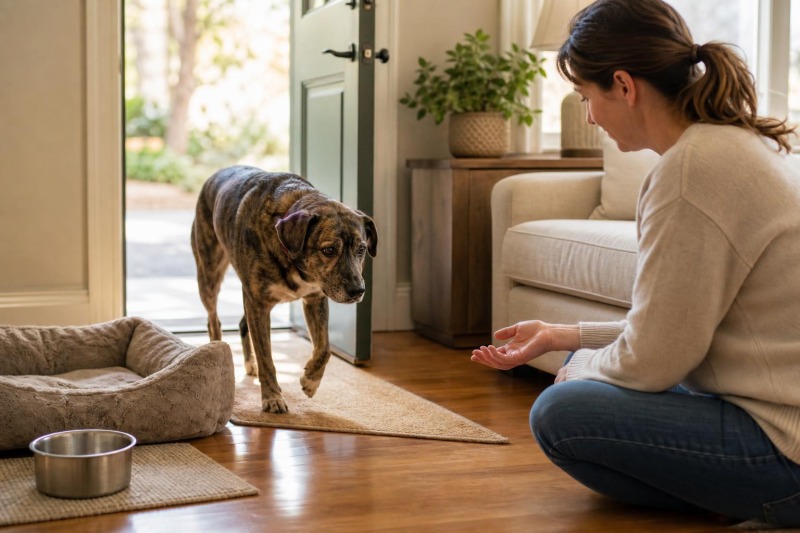
Sit nearby. Turn your body slightly sideways. Keep your movements loose. Toss a treat without reaching in. Let the dog approach, sniff, and retreat as needed. That choice matters. When a dog learns it can move away without being trapped, it often becomes brave enough to move closer on its own. Real confidence grows when the dog feels it has agency.
Use Routine to Create Safety
Dogs find comfort in patterns. A rescue dog especially benefits from a household rhythm it can count on. Meals should land around the same time each day. Walks should be structured and calm. Rest should be protected. Training sessions should be short and successful. Bedtime should not feel different every night. These simple repetitions teach a dog that life with you is understandable.
That same consistency should carry into your rules. If the couch is off limits today but allowed tomorrow, some dogs can roll with it. A rescue dog with a shaky foundation may not. Clear boundaries are not unkind. In fact, they can be deeply reassuring. The dog stops guessing and starts settling.
Food, Play, and Gentle Handling
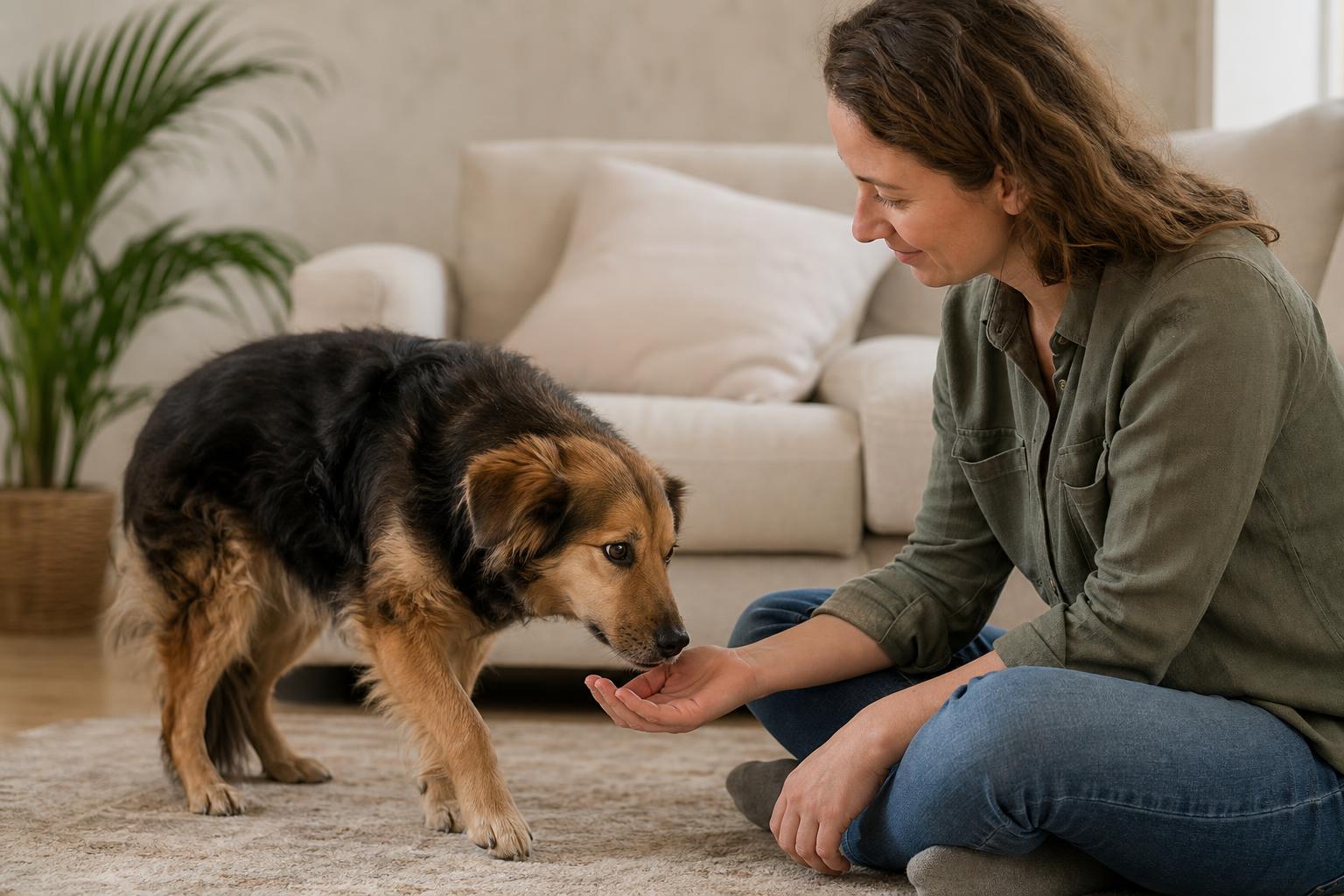
Trust often begins with the basics: eating, moving, resting, and being touched. Food is useful, but it should not become a bribe waved in the dog’s face every second. Instead, let food mark safety and good things. Hand-feeding can help some dogs, though not all. For a dog that is hand-shy, tossing treats or using a bowl placed nearby may be the better path at first. Meet the dog where it is, not where you wish it were.
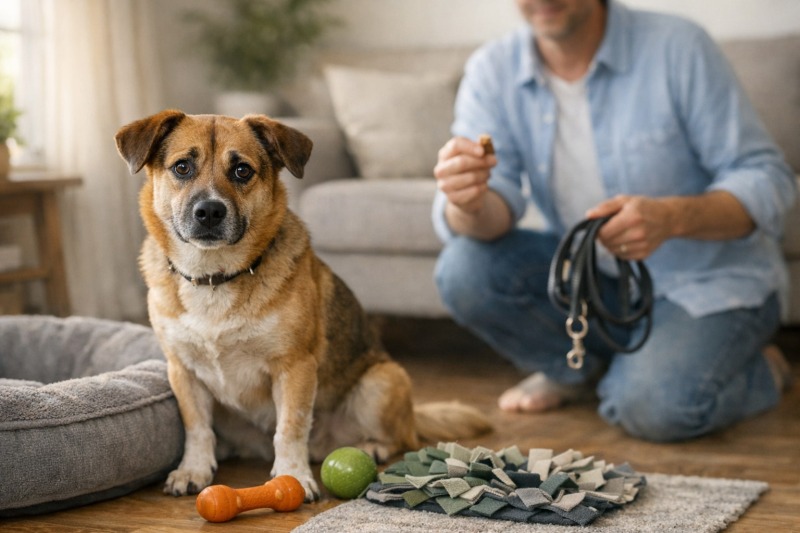
Play can also open a door, especially for dogs who find direct affection hard to accept. A soft tug game, a gentle toss of a toy, or sniff-based enrichment in the yard can lower stress and create shared enjoyment. What matters is keeping it pressure-free. The moment play becomes overwhelming, the trust account starts to drain.
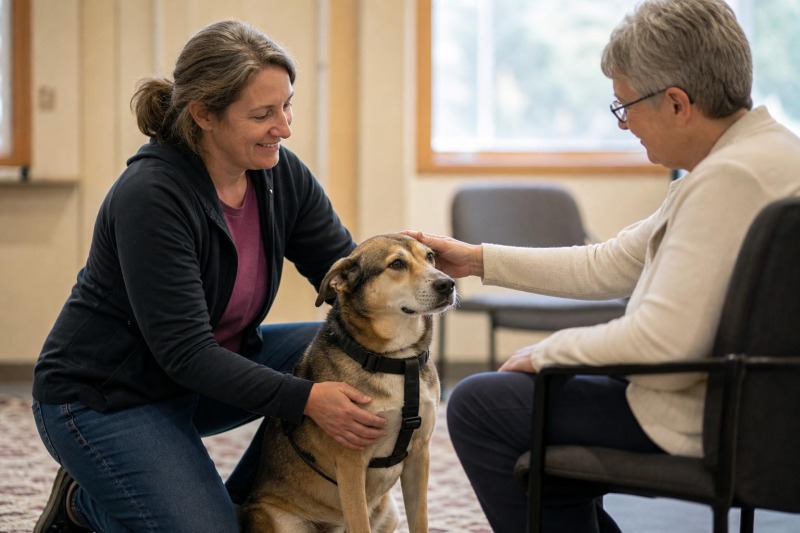
Handling deserves special care. Many rescue dogs tolerate touch before they truly welcome it. Start small. A brief chest scratch may feel easier than a pat on top of the head. Touch, pause, and watch. If the dog leans in, softens, or seeks more contact, you are likely on good ground. If it stiffens or turns away, respect that answer. The fastest way to become trustworthy is to listen when the dog says no.
Training Builds Communication, Not Just Obedience
Good training is one of the finest tools for building trust with a rescue dog because it creates a shared language. A dog that can predict your cues and earn calm praise begins to feel more secure in your presence.
Start with simple, useful behaviors: name recognition, hand target, sit, down, come, place, and loose-leash walking. Keep sessions short enough that the dog finishes wanting more. End on a win. If the dog seems overwhelmed, lower the difficulty. That kind of fairness matters, especially if the dog has lived with confusion or harsh correction in the past.
Why This Matters for Therapy and Service Dog Prospects
For anyone interested in a therapy dog or service dog, trust is not optional. A dog cannot work steadily in public if it is unsure of its handler. It cannot recover well from stress if the relationship lacks a secure base. Not every rescue dog is suited for therapy or service work, and there is no shame in that. Plenty make exceptional companion dogs and enrich a household beyond words. But for the dogs that do have the right temperament, trust is the bedrock under every future skill.
Walks, Triggers, and the Outside World
Outdoors is where many rescue dogs show their worries most clearly. A tight leash, traffic noise, strange dogs, children running, or a man stepping out from behind a truck can stir old fear in a hurry. This is where people often push too hard. They think socialization means exposing the dog to more and more. In truth, good exposure means giving the dog manageable experiences it can handle without flooding.
Walk your rescue dog with attention. If you see tension building, create distance early. Cross the street. Turn into a driveway. Step behind a parked car and let the dog watch from safety. Reward calm glances and soft body language. Over time, many dogs learn that the world is not as sharp-edged as they once believed. But that lesson comes through repeated success, not forced endurance.
Patience Through Setbacks
Trust rarely builds in a straight line. A dog can do beautifully for two weeks and then suddenly cower when a visitor drops a bag by the door. That does not mean you failed. It means healing is uneven. Progress with rescue dogs is often measured in softer eyes, quicker recovery, and fewer moments of panic, not in perfection.
When setbacks come, go back to what works. Lower the pressure. Rebuild confidence with easy routines and known rewards. Keep your own emotions level. Dogs read us better than most folks realize, and if you meet their fear with frustration, they learn your bad moods are part of the danger picture too.
The Moment Trust Starts to Show
It usually does not arrive with fanfare. One day the dog follows you to the porch and lies down with a sigh. It eats while your chair sits close by. It rests its chin on your boot. It startles at a noise, then looks to you instead of bolting. Those are big moments, even if they look small from the outside. Trust is often quiet. It is the dog deciding, piece by piece, that you are safe to depend on.
That is the reward in rescue work. You do not just teach a dog to live in your house. You help it believe that life can be steady again. And once that belief takes root, everything else gets better. Training becomes smoother. Companionship grows deeper. A therapy or service prospect can be evaluated with clearer eyes. Most important of all, the dog can finally rest.
Rescue dogs do not need saving speeches. They need steady meals, fair rules, gentle hands, and a person who means the same thing every day. That is how trust is built.
For families seeking a companion dog, for handlers exploring therapy dog potential, and for those learning what makes a service dog truly dependable, this principle stays the same. Trust comes first. Build that well, and you give the dog the best chance to become what it was meant to be in your life.