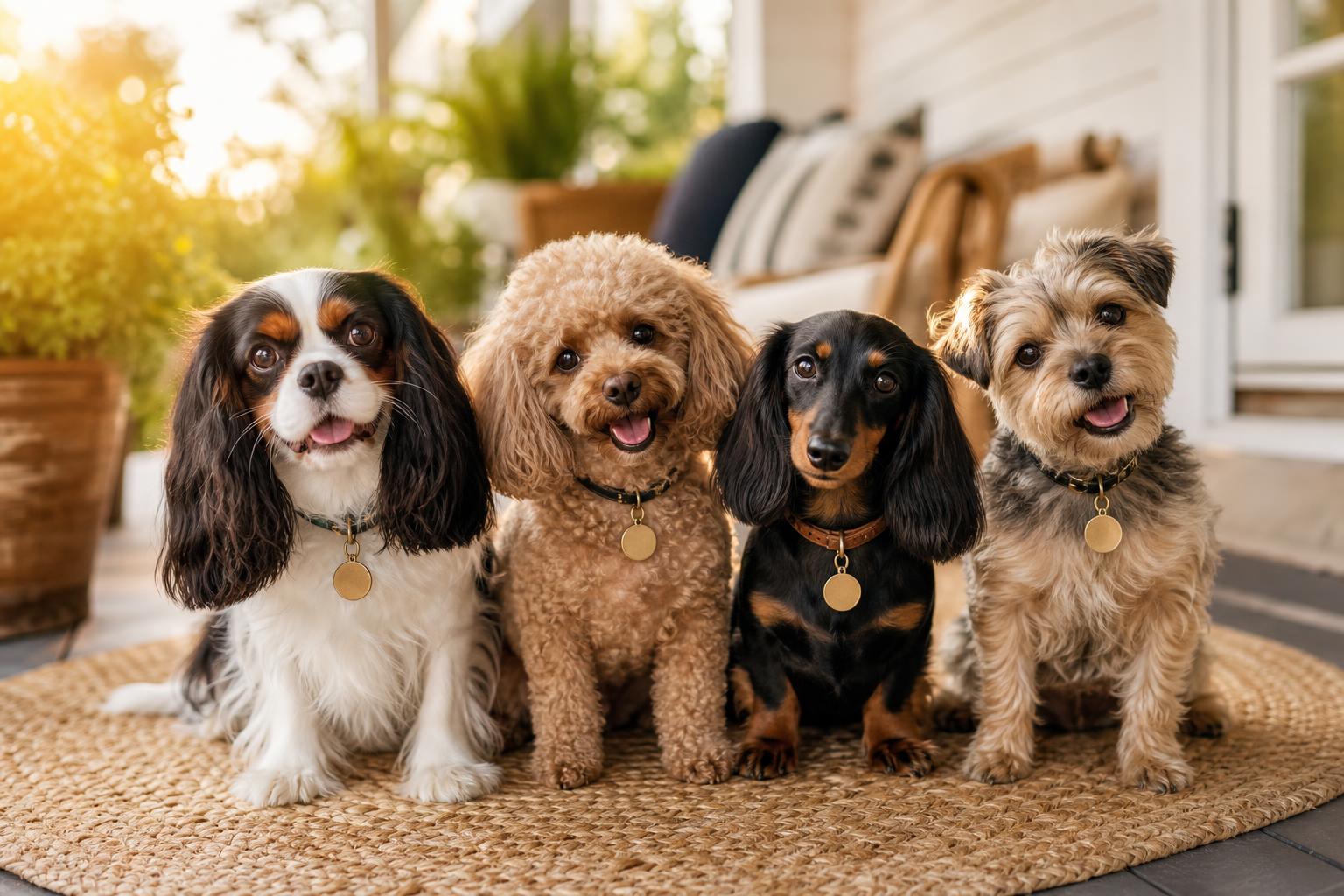
A useful dog name is one the household can say consistently and teach positively. Try it aloud in ordinary situations, and consider whether it is easily confused with familiar cues or names.
When you bring home a small companion dog, therapy prospect, or service dog, the name is one of the first gifts you give. You will say it in happy moments, in serious training sessions, and in those quiet hours when your dog is curled against your boots or tucked into a blanket at your feet. A name should be easy to say, easy for the dog to recognize, and fitting for the animal standing in front of you. Some tiny dogs are all sweetness and softness. Others walk around like they own the timber, the truck, and the whole county line.
What Makes a Good Name for a Small Dog?
A good small dog name should be clear and natural on your tongue. Dogs tend to respond best to names with one or two sharp syllables. Names like Max, Sadie, Coco, and Finn carry well, whether you are calling across the backyard or guiding a dog through a crowded waiting room. If a dog may work in therapy or service settings, clarity matters even more. You want a name that cuts clean without sounding too much like a command.
Temperament matters too. The right name should match your dog’s expression, movement, and spirit. Watch your dog a few days if you can. A name often shows itself once you see how that dog greets the morning, handles strangers, or follows you from room to room.
Why Small Dogs Deserve Thoughtful Names
Folks sometimes rush naming a small dog because the dog looks adorable enough to carry anything. That is a mistake. Small dogs are often expected to do important work. They may provide emotional support through daily companionship, bring calm and connection in therapy visits, or perform trained tasks for a handler in need. A thoughtful name helps people take the dog seriously while still honoring the dog’s charm. That balance is worth finding.
Popular Small Dog Names That Never Wear Out
Some names stay popular because they simply work. Bella remains a favorite because it sounds bright and gentle. Charlie has an easy, friendly ring to it. Lucy, Teddy, Milo, Ruby, Leo, and Penny all keep showing up because they fit many breeds and personalities. These names are approachable, memorable, and warm without trying too hard.
If you want a name that feels familiar and dependable, these well-loved choices can serve a small dog beautifully. For therapy dogs especially, a name that sounds kind and approachable can put people at ease. A nervous child or an elderly patient may feel more comfortable meeting a dog named Rosie than one with a name that feels too rough or dramatic. Context matters, and the dog’s role should always be part of the decision.
Best Names for Small Male Dogs
Male small dogs often benefit from names with a bit of grit or playfulness. Names like Jack, Gus, Scout, Otis, Beau, Hank, Archie, Louie, Finn, and Tucker all have good shape to them. They suit a dog that is lively, watchful, and eager to stay close. If you want something with a little more swagger, names like Bandit, Boone, Ace, Remy, and Jett fit well too.
Now and then, a tiny male dog carries himself like an old woodsman in a young body. That is when names like Ranger, Cash, Flint, or Deacon seem to land just right. Those names have weight without being too heavy for a small companion. They suggest confidence, steadiness, and a touch of backcountry character.
Best Names for Small Female Dogs
Female small dogs can carry names that are gentle, elegant, spunky, or downright tough. These names feel warm and timeless. They suit dogs that love being near people and have that easy companion nature many small breeds are known for.
Then there are the little females with steel in their spine. For those dogs, names like Piper, Cleo, Scout, Josie, Pepper, Nova, and Frankie can fit beautifully. A small dog does not have to sound delicate if she is bold as brass and twice as opinionated. Her name was Mae, plain and short, and it suited her better than anything fancy ever could.
Cute Names for Tiny Dogs Without Going Overboard
There is nothing wrong with a cute name, so long as it still feels usable in everyday life. Peanut, Biscuit, Button, Pip, Mochi, Bean, Tilly, Nugget, and Coco all carry that sweet, small-dog appeal. The trick is to choose a name you will still be glad to say a thousand times. If it feels too silly on day one, it will likely wear thin by month three.
Step outside and call the name out loud three times like your dog slipped past the gate. If it feels awkward, sing-songy, or too long, move on. A good name should sound natural whether spoken softly at bedtime or firmly when you need your dog’s attention right now.
Strong Names for Small Dogs With Big Personalities
Some of the best names for small dogs play against their size in a way that feels honest and fun. Tiny dogs often have oversized confidence, and a stronger name can reflect that spark. Bear, Moose, Diesel, Rogue, Hunter, Tank, Chief, and Maverick all get used for a reason. When a six-pound dog marches through the house like he is leading a whole pack, a powerful name does not feel like a joke. It feels accurate.
That said, make sure the name fits the dog rather than your own amusement. A strong name should still be comfortable in public, especially if the dog may work around vulnerable people. If your dog is headed into therapy settings, names with steadiness and warmth often serve better than names that sound aggressive. Strong does not have to mean harsh.
Names for Small Therapy and Service Dogs
Names like Molly, Grace, Ben, Toby, Ella, Sam, Nora, and Cooper tend to work well because they are easy to hear and easy to trust. In professional or public environments, that matters. A name can shape first impressions before the dog ever lays a paw on the floor.
For a service dog, practical use should lead the way. Choose a name that does not sound like sit, stay, no, or heel. Keep it clean and distinct. A dog working in close partnership with a handler needs consistency, and the name becomes part of that working language. Even in the smallest breeds used for support roles, reliability begins with clear communication.
How to Choose the Right Name for Your Small Dog
Start with observation. Watch how your dog moves, how your dog reacts to strangers, and what kind of presence your dog brings into a room. Does the dog trot in like sunshine, or does it study everything first with a serious face? Is your little companion soft and snuggly, or sharp as a tack and always first to the door? The best names often rise from behavior, not just appearance.
Next, think about daily life. You may love a clever name tied to a movie or trend, but trends pass. Your dog’s name will stay. Pick something with staying power. If the dog is meant for companionship, choose a name that feels affectionate and true. If the dog may become a therapy or service dog, think about how that name will sound in clinics, schools, stores, and quiet waiting areas.
Finally, test a short list and see what your dog notices. Dogs may not understand language the way we do, but they do respond to sound, repetition, and tone. Sometimes a dog perks up at one name more than the rest. When that happens, pay attention.
The Best Name Is the One That Fits for Life
The best names for small dogs are the ones that fit naturally and hold up over time. They should feel right when your dog is young and playful, and still feel right years later when the muzzle grays and the pace slows. A small dog may spend a decade or more as your shadow, your comfort, your helper, or your family’s steady little heartbeat. That kind of bond deserves a name with some thought behind it.
Choose one that matches the dog you have and the life you plan to share. A fine dog, even a tiny one, will grow into that name every day you say it with kindness, consistency, and pride. That is how a name turns from a word into part of the story.