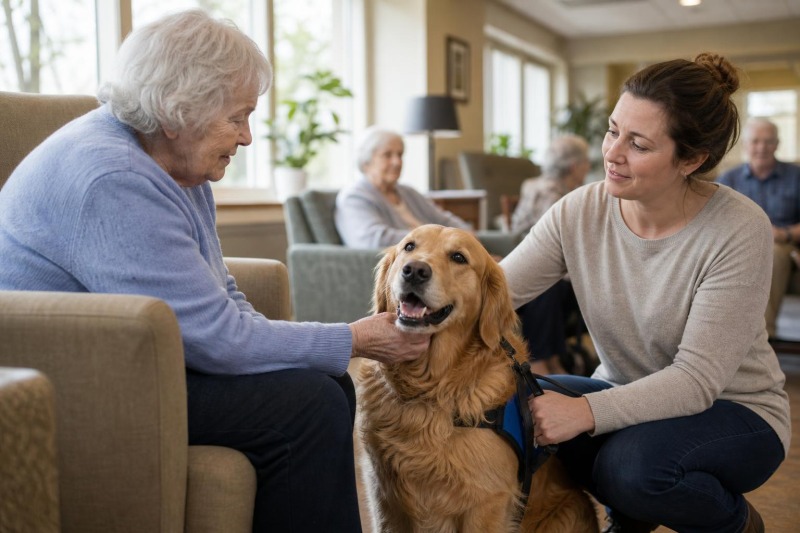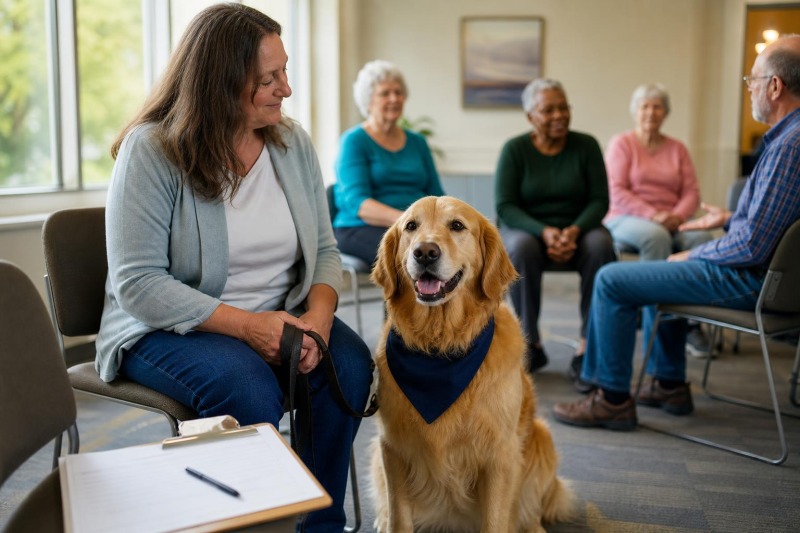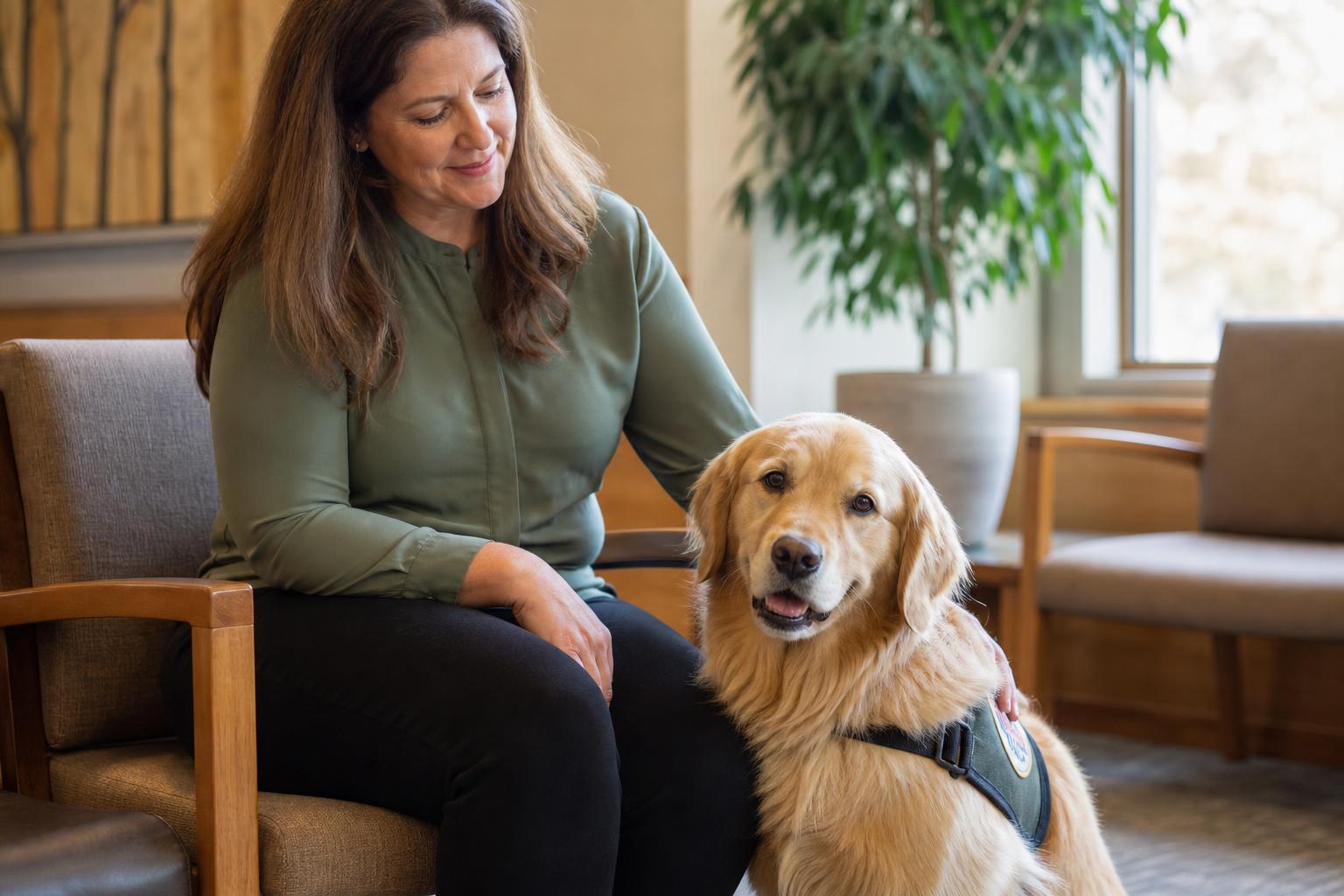
A suitable therapy-dog temperament is assessed through behavior in context. Look for comfortable engagement, recovery from mild surprises, and the ability to rest, rather than a particular breed label.
A therapy dog steps into places where people may be hurting, anxious, grieving, excited, confused, or physically fragile. That dog may visit hospitals, schools, nursing homes, rehab centers, libraries, and community spaces. In every one of those places, the dog needs to be safe, dependable, and emotionally even. The best therapy dogs carry themselves with the kind of quiet confidence that reminds me of a seasoned hunting dog at the edge of a field at first light, alert but not frantic, aware but not bothered, ready to work without making a fuss about it.
If you are trying to understand therapy dog temperament requirements, whether you want to buy a suitable dog or evaluate the one already at your side, it helps to look beyond charm and focus on character. The right temperament is not flashy. It is steady.
Why Temperament Comes Before Training
Training matters, and good training matters a great deal. Still, training sits on top of temperament like a saddle sits on a horse. If what is underneath is unstable, the whole arrangement wobbles sooner or later. A dog can memorize commands and still be the wrong fit for therapy work if he startles easily, reacts poorly to strangers, guards his space, or becomes overstimulated by noise and movement.
In therapy settings, dogs meet people who may move unpredictably, speak loudly, smell unfamiliar, use medical equipment, or reach suddenly for fur, ears, or paws. Some people hug too hard. Some shuffle instead of walk. Some cry. Some laugh from the belly with a force that echoes down the hall. A suitable therapy dog does not need to love every odd thing, but the dog does need to tolerate it without fear, aggression, panic, or shutdown.
That is why the best therapy dog candidates often show the right traits long before advanced training begins. They are naturally social without being pushy. They are attentive without being needy. They are calm without being dull. That balance is worth more than all the fancy tricks in the world.
Calm Confidence
Not bravado. Not intensity. A therapy dog should move through the world with a settled mind. When a cart rattles past, when a child squeals, when an elevator door opens, the dog notices it and keeps his balance. He does not unravel just because the environment changes.
This kind of confidence cannot be faked for long. You see it in the eyes, in the body carriage, in the way the dog takes in something new and recovers quickly. Some dogs have a naturally grounded presence. They do not need to be the center of attention, and they do not need to control every situation. That steady composure is gold in therapy work.
Friendly and Social Without Overexcitement
A therapy dog should enjoy people. That sounds simple, but there is a difference between social and overstimulated. A dog that lunges forward, spins in circles, jumps on visitors, or vocalizes with excitement may be sweet-natured, but he is not ready for therapy work. Many therapy environments call for a soft, respectful manner. Frail adults, children with sensory sensitivities, and patients recovering from illness often need gentleness more than enthusiasm.
The ideal therapy dog greets people with relaxed interest. He is willing, approachable, and affectionate when invited. He does not crowd. He does not demand. He understands, in a canine sort of way, how to be present without overwhelming the person in front of him.
Emotional Stability
One of the most important therapy dog temperament requirements is emotional stability. A dog in this role will encounter stress, but what matters is how the dog processes it. A stable dog does not stay rattled. He may pause at a sudden noise or glance toward a strange object, but he regains himself quickly.
Emotional stability is the difference between a dog who merely behaves in ideal conditions and a dog who remains trustworthy when life gets noisy and uneven.
Gentleness With Touch and Handling
Therapy dogs are touched often, and not always skillfully. People may pat too hard, lean on the dog, stroke the dog backward, or touch sensitive areas without meaning any harm. A suitable therapy dog must be tolerant of handling and remain composed under clumsy affection.
That does not mean the dog should have no boundaries at all. It means the dog should not react defensively when handled in common therapy scenarios. Softness matters here. A dog with a forgiving nature can make people feel safe, and that safety is part of the healing value therapy dogs bring.
Low Reactivity
Low reactivity is another trait that separates a true therapy prospect from a dog who is simply pleasant at home. Therapy dogs need to stay composed around other dogs, strange noises, dropped items, mobility aids, crowds, and unusual sights. Reactivity can show up as barking, lunging, freezing, spinning, or intense fixation. Even if it comes from excitement rather than fear, it can make the dog unsuitable for therapy settings.
A low-reactive dog has a buffer between stimulus and response. That little gap is important. It gives the dog time to stay thoughtful rather than impulsive. In a public-facing role, that kind of self-control is not optional.
Patience and Impulse Control
Patience is one of those traits people overlook until they need it. Therapy visits can involve waiting, standing still, moving slowly, or calmly settling beside a chair or bed. A dog that must always be moving, sniffing, pawing, or seeking novelty may struggle with this kind of work.
Good impulse control shows up in small moments. The dog can hold position when a treat is visible. The dog can ignore food on the floor. The dog can walk past distractions without pulling like a hound on hot scent. The dog can sit beside a person and simply be there. That quiet ability to do less is often exactly what the setting calls for.
Traits That Can Disqualify a Therapy Dog Candidate
Some traits should give a prospective owner real pause. Aggression of any kind is a serious red flag. Fearfulness, especially when it leads to avoidance or defensive behavior, is another. Resource guarding, sharp sensitivity to touch, extreme prey drive in public settings, and chronic anxiety can all interfere with safe therapy work.
That does not make a dog bad. It just means the dog may be better suited for a different kind of life. Matching the dog to the job is part of responsible ownership.
Can Temperament Be Improved?
To a degree, yes. Early socialization, thoughtful exposure, confidence-building, and steady training can improve a dog’s ability to cope with the world. A young dog that is a little unsure may blossom with patient guidance. A rambunctious dog may learn calm manners. A bright dog may develop better impulse control.
Still, training has limits. If a dog is deeply anxious, highly reactive, suspicious of strangers, or emotionally inconsistent, no amount of wishful thinking will turn that dog into an ideal therapy partner. It is better to be honest than to push a dog into work that does not suit him. Good handlers protect the public, but they also protect the dog.
Breed, Personality, and the Individual Dog
People often ask whether certain breeds are best for therapy work. Breed tendencies can matter, sure enough. Some lines are bred for sociability, biddability, and stable nerves, while others may carry stronger guarding instincts, higher intensity, or more independence. But breed alone never tells the whole story.
What matters most is the individual dog standing in front of you. Watch how the dog responds to novelty. Notice whether the dog seeks connection without becoming frantic. See whether the dog recovers from surprise. Observe how the dog handles touch, frustration, waiting, and crowds. Temperament reveals itself over time in ordinary moments.
Look for Consistency Across Environments
A dog may seem perfect in the living room and come undone in public. That is why evaluation should happen in more than one place. Watch the dog at home, on walks, around strangers, near traffic, in stores that allow dogs, and in controlled social settings. Consistency matters. A therapy dog should not be stable only when conditions are easy.
Pay Attention to Recovery Time
No dog is a machine. Even a wonderful candidate may startle now and then. What matters is how quickly the dog returns to baseline. A dog that glances, pauses, and settles again is far different from a dog that spirals for several minutes after a minor surprise.
Get an Honest Outside Opinion
Sometimes owners love their dogs so much they miss what is plain as day to an experienced trainer or evaluator. There is no shame in getting an honest assessment. In fact, it is the smart thing to do. A good professional can help determine whether the dog has the right therapy dog temperament requirements or whether the dog would be happier in another role.
The Heart of a Good Therapy Dog
The best therapy dogs have a rare kind of steadiness. They do not just obey. They comfort. They do not just tolerate people. They meet them well. There is something deeply reassuring about a dog that can walk into a tense room and bring the whole place down a notch simply by being calm, kind, and present.
It is not magic, though it can feel that way. It is temperament, carefully shaped by training and guided by a thoughtful handler. If you are looking for a therapy dog, choose with a clear eye. Look for stable nerves, easy sociability, gentleness, patience, and good recovery from stress. Those are the traits that hold when the hallway gets loud and the work becomes real.
And if your dog has those gifts, you may have something special on the lead. Not every good dog is meant for therapy work, but the ones that are can leave a mark on people that lasts a long while.