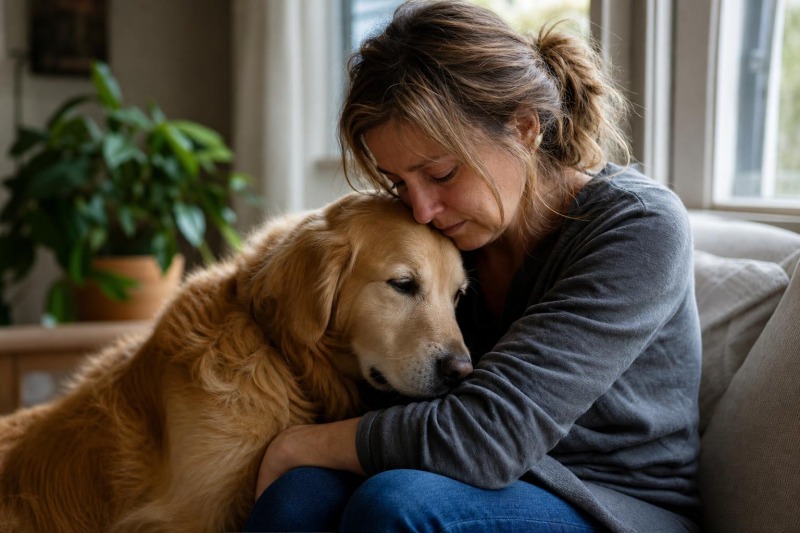
Research on dog companionship asks several different questions, from daily activity to perceived support. The effects of ownership, brief visits, and trained assistance should not be treated as interchangeable findings.
For anyone considering a companion dog, therapy dog, or service dog, understanding that science matters. It helps explain why dogs calm us down, why they become tuned in to our routines, and why the right dog can change a life in ways that are practical as much as emotional. This is not magic, though at times it feels mighty close. It is a relationship shaped by evolution, reinforced by brain chemistry, and strengthened through steady daily contact.
The Long History Behind the Human-Dog Bond
Dogs did not become our companions overnight. Long before modern training programs, certifications, and family living rooms, wolves began drifting toward human camps. The boldest and most socially flexible among them likely found food and safety near people. Over generations, those animals changed. Humans changed too. We selected dogs for traits that suited our needs, whether guarding, tracking, retrieving, herding, or simply staying close and reading the room. That long partnership is one reason dogs are so unusually skilled at living alongside us.
Scientists who study domestication often point to one remarkable fact: dogs are exceptionally good at interpreting human signals. They can follow a pointing finger, watch our eyes, and respond to tone and posture in ways many other animals do not. That sensitivity is not just training. It is part of what dogs have been shaped for over thousands of years.
This history helps explain why companion dogs fit so naturally into daily life and why therapy and service dogs can be trained to work so closely with people in need. The foundation was laid long ago. Modern roles build on that ancient ability to connect with us.
How Dog Companionship Affects the Brain and Body
One of the clearest scientific explanations for dog companionship involves hormones. When people interact positively with dogs, both species can experience changes in oxytocin, sometimes called the bonding hormone. Oxytocin is linked to trust, attachment, and feelings of social safety. A calm petting session, gentle eye contact, or simply sitting together can help trigger that response. The same is true for dogs. In many cases, the bond runs both directions.
At the same time, stress markers may decrease. Research has shown that spending time with a dog can lower cortisol, the hormone associated with stress. Heart rate and blood pressure can also improve during relaxed interaction. That matters in real life. A person living with anxiety, grief, isolation, or chronic stress may feel a measurable shift when a dog becomes part of the rhythm of the home. The dog does not remove every hard thing, but it often helps the nervous system settle enough for the person to breathe easier and function better.
Feeding at regular times, walking at dawn, brushing out a coat at the end of the day, all of it adds routine. Science backs up what old dog owners have known forever: routine steadies people. Dogs are creatures of habit, and in asking us to care for them, they quietly pull us toward healthier patterns.
The Power of Touch and Presence
Touch matters more than many folks realize. Stroking a dog’s coat, feeling that warm body pressed against your leg, hearing the slow exhale of a relaxed animal nearby, these are not minor comforts. They are sensory experiences that can regulate emotion. For children, older adults, and individuals dealing with trauma or mental health challenges, a dog’s physical presence can be grounding. It brings attention back to the present moment.
That is one reason therapy dogs are so effective in schools, hospitals, nursing homes, and counseling settings. They create a bridge. Some people struggle to talk directly about pain, fear, or loneliness. A dog lowers the temperature in the room. Conversation comes easier. Muscles loosen. Smiles show up where there had only been tension.
Why Dogs Read Human Emotion So Well
Dogs are keen observers. They notice patterns faster than many people expect. They learn the sound of your truck in the drive, the difference between your work boots and your walking shoes, and the way your breathing changes when your mind is troubled. Studies suggest dogs can distinguish aspects of human facial expression and vocal tone. They may not understand every reason behind our emotions, but they often detect the shift itself.
This ability is especially important in service work. A well-trained service dog may respond to changes in movement, posture, scent, or behavior that signal a medical or psychiatric need. In some cases, dogs can alert to blood sugar changes, interrupt destructive behaviors, guide handlers with visual impairment, or provide balance and mobility support. While training sharpens these responses, the raw material begins with the dog’s deep attention to people.
Companion dogs show a version of this every day. Anyone who has lived closely with a dog knows the look. You come home worn thin, and the dog meets you gently rather than wild. You sit down after hard news, and before long that dog is there, silent but fully present. Science gives us the framework, but lived experience gives it weight.
Companion Dogs, Therapy Dogs, and Service Dogs: Different Roles, Shared Science
It helps to understand that while these dogs share a common bond with humans, their roles are different. A companion dog is first and foremost there for everyday connection, comfort, and shared life. That role is no small thing. Companionship can improve mood, reduce feelings of loneliness, encourage exercise, and add purpose to ordinary days.
Therapy dogs are trained and evaluated to visit and provide comfort in settings like hospitals, schools, and care facilities. Their work depends on temperament, calm behavior, and a reliable ability to engage safely with many different people. The science behind their impact often centers on stress reduction, social facilitation, and emotional regulation.
Service dogs are task-trained to assist individuals with disabilities. Their companionship is powerful, but their primary value lies in specific trained behaviors that help a handler navigate daily life more safely and independently. The science behind service dogs includes not only emotional support but also task performance, environmental awareness, and behavior shaped through precise reinforcement.
Different as these roles may be, all three rest on the same essential truth: dogs are uniquely equipped to connect with human beings in ways that influence both emotional and physical well-being.
Why the Right Match Matters
Not every dog fits every home, and science supports that too. Temperament, energy level, sociability, resilience, and trainability all affect success. A household wanting a steady companion for calm support may need a very different dog than a person requiring advanced service tasks or a handler planning therapy visits in busy environments. Breed tendencies can play a role, but individual temperament always matters most.
That is why thoughtful selection and training are so important. A dog can only thrive in a role that matches its nature. When the fit is right, the relationship feels smooth instead of forced. The dog settles in. The human gains confidence. Trust grows from there.
The Social and Health Benefits of Dog Companionship
One of the lesser talked about pieces of dog companionship is how dogs connect people to other people. Walk a dog around any neighborhood and watch how often conversations start. For someone isolated or shy, a dog can become a social bridge. That increased social contact can support mental health and reduce loneliness, which is itself linked to poorer physical outcomes over time.
Dogs also encourage movement. Not every companion dog is a hard-driving field dog that wants miles before breakfast, but most need some degree of regular exercise. That means their owners often move more too. Walking, training, play sessions, and outdoor time can contribute to better cardiovascular health, improved mood, and stronger daily habits.
Then there is the sense of meaning. Caring for a dog asks something of a person. You get up, even when the weather is sour. You keep a schedule. You pay attention. For people navigating depression, life transitions, disability, or grief, that sense of responsibility can be deeply stabilizing. Science often measures outcomes in numbers, but out in the real world, meaning is one of the biggest reasons dogs matter.
What the Science Really Tells Us
The science behind dog companionship does not cheapen the relationship by reducing it to chemicals or conditioned responses. If anything, it deepens our respect for what is happening. It shows that when a dog leans against your leg or watches your face for direction, there is an intricate dance taking place between instinct, learning, trust, and shared experience.
From companion dogs who bring warmth to everyday life, to therapy dogs who soften hard places, to service dogs who help handlers live with greater independence, the evidence keeps pointing in the same direction. Dogs matter because they engage the whole person. They affect the mind, the body, behavior, and the social world around us.
A good dog does more than keep you company. It changes the feel of a home. It steadies your pace. It teaches attention, patience, and loyalty in plain terms. And whether that dog is curled at your feet after supper or guiding someone through a crowded day, the bond is built on something real, ancient, and measurable. That may be science, but it still feels a lot like grace.