Service-dog work has developed through changing tasks, training practices, and disability-related expectations. Distinguish documented program history from broad stories about dogs helping people across earlier centuries.
Long before formal training programs and legal definitions, dogs were already helping humans survive. Early people likely relied on them for guarding camp, tracking movement, alerting to danger, and offering companionship in hard country. A sharp dog could hear trouble before a sleeping family ever stirred. It does not take much imagination to see how that natural usefulness slowly turned into specialized help. Over time, people began breeding and selecting dogs not just for strength or speed, but for steadiness, intelligence, attentiveness, and the willingness to stay close and work as a team. Those are the same qualities that still matter in service dog training today.
Early Roles That Shaped the Service Dog
In ancient civilizations, dogs were more than property. They guarded homes, accompanied travelers, and in some cases helped people with physical limitations navigate daily life. Historical records and artwork suggest that dogs were used as guides in various parts of the world, especially for those with visual impairments. These early partnerships were not organized the way they are now, but they planted the seed. People saw that certain dogs could do more than obey commands. They could watch, anticipate, and respond with judgment.
That distinction matters. A service dog is not simply a well-behaved pet. At its best, it is a working partner trained to perform specific tasks that reduce the impact of a disability. That level of responsibility did not appear overnight. It grew out of centuries of observing canine behavior and refining the relationship between dog and handler. Hunters, shepherds, farmers, teamsters, and soldiers all contributed to this understanding in their own way. Anyone who has depended on a dog in real conditions knows that instinct is only part of the equation. Trust is what turns talent into reliable work.
The Turning Point After War
One of the biggest shifts in the history of service dogs came after periods of war, especially in the early twentieth century. Large numbers of injured veterans returned home needing practical support. In that setting, the idea of the guide dog moved from scattered practice into structured training. Germany played a major role in the early development of organized guide dog schools, particularly for soldiers who had lost their sight. Trainers began identifying dogs with the right temperament and teaching them how to lead safely through crowded, unpredictable environments.
That was no small feat. A dog guiding a blind handler must do more than follow commands. It has to disobey when obedience would cause harm, a skill often called intelligent disobedience. If a handler tells the dog to move forward but a car is coming or a curb drops away, the dog must refuse. That kind of judgment marks a turning point in working-dog history. It showed the world that dogs could be trained not just to act, but to think within the boundaries of their job.
Guide Dogs Set the Standard
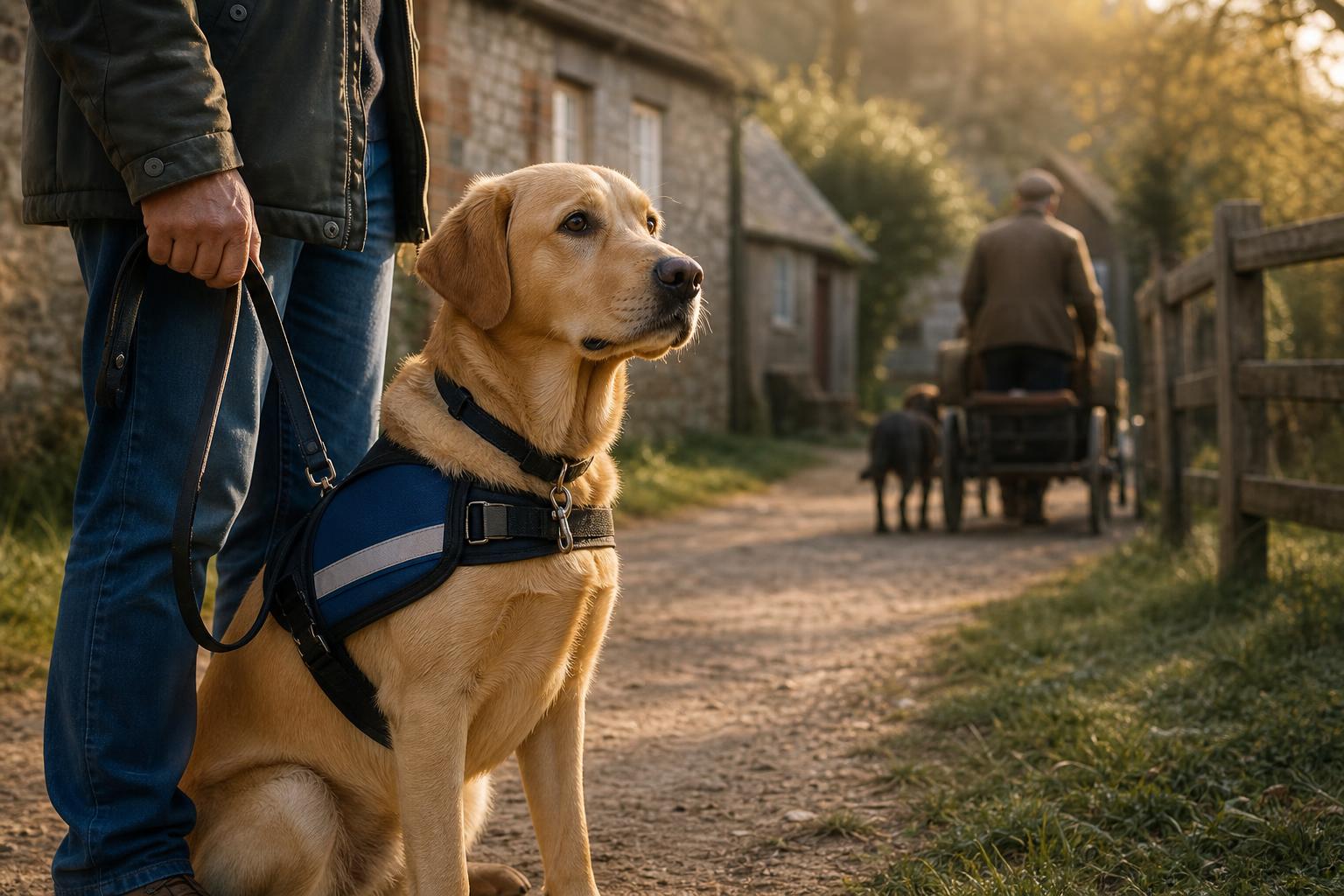
Guide dogs became the first widely recognized form of modern service dog, and for good reason. Their work was visible, practical, and life-changing. Programs spread beyond Europe and took root in the United States and elsewhere. Breeds such as German Shepherds, Labrador Retrievers, and Golden Retrievers rose to prominence because they combined trainability with calm nerves and a stable disposition. Trainers learned that success depended less on toughness and more on balance. A service dog had to be alert without being reactive, loyal without becoming clingy, and confident without pushing ahead of its handler.
Those lessons shaped every branch of assistance dog work that followed. The standards developed for guide dogs laid the groundwork for more specialized forms of support, including mobility assistance, medical alert work, hearing assistance, and psychiatric service dog tasks.
How Service Dogs Expanded Beyond Vision Support
As society gained a better understanding of disability, the role of service dogs broadened. People began to see that a skilled dog could help with far more than guiding someone who is blind. Dogs were trained to brace and retrieve for individuals with mobility challenges, open doors, pick up dropped items, pull wheelchairs in some settings, and provide balance support when appropriate. For people who are deaf or hard of hearing, hearing dogs were taught to alert to alarms, doorbells, crying babies, and a person calling their name.
Then came another leap forward. Trainers and medical professionals began recognizing that dogs could notice subtle physical and behavioral changes that humans often miss. Some dogs learned to alert before a seizure, respond to diabetic blood sugar shifts, or signal an oncoming medical event through scent and observation. Others were trained for psychiatric support tasks, such as interrupting panic behaviors, creating space in crowded environments, waking a handler from night terrors, or guiding them to an exit during episodes of distress. These were not tricks. They were meaningful tasks that restored confidence and independence.
From the outside, it may seem like service dog work has become increasingly complicated, and in some ways it has. But underneath all that specialization, the core remains old and familiar. A good working dog pays attention, stays steady under pressure, and learns to put its handler first. Whether that dog is marking a bird in flooded timber or alerting to a change in blood sugar in a grocery store, the same fundamental partnership is at work.
The Difference Between Service Dogs, Therapy Dogs, and Companion Dogs
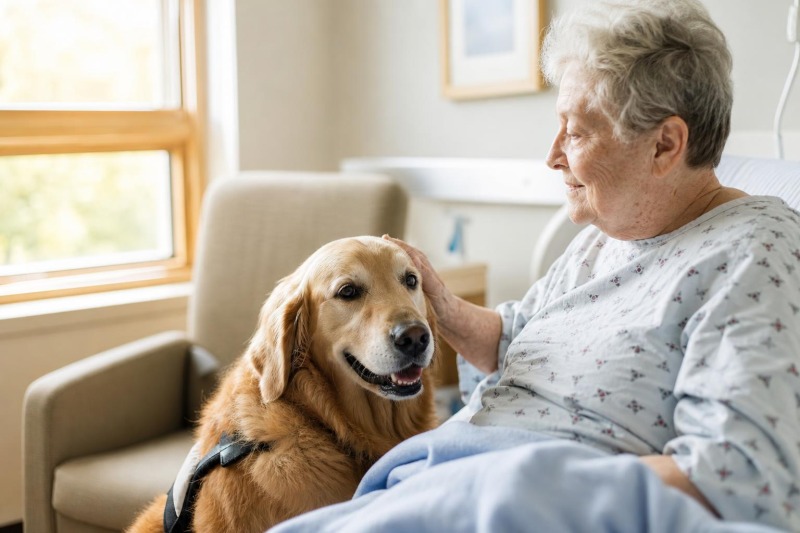
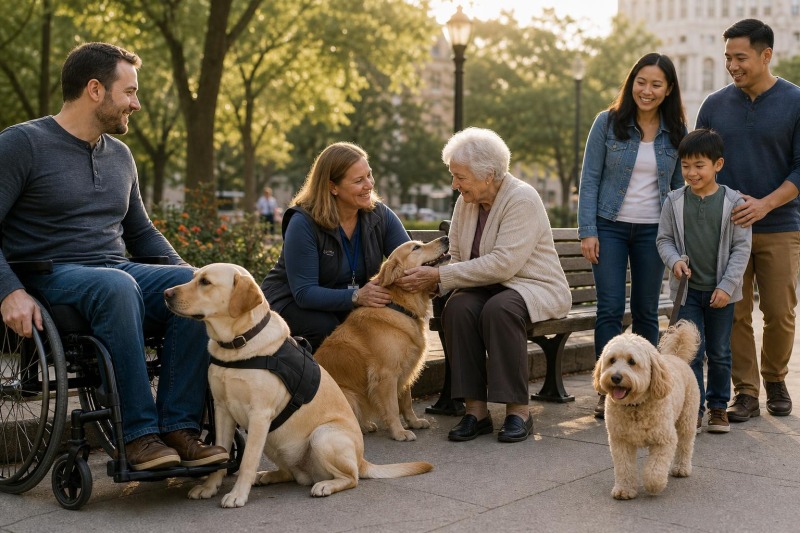
This is where many people get turned around, especially those just beginning to learn about the different roles dogs can play. A service dog is trained to perform tasks for a person with a disability. A therapy dog, by contrast, is usually trained for calm, social interaction in places like hospitals, schools, and care facilities, where it offers comfort to many people rather than one handler. A companion dog may provide emotional closeness and daily support through presence alone, but it does not necessarily have the specialized task training or legal status of a service dog.
All three roles matter. In fact, they often share overlapping traits such as steadiness, sociability, and trustworthiness. Still, the evolution of service dogs stands apart because it reflects a specific journey into task-based assistance and legal recognition. Understanding that difference helps buyers, families, and dog lovers make better choices when they begin exploring what kind of dog best fits their needs.
Modern Training Methods and Better Breeding Decisions
Service dog programs today are far more refined than they once were. Trainers look closely at temperament, recovery from stress, motivation, environmental confidence, and focus. The old heavy-handed methods have given way, in strong programs, to clearer communication and reward-based training that builds reliability without crushing initiative. That matters because a service dog has to work in the real world, where children run past, carts rattle, automatic doors hiss open, and strangers reach without asking. A dog that shuts down or becomes edgy cannot do the job safely.
Breeding has also become more intentional in established lines. While many individual dogs from shelters or private homes can succeed, purpose-bred service prospects often come from generations selected for health, nerve, biddability, and stable working temperament. Even then, not every promising puppy makes the cut. Service work demands a rare blend of traits, and experienced trainers know better than to force a dog into a role it does not truly fit.
The Rise of Owner Training and Public Awareness
Another important chapter in the evolution of service dogs is the rise of owner-trained service dogs. In some cases, individuals train their own dogs to perform disability-related tasks, sometimes with professional guidance and sometimes through a more independent path. This has opened doors for many people, though it has also raised questions about standards, access, and public understanding. At the same time, greater awareness has brought both progress and confusion. More people know what service dogs are, yet many still misunderstand the difference between a fully trained service dog and an emotional support animal.
That confusion can create real problems for legitimate handlers, especially when poorly behaved dogs are misrepresented in public spaces. The best answer is education. When people understand the history, purpose, and training behind service dogs, they are more likely to respect the work these animals do and the people who rely on them.
Why the History Still Matters Today
The story of service dogs is not just about the past. It shapes the choices being made right now by breeders, trainers, handlers, and families considering whether a dog can meet a serious need. It reminds us that this work depends on honesty, patience, and suitability. Not every friendly dog is service dog material. Not every problem can be solved with a vest and a leash. But the right dog, matched well and trained thoroughly, can change the course of a person’s life.
No fuss, no show, just steady work. That is what makes service dogs so remarkable. Their evolution has carried them from ancient camps and rough roads to hospitals, homes, and public places where they now serve with an almost uncanny sense of purpose. They represent one of the finest examples of what happens when human need meets canine willingness.
For anyone interested in therapy dogs, service dogs, or companion dogs, this history offers a useful lesson. Dogs have always been close to us, but their greatest value comes when we understand them clearly and treat their abilities with respect. The evolution of service dogs did not happen by accident. It was built over generations through observation, discipline, and deep partnership. And if history is any guide, their role will only continue to grow as we learn more about what these remarkable animals can do.