Adopting a Therapy Dog Prospect
How to Choose the Right Dog for Calm, Steady Work
Jeff Davis | https://companiondogcentral.com
 0
0 0
0 0
0 0
0 0
0
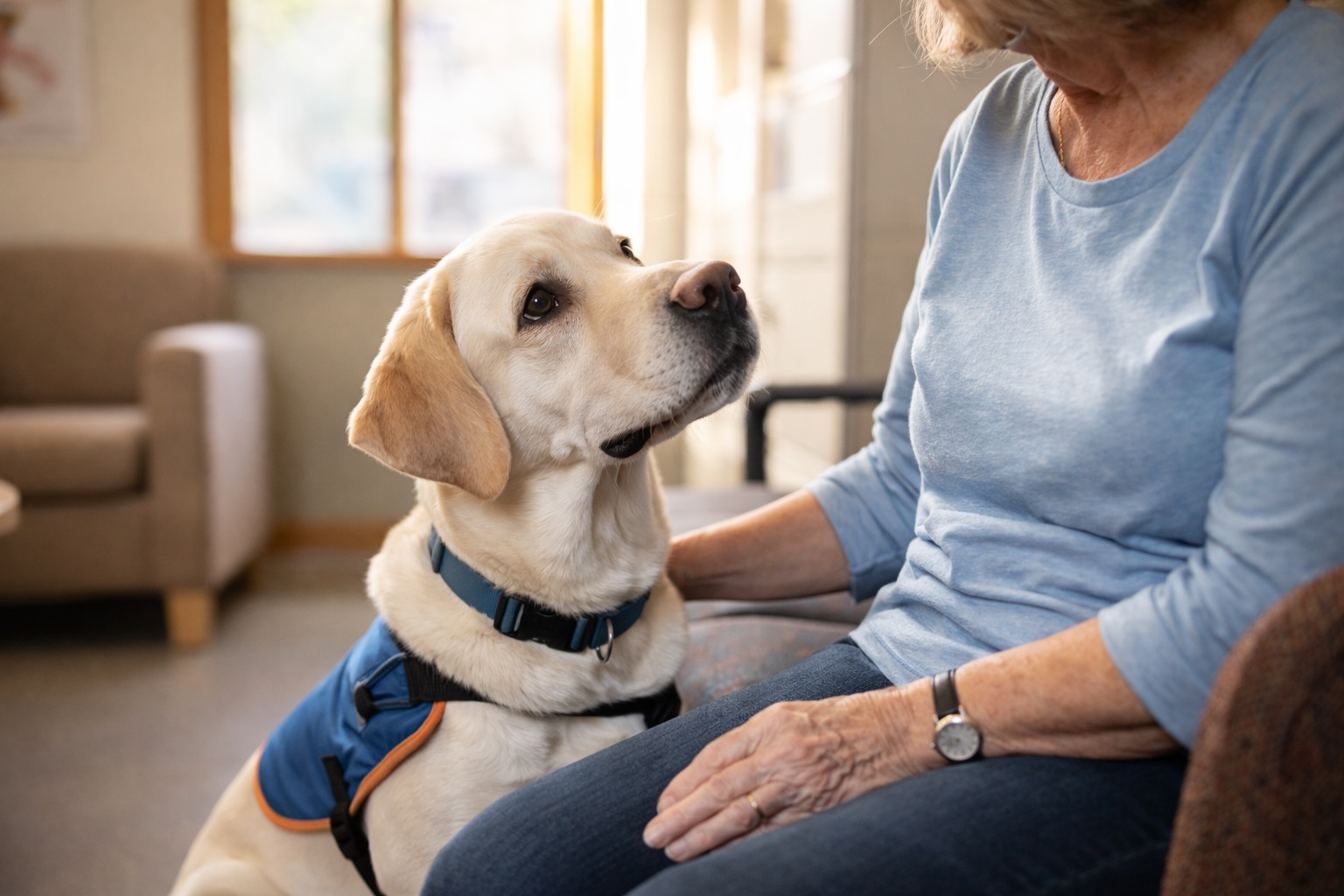
Adopting a therapy dog prospect is not the same as bringing home a pleasant pet, and it surely is not a matter of picking the prettiest pup in the pen. I have spent enough years around working dogs to know that a good heart alone will not carry a dog through the kind of pressure therapy work can bring. A dog may be loving as the day is long and still not be cut out for hospitals, schools, nursing homes, or crowded public events. If you want a dog that can offer comfort with steadiness and grace, you have to start with clear eyes and a level head.
Folks often come into the process with noble intentions. They want to help people, they love dogs, and they picture a calm animal resting its head on a patient's lap or greeting a child who needs a reason to smile. That picture can become real, but the dog has to be chosen with purpose. A therapy dog prospect needs temperament first, trainability second, and sound structure and health close behind. Everything else is window dressing.
What a Therapy Dog Prospect Really Needs
The best therapy dogs are steady in the same way a seasoned hunting dog is steady in the blind. They do not come apart when the world gets noisy. They notice pressure without being ruled by it. They recover quickly from surprises. A dropped walker, a sudden laugh, the clatter of a food cart, the awkward reach of unfamiliar hands, or a child hugging too tightly should not shake the dog to its core.
That does not mean the dog must be perfect from the start. Very few are. What you want is a dog with a natural tendency toward calm engagement. The ideal prospect is social without being frantic, affectionate without being pushy, curious without being suspicious, and responsive without being clingy. There is a sweet middle ground there, and it matters more than color, breed hype, or whether the dog already knows how to sit.
One of the biggest mistakes people make when adopting a therapy dog prospect is confusing softness with stability. A shy, shut-down dog may appear gentle, but therapy work asks for confidence. On the other end, a wildly outgoing dog may seem friendly, yet that same dog might lack the impulse control needed to move carefully around frail people. The dog you want is balanced. That word gets used a lot, but here it means a dog who can take in the world without overreacting to every piece of it.
Temperament Comes Before Everything Else
If I were standing in a shelter, rescue kennel, or foster home evaluating dogs, I would spend more time watching than touching. I would want to see how the dog handles ordinary disruption. What happens when someone new enters the room? Does the dog rush, freeze, bark, cower, or simply notice and settle? Does the dog check in with people naturally? Can it be redirected? Does it carry itself with ease, or does it look like it is waiting for trouble?
A strong therapy prospect usually shows social interest, moderate energy, and emotional resilience. It should not guard space, food, or people. It should not be highly reactive to other dogs or sudden movement. A little uncertainty in a new environment is normal, but the dog should recover quickly. Recovery is worth paying attention to. A dog that startles and then regains composure is often workable. A dog that startles and stays worried is telling you something important.
Should You Adopt a Puppy or an Adult Dog?
There is no single right answer, though many people imagine a puppy is always the best route. Sometimes it is. A well-bred or carefully selected puppy gives you the chance to shape habits from the beginning, build social confidence properly, and create a clean training foundation. But puppies are also unproven. What looks promising at eight weeks may not hold at fourteen months. You are making an educated guess, not a guarantee.
An adult dog can be a wiser choice for many homes. With an adult, much of the mystery is gone. You can often see the dog's true temperament, energy level, social habits, and stress responses. If the dog is old enough to have settled into itself, you have fewer surprises waiting in the wings. I have seen more than one family save themselves heartache by choosing a calm adult over a flashy puppy they hoped would grow into the role.
Age matters less than maturity, and maturity matters less than temperament. A young adult dog with a stable mind can be an excellent therapy dog prospect. An older dog can work too, provided health and stamina are on its side. The key is not how young the dog is, but whether the dog can handle the work with comfort and confidence.
Health, Soundness, and Physical Comfort Matter More Than People Think
Therapy work may look gentle from the outside, but it can ask a lot from a dog physically. Slick hospital floors, long periods of calm handling, travel, repetitive visits, and unpredictable interactions all place demands on the body. A dog that is in pain, even mild pain, is not likely to perform well. More importantly, it should not be asked to.
Before committing to adoption, look hard at health history if it is available. If you are adopting through a rescue, ask direct questions about orthopedic issues, allergies, chronic digestive trouble, prior injuries, skin sensitivity, ear problems, and any medication history. Once adopted, plan for a full veterinary evaluation. Eyes, ears, joints, teeth, gait, and overall condition all matter. A dog that is physically uncomfortable may become avoidant, irritable, or anxious, and those traits can be mistaken for training problems when they are really pain responses.
Size also deserves a practical look. Large dogs can be wonderfully reassuring, but they need to be steady and physically controlled in tight spaces. Small dogs can fit nicely into many therapy settings, but they must not be fragile or nervy. Pick the dog that can work comfortably in the environments you expect to visit.
Breed Matters, but It Is Not the Whole Story
Some breeds and mixes do tend to produce more therapy-capable dogs than others. Retrievers, poodles, collies, spaniels, and many mixed breeds can make excellent therapy partners when the individual dog has the right temperament. But breed should guide your expectations, not make the decision for you. I have seen the wrong Labrador fail and the right mixed-breed dog shine because one had the proper mind for the job and the other did not.
Drives matter here. Dogs bred for intense guarding, suspiciousness, hard protection instincts, or extreme environmental sensitivity may be less suited for therapy work, even if they are loyal and intelligent. That does not make them bad dogs. It simply means the work asks for a different set of natural strengths.
Where to Find a Good Therapy Dog Prospect
Good therapy prospects can come from shelters, rescues, breed-specific rescue groups, foster-based organizations, or reputable breeders if you are starting with a puppy. The source matters less than the honesty of the evaluation and the fit of the dog. Still, some sources give you better odds of learning the truth. Foster homes can be especially useful because they often see how the dog behaves in a household, around guests, with other animals, and under daily stress.
When you speak with rescue staff or foster families, ask how the dog handles novelty, strangers, restraint, grooming, and noise. Ask whether the dog startles easily, whether it has shown separation distress, and whether it seeks out gentle contact with people. Do not just ask if the dog is sweet. Nearly every available dog gets called sweet. Sweet is pleasant, but it is not enough information to build a working future on.
If possible, visit more than once. Meet the dog in different settings. A prospect that looks settled in one quiet room may tell a different story in a parking lot or lobby. You are not trying to trick the dog. You are trying to understand it honestly.
Red Flags You Should Not Ignore
Some issues can improve with training and time. Others should make you pause long and hard. Persistent fear, reactivity, guarding behavior, high sensitivity to handling, extreme prey drive, inability to settle, and poor recovery from stress are all serious concerns for therapy work. A dog that avoids strangers, stiffens when touched unexpectedly, or becomes overstimulated in busy places may still become a wonderful pet, but that does not mean it should be pushed toward therapy certification.
I say this plainly because too many good-hearted people try to rescue and recruit at the same time. They adopt a dog with obvious emotional baggage and hope love alone will turn that dog into a public comfort animal. Sometimes love helps heal a dog. It does not always change what the dog is suited for. A therapy dog should enjoy the work. If the work costs the dog too much, it is the wrong job.
The First Weeks After Adoption
Once you bring your prospect home, resist the urge to do too much too soon. Let the dog settle. Watch its natural rhythms. Learn how it handles the ordinary business of living. A dog can look one way in a shelter and another way after three weeks in a home. Give structure, gentle routines, and clear expectations. Build trust before you test ambition.
During this period, focus on observation and foundation skills. Name recognition, loose-leash walking, polite greetings, calm grooming, settling on a mat, and comfortable handling are all more valuable than flashy obedience. Therapy work is built on emotional steadiness and manners, not tricks. If the dog cannot relax in your living room, it is not ready for a hospital hallway.
Training Toward Therapy Work
Good training shapes a prospect, but it does not manufacture one from thin air. Start with basic obedience, but keep your eyes on the larger goal. You want a dog that can remain composed while people move oddly, speak loudly, cry, laugh, or touch in clumsy ways. You want a dog that can be guided gently through unusual situations and still keep its wits.
Socialization for a therapy dog prospect should be thoughtful rather than reckless. Do not flood the dog with every possible environment at once. Introduce the world in measured doses. Reward calm behavior. End on success. Build confidence, not mere exposure. I have seen many promising dogs spoiled by owners who mistook overstimulation for socialization.
At the right stage, a good trainer familiar with therapy dog standards can help you evaluate whether your dog is progressing honestly. That outside eye can save months of wishful thinking. Sometimes a dog is almost right but not quite. Better to know that early than to force the issue.
Choosing With Your Head and Your Heart
There is no shame in loving a dog that is not meant for therapy work. In fact, some of the best companion dogs I have known were never suited for public service of any kind. But if your goal is to adopt a therapy dog prospect, sentiment has to walk beside judgment. Pick the dog that can carry the work lightly, not the one you hope will somehow grow into it against its nature.
The finest therapy dogs I have seen all had the same kind of quiet truth in them. They were not the loudest, not the flashiest, and not always the most obedient in a show-ring sense. What they had was steadiness. They could step into human need without adding their own turmoil to the room. That kind of dog is worth waiting for.
If you choose carefully, train patiently, and keep the dog's welfare at the center of every decision, you will be far more likely to end up with a genuine therapy partner. And when that dog leans softly into a trembling hand or rests calmly beside someone who needs comfort, you will know the effort at the beginning was time well spent.
Folks often come into the process with noble intentions. They want to help people, they love dogs, and they picture a calm animal resting its head on a patient's lap or greeting a child who needs a reason to smile. That picture can become real, but the dog has to be chosen with purpose. A therapy dog prospect needs temperament first, trainability second, and sound structure and health close behind. Everything else is window dressing.
What a Therapy Dog Prospect Really Needs
The best therapy dogs are steady in the same way a seasoned hunting dog is steady in the blind. They do not come apart when the world gets noisy. They notice pressure without being ruled by it. They recover quickly from surprises. A dropped walker, a sudden laugh, the clatter of a food cart, the awkward reach of unfamiliar hands, or a child hugging too tightly should not shake the dog to its core.
That does not mean the dog must be perfect from the start. Very few are. What you want is a dog with a natural tendency toward calm engagement. The ideal prospect is social without being frantic, affectionate without being pushy, curious without being suspicious, and responsive without being clingy. There is a sweet middle ground there, and it matters more than color, breed hype, or whether the dog already knows how to sit.
One of the biggest mistakes people make when adopting a therapy dog prospect is confusing softness with stability. A shy, shut-down dog may appear gentle, but therapy work asks for confidence. On the other end, a wildly outgoing dog may seem friendly, yet that same dog might lack the impulse control needed to move carefully around frail people. The dog you want is balanced. That word gets used a lot, but here it means a dog who can take in the world without overreacting to every piece of it.
Temperament Comes Before Everything Else
If I were standing in a shelter, rescue kennel, or foster home evaluating dogs, I would spend more time watching than touching. I would want to see how the dog handles ordinary disruption. What happens when someone new enters the room? Does the dog rush, freeze, bark, cower, or simply notice and settle? Does the dog check in with people naturally? Can it be redirected? Does it carry itself with ease, or does it look like it is waiting for trouble?
A strong therapy prospect usually shows social interest, moderate energy, and emotional resilience. It should not guard space, food, or people. It should not be highly reactive to other dogs or sudden movement. A little uncertainty in a new environment is normal, but the dog should recover quickly. Recovery is worth paying attention to. A dog that startles and then regains composure is often workable. A dog that startles and stays worried is telling you something important.
Should You Adopt a Puppy or an Adult Dog?
There is no single right answer, though many people imagine a puppy is always the best route. Sometimes it is. A well-bred or carefully selected puppy gives you the chance to shape habits from the beginning, build social confidence properly, and create a clean training foundation. But puppies are also unproven. What looks promising at eight weeks may not hold at fourteen months. You are making an educated guess, not a guarantee.
An adult dog can be a wiser choice for many homes. With an adult, much of the mystery is gone. You can often see the dog's true temperament, energy level, social habits, and stress responses. If the dog is old enough to have settled into itself, you have fewer surprises waiting in the wings. I have seen more than one family save themselves heartache by choosing a calm adult over a flashy puppy they hoped would grow into the role.
Age matters less than maturity, and maturity matters less than temperament. A young adult dog with a stable mind can be an excellent therapy dog prospect. An older dog can work too, provided health and stamina are on its side. The key is not how young the dog is, but whether the dog can handle the work with comfort and confidence.
Health, Soundness, and Physical Comfort Matter More Than People Think
Therapy work may look gentle from the outside, but it can ask a lot from a dog physically. Slick hospital floors, long periods of calm handling, travel, repetitive visits, and unpredictable interactions all place demands on the body. A dog that is in pain, even mild pain, is not likely to perform well. More importantly, it should not be asked to.
Before committing to adoption, look hard at health history if it is available. If you are adopting through a rescue, ask direct questions about orthopedic issues, allergies, chronic digestive trouble, prior injuries, skin sensitivity, ear problems, and any medication history. Once adopted, plan for a full veterinary evaluation. Eyes, ears, joints, teeth, gait, and overall condition all matter. A dog that is physically uncomfortable may become avoidant, irritable, or anxious, and those traits can be mistaken for training problems when they are really pain responses.
Size also deserves a practical look. Large dogs can be wonderfully reassuring, but they need to be steady and physically controlled in tight spaces. Small dogs can fit nicely into many therapy settings, but they must not be fragile or nervy. Pick the dog that can work comfortably in the environments you expect to visit.
Breed Matters, but It Is Not the Whole Story
Some breeds and mixes do tend to produce more therapy-capable dogs than others. Retrievers, poodles, collies, spaniels, and many mixed breeds can make excellent therapy partners when the individual dog has the right temperament. But breed should guide your expectations, not make the decision for you. I have seen the wrong Labrador fail and the right mixed-breed dog shine because one had the proper mind for the job and the other did not.
Drives matter here. Dogs bred for intense guarding, suspiciousness, hard protection instincts, or extreme environmental sensitivity may be less suited for therapy work, even if they are loyal and intelligent. That does not make them bad dogs. It simply means the work asks for a different set of natural strengths.
Where to Find a Good Therapy Dog Prospect
Good therapy prospects can come from shelters, rescues, breed-specific rescue groups, foster-based organizations, or reputable breeders if you are starting with a puppy. The source matters less than the honesty of the evaluation and the fit of the dog. Still, some sources give you better odds of learning the truth. Foster homes can be especially useful because they often see how the dog behaves in a household, around guests, with other animals, and under daily stress.
When you speak with rescue staff or foster families, ask how the dog handles novelty, strangers, restraint, grooming, and noise. Ask whether the dog startles easily, whether it has shown separation distress, and whether it seeks out gentle contact with people. Do not just ask if the dog is sweet. Nearly every available dog gets called sweet. Sweet is pleasant, but it is not enough information to build a working future on.
If possible, visit more than once. Meet the dog in different settings. A prospect that looks settled in one quiet room may tell a different story in a parking lot or lobby. You are not trying to trick the dog. You are trying to understand it honestly.
Red Flags You Should Not Ignore
Some issues can improve with training and time. Others should make you pause long and hard. Persistent fear, reactivity, guarding behavior, high sensitivity to handling, extreme prey drive, inability to settle, and poor recovery from stress are all serious concerns for therapy work. A dog that avoids strangers, stiffens when touched unexpectedly, or becomes overstimulated in busy places may still become a wonderful pet, but that does not mean it should be pushed toward therapy certification.
I say this plainly because too many good-hearted people try to rescue and recruit at the same time. They adopt a dog with obvious emotional baggage and hope love alone will turn that dog into a public comfort animal. Sometimes love helps heal a dog. It does not always change what the dog is suited for. A therapy dog should enjoy the work. If the work costs the dog too much, it is the wrong job.
The First Weeks After Adoption
Once you bring your prospect home, resist the urge to do too much too soon. Let the dog settle. Watch its natural rhythms. Learn how it handles the ordinary business of living. A dog can look one way in a shelter and another way after three weeks in a home. Give structure, gentle routines, and clear expectations. Build trust before you test ambition.
During this period, focus on observation and foundation skills. Name recognition, loose-leash walking, polite greetings, calm grooming, settling on a mat, and comfortable handling are all more valuable than flashy obedience. Therapy work is built on emotional steadiness and manners, not tricks. If the dog cannot relax in your living room, it is not ready for a hospital hallway.
Training Toward Therapy Work
Good training shapes a prospect, but it does not manufacture one from thin air. Start with basic obedience, but keep your eyes on the larger goal. You want a dog that can remain composed while people move oddly, speak loudly, cry, laugh, or touch in clumsy ways. You want a dog that can be guided gently through unusual situations and still keep its wits.
Socialization for a therapy dog prospect should be thoughtful rather than reckless. Do not flood the dog with every possible environment at once. Introduce the world in measured doses. Reward calm behavior. End on success. Build confidence, not mere exposure. I have seen many promising dogs spoiled by owners who mistook overstimulation for socialization.
At the right stage, a good trainer familiar with therapy dog standards can help you evaluate whether your dog is progressing honestly. That outside eye can save months of wishful thinking. Sometimes a dog is almost right but not quite. Better to know that early than to force the issue.
Choosing With Your Head and Your Heart
There is no shame in loving a dog that is not meant for therapy work. In fact, some of the best companion dogs I have known were never suited for public service of any kind. But if your goal is to adopt a therapy dog prospect, sentiment has to walk beside judgment. Pick the dog that can carry the work lightly, not the one you hope will somehow grow into it against its nature.
The finest therapy dogs I have seen all had the same kind of quiet truth in them. They were not the loudest, not the flashiest, and not always the most obedient in a show-ring sense. What they had was steadiness. They could step into human need without adding their own turmoil to the room. That kind of dog is worth waiting for.
If you choose carefully, train patiently, and keep the dog's welfare at the center of every decision, you will be far more likely to end up with a genuine therapy partner. And when that dog leans softly into a trembling hand or rests calmly beside someone who needs comfort, you will know the effort at the beginning was time well spent.