Best Small Dogs for Apartments Ranked
Jeff Davis | https://companiondogcentral.com
 0
0 0
0 0
0 0
0 0
0
Folks often think apartment living means a dog has to be tiny, quiet as a church mouse, and content to nap all day. That sounds neat on paper, but dogs are more honest than that. I have spent enough years around working dogs, companion dogs, and steady-nerved house dogs to tell you this plain: the best apartment dog is not always the smallest one. It is the dog whose temperament fits close living, daily routines, and the kind of companionship you are truly ready to give.
In a small home, every habit shows itself fast. A dog that barks at each hallway footstep, paces when left alone, or needs open-country exercise can make four walls feel even tighter. On the other hand, the right dog can turn a compact apartment into a calm den, the kind of place that settles your nerves after a long day. For people looking for a companion dog, a future therapy dog prospect, or a service dog candidate in a smaller package, choosing well matters.
I ranked these breeds based on apartment friendliness, trainability, temperament, adaptability, grooming demands, and how well they tend to live in close quarters with neighbors on all sides. No dog is perfect, and every individual dog is its own creature, but some breeds consistently prove themselves in apartment life better than others.
How I Ranked the Best Small Apartment Dogs
Before we get into the dogs themselves, it helps to understand the lens I am using. Apartment living rewards dogs with steady nerves, moderate exercise needs, and a sound mind. A dog does not need to be lazy, but it does need to settle well indoors. That matters doubly for anyone considering a therapy dog or service dog prospect, because those roles demand focus, resilience, and comfort in busy environments.
I also weighed barking tendency heavily. In a hunting camp or on acreage, a vocal dog can be tolerated. In an apartment complex with thin walls and neighbors who work nights, that same dog can become a real problem. Trainability is another major piece. A good apartment dog should learn routines, house manners, elevator etiquette, and how to pass strangers calmly in close hallways.
1. Cavalier King Charles Spaniel
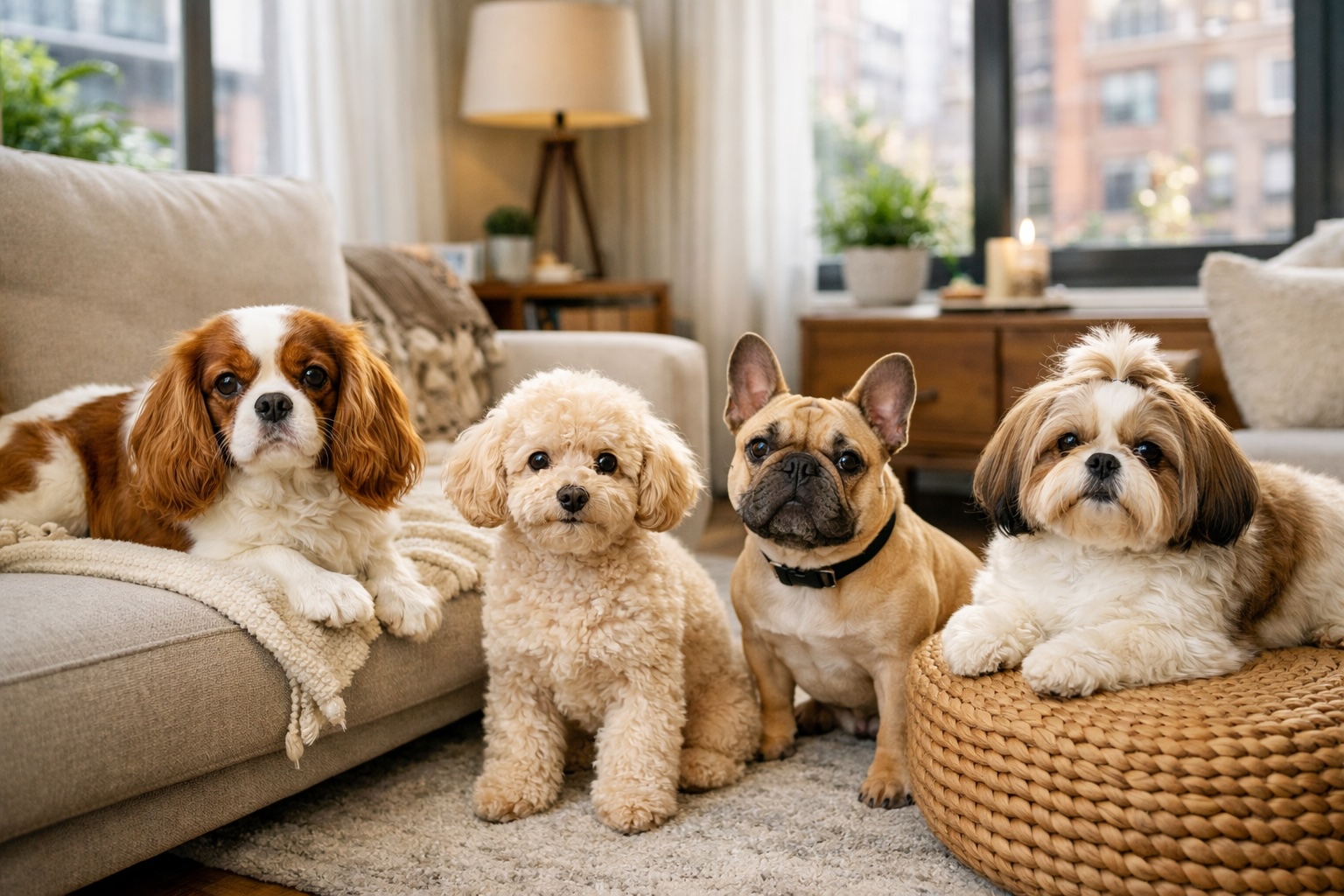
If I had to point a first-time apartment owner toward one breed with the fewest rough edges, I would start with the Cavalier King Charles Spaniel. These dogs have a softness about them that suits indoor life well. They are affectionate without always being frantic, small without being fragile in spirit, and adaptable in a way many breeds are not.
Cavaliers usually want to be near their people, which makes them exceptional companion dogs. They often have the warm, people-centered temperament that can also make them strong therapy dog candidates when properly socialized. They enjoy walks and play, but they do not usually demand the kind of hard exercise that turns apartment life into a daily wrestling match. Their biggest challenge is that they can become too attached if you never teach independence, so early routine and calm alone-time training matter.
2. French Bulldog
The French Bulldog has earned its reputation as one of the best apartment dogs for good reason. These dogs are sturdy little companions with a comic streak, and many of them are content with short walks, indoor play, and a comfortable place to watch the world go by. In practical terms, that is a fine recipe for city living.
They are usually not marathon dogs, and they often settle nicely indoors. Their manageable size and affectionate nature make them appealing to people who want a close companion in a small space. That said, a Frenchie can be stubborn, and some are more vocal than their reputation suggests. They also require careful attention to heat and breathing issues. I would not pick one for heavy service work, but as a companion dog for apartment dwellers, they rank high.
3. Miniature Poodle
I have always respected a dog with a sharp mind and a willing nature, and the Miniature Poodle has both. Too many folks overlook them because they focus on the haircut instead of the dog underneath. That is a mistake. Miniature Poodles are among the smartest small dogs around, and in apartment settings, intelligence can be a real blessing when paired with training.
These dogs learn quickly, bond closely, and often excel in therapy work because they are alert, responsive, and socially aware. Their coat sheds little, which many apartment owners appreciate, especially in tight quarters where every stray hair seems to find your coffee mug. Still, a clever dog needs an outlet. Without regular engagement, a Poodle may invent its own entertainment, and that rarely benefits the furniture. Give them structure, and they shine.
4. Bichon Frise
The Bichon Frise is one of those little dogs that can surprise you with its balance. They are cheerful without always being wild, social without being overbearing, and well suited to life where space is limited but companionship is close. A good Bichon carries itself with confidence, and that confidence helps in apartment environments full of noises, strangers, and daily interruptions.
They often do well with families, singles, and older adults alike. Their friendly disposition can make them suitable for companion roles and, in some cases, therapy settings. They do need grooming, and that should not be brushed aside. A neglected coat becomes a burden fast. But if you can keep up with maintenance, the Bichon is a pleasant little apartment dog with a bright and workable temperament.
5. Shih Tzu
The Shih Tzu was bred first and foremost to be close to people, and you can feel that purpose in the breed. They are homebody dogs in the best sense. They do not need a giant yard to be content, and many of them are perfectly satisfied with a modest walk, some indoor play, and a steady place beside their person.
For apartment life, that natural inclination to stay close can be a gift. Shih Tzus are often affectionate, charming, and easier to manage in small spaces than more driven breeds. They can, however, become stubborn if babied too much, and house training may require patience. Still, for someone seeking a loyal companion dog rather than a high-octane athlete, the breed is a dependable choice.
6. Havanese
The Havanese is a mighty appealing little dog for folks who want warmth, trainability, and enough adaptability to handle apartment routines with grace. These dogs are generally social and eager to engage with their people, which gives them strong potential as companion dogs and occasional therapy dog candidates.
What I like most about the Havanese is that they tend to be biddable without losing personality. They enjoy activity, but they usually do not act like they must run ten miles before breakfast. In an apartment, that kind of moderation is worth a lot. The coat requires care, and they can become clingy if raised without boundaries, but many owners find the tradeoff more than fair.
7. Boston Terrier
The Boston Terrier is compact, expressive, and often well suited to urban living. A good Boston carries itself with a kind of practical confidence. They are lively enough to be fun but usually manageable in tighter quarters. If you want a dog with personality that still understands how to settle indoors, this breed deserves a hard look.
Boston Terriers tend to do well with routine and basic obedience, and they generally adapt well to apartment sounds and shared spaces. Their short coat is easy to maintain, which is no small thing for busy owners. Like French Bulldogs, they need care in hot weather, but as everyday apartment companions, they are steady performers.
8. Maltese
The Maltese is often underestimated because of its dainty appearance. Underneath that soft coat is a dog with real attachment to its people and a surprisingly lively spirit. In apartments, their small size is an obvious advantage, but what matters more is that many Maltese are content with indoor closeness and moderate daily exercise.
They fit well with owners who want a truly close companion. For emotional support and day-to-day companionship, they can be excellent. Some can be vocal, though, and that should be worked on early. In a small living environment, small habits turn into big issues if left alone too long.
9. Pug
A Pug is a lot like an old camp friend who never takes himself too seriously. They are affectionate, funny, and often happiest when they are squarely in the middle of family life. In apartment living, that easygoing social nature can work beautifully.
Pugs generally do not need excessive exercise, and many are content with a consistent but moderate routine. They are often charming with visitors, which can be helpful for owners who want a dog comfortable around people. The caution here, same as with other flat-faced breeds, is health. Heat, breathing, and weight management must be taken seriously. When responsibly cared for, a Pug can be a deeply satisfying apartment companion.
10. Chihuahua
Now here is a breed that can go either way depending on breeding, socialization, and handling. A well-raised Chihuahua can be an excellent apartment dog. They are tiny, portable, and often deeply devoted to their person. But a poorly socialized Chihuahua in an apartment can become a nervous little alarm bell with teeth.
I rank them lower not because they cannot succeed, but because they require more intentional training than people expect. You cannot let a small dog get away with rude behavior just because it weighs six pounds. If trained with consistency and respect, many Chihuahuas settle in beautifully and offer fierce loyalty in a very small package.
Breeds That May Look Ideal but Need Caution
There are small breeds people assume belong at the top of every apartment list, but I would advise a closer look. Jack Russell Terriers, for instance, are brilliant and entertaining, but many are simply too driven for average apartment life. They need work, movement, and purpose. Without it, they can become destructive or relentlessly vocal.
Yorkshire Terriers can also do well, but they are often sharper and noisier than folks anticipate. Dachshunds are lovable and adaptable in many homes, yet their barking and stubborn streak can challenge apartment owners. None of these dogs are bad choices across the board, but they require the right household and honest expectations.
Choosing the Right Small Dog for Your Lifestyle
The best apartment dog for you depends on what you really want from the relationship. If you need a calm, emotionally intuitive companion, a Cavalier or Havanese may suit you well. If you want trainability and low shedding, a Miniature Poodle should be high on your list. If you value a laid-back indoor dog with comic charm, a French Bulldog or Pug may fit.
For those interested in therapy dog or service dog potential, focus less on appearance and more on temperament. Look for confidence without reactivity, affection without clinginess, and intelligence without frantic energy. In my experience, a dog that can settle quietly beside you in a small room is worth more than one that looks good in a photograph.
Final Thoughts on the Best Small Dogs for Apartments
I have seen good dogs thrive in one-room spaces and poor matches unravel in big houses. Space matters, but temperament matters more. The best small dogs for apartments are the ones that can live close, think clearly, and take comfort in partnership with their people. If you choose with your eyes open and train with patience, a small dog can turn apartment living into something richer, steadier, and a whole lot warmer.
In the end, you are not just picking a breed. You are choosing the set of footsteps that will follow you through mornings, late nights, hard seasons, and quiet ones. Pick the dog whose nature fits your life, and both of you will rest easier for it.
In a small home, every habit shows itself fast. A dog that barks at each hallway footstep, paces when left alone, or needs open-country exercise can make four walls feel even tighter. On the other hand, the right dog can turn a compact apartment into a calm den, the kind of place that settles your nerves after a long day. For people looking for a companion dog, a future therapy dog prospect, or a service dog candidate in a smaller package, choosing well matters.
I ranked these breeds based on apartment friendliness, trainability, temperament, adaptability, grooming demands, and how well they tend to live in close quarters with neighbors on all sides. No dog is perfect, and every individual dog is its own creature, but some breeds consistently prove themselves in apartment life better than others.
How I Ranked the Best Small Apartment Dogs
Before we get into the dogs themselves, it helps to understand the lens I am using. Apartment living rewards dogs with steady nerves, moderate exercise needs, and a sound mind. A dog does not need to be lazy, but it does need to settle well indoors. That matters doubly for anyone considering a therapy dog or service dog prospect, because those roles demand focus, resilience, and comfort in busy environments.
I also weighed barking tendency heavily. In a hunting camp or on acreage, a vocal dog can be tolerated. In an apartment complex with thin walls and neighbors who work nights, that same dog can become a real problem. Trainability is another major piece. A good apartment dog should learn routines, house manners, elevator etiquette, and how to pass strangers calmly in close hallways.
1. Cavalier King Charles Spaniel
If I had to point a first-time apartment owner toward one breed with the fewest rough edges, I would start with the Cavalier King Charles Spaniel. These dogs have a softness about them that suits indoor life well. They are affectionate without always being frantic, small without being fragile in spirit, and adaptable in a way many breeds are not.
Cavaliers usually want to be near their people, which makes them exceptional companion dogs. They often have the warm, people-centered temperament that can also make them strong therapy dog candidates when properly socialized. They enjoy walks and play, but they do not usually demand the kind of hard exercise that turns apartment life into a daily wrestling match. Their biggest challenge is that they can become too attached if you never teach independence, so early routine and calm alone-time training matter.
2. French Bulldog
The French Bulldog has earned its reputation as one of the best apartment dogs for good reason. These dogs are sturdy little companions with a comic streak, and many of them are content with short walks, indoor play, and a comfortable place to watch the world go by. In practical terms, that is a fine recipe for city living.
They are usually not marathon dogs, and they often settle nicely indoors. Their manageable size and affectionate nature make them appealing to people who want a close companion in a small space. That said, a Frenchie can be stubborn, and some are more vocal than their reputation suggests. They also require careful attention to heat and breathing issues. I would not pick one for heavy service work, but as a companion dog for apartment dwellers, they rank high.
3. Miniature Poodle
I have always respected a dog with a sharp mind and a willing nature, and the Miniature Poodle has both. Too many folks overlook them because they focus on the haircut instead of the dog underneath. That is a mistake. Miniature Poodles are among the smartest small dogs around, and in apartment settings, intelligence can be a real blessing when paired with training.
These dogs learn quickly, bond closely, and often excel in therapy work because they are alert, responsive, and socially aware. Their coat sheds little, which many apartment owners appreciate, especially in tight quarters where every stray hair seems to find your coffee mug. Still, a clever dog needs an outlet. Without regular engagement, a Poodle may invent its own entertainment, and that rarely benefits the furniture. Give them structure, and they shine.
4. Bichon Frise
The Bichon Frise is one of those little dogs that can surprise you with its balance. They are cheerful without always being wild, social without being overbearing, and well suited to life where space is limited but companionship is close. A good Bichon carries itself with confidence, and that confidence helps in apartment environments full of noises, strangers, and daily interruptions.
They often do well with families, singles, and older adults alike. Their friendly disposition can make them suitable for companion roles and, in some cases, therapy settings. They do need grooming, and that should not be brushed aside. A neglected coat becomes a burden fast. But if you can keep up with maintenance, the Bichon is a pleasant little apartment dog with a bright and workable temperament.
5. Shih Tzu
The Shih Tzu was bred first and foremost to be close to people, and you can feel that purpose in the breed. They are homebody dogs in the best sense. They do not need a giant yard to be content, and many of them are perfectly satisfied with a modest walk, some indoor play, and a steady place beside their person.
For apartment life, that natural inclination to stay close can be a gift. Shih Tzus are often affectionate, charming, and easier to manage in small spaces than more driven breeds. They can, however, become stubborn if babied too much, and house training may require patience. Still, for someone seeking a loyal companion dog rather than a high-octane athlete, the breed is a dependable choice.
6. Havanese
The Havanese is a mighty appealing little dog for folks who want warmth, trainability, and enough adaptability to handle apartment routines with grace. These dogs are generally social and eager to engage with their people, which gives them strong potential as companion dogs and occasional therapy dog candidates.
What I like most about the Havanese is that they tend to be biddable without losing personality. They enjoy activity, but they usually do not act like they must run ten miles before breakfast. In an apartment, that kind of moderation is worth a lot. The coat requires care, and they can become clingy if raised without boundaries, but many owners find the tradeoff more than fair.
7. Boston Terrier
The Boston Terrier is compact, expressive, and often well suited to urban living. A good Boston carries itself with a kind of practical confidence. They are lively enough to be fun but usually manageable in tighter quarters. If you want a dog with personality that still understands how to settle indoors, this breed deserves a hard look.
Boston Terriers tend to do well with routine and basic obedience, and they generally adapt well to apartment sounds and shared spaces. Their short coat is easy to maintain, which is no small thing for busy owners. Like French Bulldogs, they need care in hot weather, but as everyday apartment companions, they are steady performers.
8. Maltese
The Maltese is often underestimated because of its dainty appearance. Underneath that soft coat is a dog with real attachment to its people and a surprisingly lively spirit. In apartments, their small size is an obvious advantage, but what matters more is that many Maltese are content with indoor closeness and moderate daily exercise.
They fit well with owners who want a truly close companion. For emotional support and day-to-day companionship, they can be excellent. Some can be vocal, though, and that should be worked on early. In a small living environment, small habits turn into big issues if left alone too long.
9. Pug
A Pug is a lot like an old camp friend who never takes himself too seriously. They are affectionate, funny, and often happiest when they are squarely in the middle of family life. In apartment living, that easygoing social nature can work beautifully.
Pugs generally do not need excessive exercise, and many are content with a consistent but moderate routine. They are often charming with visitors, which can be helpful for owners who want a dog comfortable around people. The caution here, same as with other flat-faced breeds, is health. Heat, breathing, and weight management must be taken seriously. When responsibly cared for, a Pug can be a deeply satisfying apartment companion.
10. Chihuahua
Now here is a breed that can go either way depending on breeding, socialization, and handling. A well-raised Chihuahua can be an excellent apartment dog. They are tiny, portable, and often deeply devoted to their person. But a poorly socialized Chihuahua in an apartment can become a nervous little alarm bell with teeth.
I rank them lower not because they cannot succeed, but because they require more intentional training than people expect. You cannot let a small dog get away with rude behavior just because it weighs six pounds. If trained with consistency and respect, many Chihuahuas settle in beautifully and offer fierce loyalty in a very small package.
Breeds That May Look Ideal but Need Caution
There are small breeds people assume belong at the top of every apartment list, but I would advise a closer look. Jack Russell Terriers, for instance, are brilliant and entertaining, but many are simply too driven for average apartment life. They need work, movement, and purpose. Without it, they can become destructive or relentlessly vocal.
Yorkshire Terriers can also do well, but they are often sharper and noisier than folks anticipate. Dachshunds are lovable and adaptable in many homes, yet their barking and stubborn streak can challenge apartment owners. None of these dogs are bad choices across the board, but they require the right household and honest expectations.
Choosing the Right Small Dog for Your Lifestyle
The best apartment dog for you depends on what you really want from the relationship. If you need a calm, emotionally intuitive companion, a Cavalier or Havanese may suit you well. If you want trainability and low shedding, a Miniature Poodle should be high on your list. If you value a laid-back indoor dog with comic charm, a French Bulldog or Pug may fit.
For those interested in therapy dog or service dog potential, focus less on appearance and more on temperament. Look for confidence without reactivity, affection without clinginess, and intelligence without frantic energy. In my experience, a dog that can settle quietly beside you in a small room is worth more than one that looks good in a photograph.
Final Thoughts on the Best Small Dogs for Apartments
I have seen good dogs thrive in one-room spaces and poor matches unravel in big houses. Space matters, but temperament matters more. The best small dogs for apartments are the ones that can live close, think clearly, and take comfort in partnership with their people. If you choose with your eyes open and train with patience, a small dog can turn apartment living into something richer, steadier, and a whole lot warmer.
In the end, you are not just picking a breed. You are choosing the set of footsteps that will follow you through mornings, late nights, hard seasons, and quiet ones. Pick the dog whose nature fits your life, and both of you will rest easier for it.