
Therapy Dogs for Children with Autism
What Families Should Know
Jeff Davis | https://companiondogcentral.com
 0
0 0
0 0
0 0
0 0
0
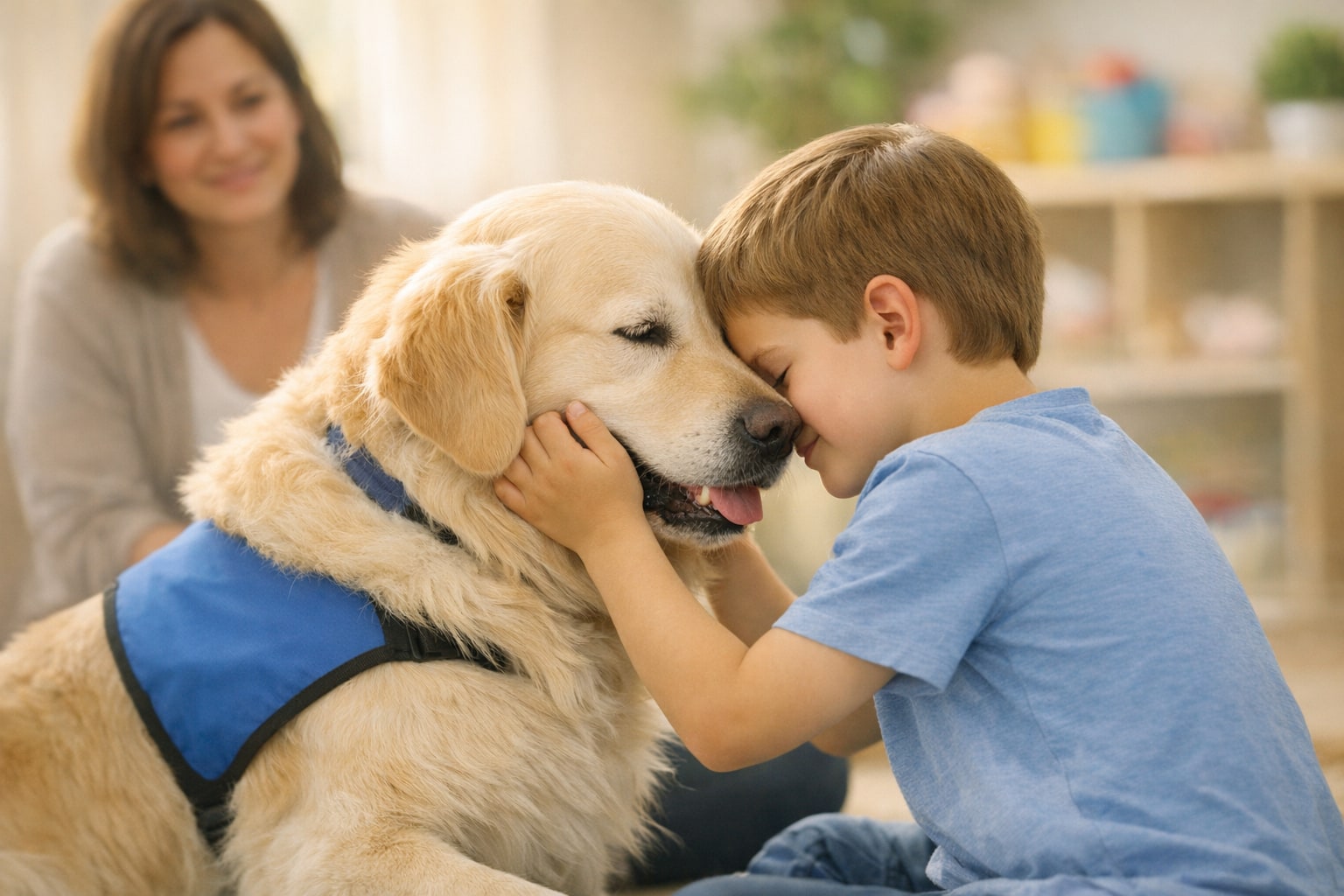
There’s a certain kind of truth you learn from working dogs and living close to them. A good dog reads the world in ways people often miss. He notices the change in breathing, the tight set of shoulders, the restless hands, the shift in mood before a storm ever breaks. That kind of quiet awareness is one reason therapy dogs have become such meaningful companions for children with autism. When the match is right and the work is done with patience, a therapy dog can offer more than comfort. He can become a steadying presence in a world that sometimes feels too loud, too fast, and too unpredictable.
Families looking into therapy dogs for children with autism are often searching for practical answers mixed with a little hope. They want to know whether a dog can help with anxiety, social connection, emotional regulation, or everyday routines. They also want the honest version, not just the shiny brochure picture. The truth is that therapy dogs are not a cure, and they are not one-size-fits-all. But in the right home, with the right child and the right dog, they can be a powerful source of support.
What Is a Therapy Dog for a Child with Autism?
A therapy dog is trained to provide comfort, emotional support, and calm in structured settings or during guided interactions. That’s different from a service dog, which is specially trained to perform tasks directly related to a person’s disability. It’s also different from a companion dog, whose primary role is friendship and everyday comfort without formal therapy work credentials. For children with autism, a therapy dog may be part of a school program, a counseling practice, a clinic, or sometimes a broader support plan developed with family and professionals.
That distinction matters. Plenty of families use the term loosely, and you’ll hear stories about a dog helping a child sleep better, tolerate transitions, or feel safer in public. Those benefits are real, but the label matters because training, legal access, and expectations differ. If your goal is emotional support and structured therapeutic interaction, a therapy dog may be the right fit. If your child needs a dog trained for specific disability-related tasks, then a service dog may be the better road to follow.
How Therapy Dogs May Help Children with Autism
Children on the autism spectrum experience the world in highly individual ways, so the benefits of a therapy dog can look different from one child to the next. Still, some patterns come up again and again. A calm, well-trained dog can reduce stress simply by being present. The repetitive act of petting a dog, feeling warm fur under the hand, or leaning against a steady body can help some children regulate their nervous systems. In moments when words are hard to find, a dog can bridge the silence without demanding anything in return.
I’ve seen dogs work the way a seasoned trail horse works with a nervous rider. They don’t push. They don’t lecture. They just hold steady until the child starts finding their footing. For some children with autism, that can mean easier transitions between activities, fewer signs of distress in unfamiliar settings, or more willingness to engage with a therapist, teacher, or peer. A dog can become the safe middle ground in an interaction that once felt too direct.
Emotional Regulation and Anxiety Support
Many children with autism struggle with anxiety, sensory overload, or emotional dysregulation. A therapy dog may help lower arousal during stressful moments. The dog’s presence can create a sense of routine and predictability, which is often comforting. Some children feel less alone when a dog is nearby during medical visits, therapy sessions, or challenging school days. Others respond to the dog’s body language and calm demeanor, using that steady energy as an anchor.
This doesn’t mean every difficult moment disappears. It means a child may have another tool for working through those moments. That can be invaluable for families who’ve spent years trying to build reliable coping strategies.
Social Skills and Communication
Dogs can also open doors socially. A child who struggles with eye contact or verbal communication may find it easier to interact through the dog first. Talking to the dog, giving a simple command, brushing his coat, or tossing a toy can create low-pressure opportunities for communication. In group settings, therapy dogs often draw children together naturally, creating shared attention without forcing direct engagement too quickly.
For some children, the dog becomes a conversation starter. For others, the dog helps build confidence by offering immediate, nonjudgmental feedback. A dog doesn’t care if a sentence comes out awkwardly. He responds to tone, intent, and connection. That simple fact can take a lot of weight off a child’s shoulders.
Choosing the Right Dog Matters More Than Breed Hype
When families start researching therapy dogs for autism, they often get pulled into breed lists. Labrador Retrievers, Golden Retrievers, Poodles, and mixes with steady temperaments are common recommendations for good reason. They’re often trainable, people-focused, and adaptable. But breed alone won’t tell you whether a dog is suitable. Temperament is the heart of the matter.
A strong therapy prospect should be calm, resilient, gentle, and comfortable with touch, sound, and changing environments. He should recover well from surprises and show no sign of fear or aggression. A dog working around children with autism may encounter sudden movements, vocalizations, or repetitive behaviors, so emotional stability is non-negotiable. The best therapy dogs aren’t always the flashiest. More often, they’re the ones with level heads and generous patience.
Age matters too. While some families dream of raising a puppy, puppies are a long game. They need months of socialization, structure, and training before anyone can predict with confidence whether they’re truly suited for therapy work. An older dog with a proven temperament can sometimes be the wiser choice.
Training and Preparation for Therapy Work
A therapy dog should never be picked on good intentions alone. Proper training lays the groundwork for safety and success. At a minimum, the dog should have solid obedience, reliable manners in public and around children, and the ability to remain composed in busy settings. Therapy certification requirements vary by organization, but the spirit stays the same: the dog must be stable, predictable, and under control.
For children with autism, training should also include thoughtful exposure to the kinds of behaviors and environments the dog will encounter. That might mean practicing around mobility aids, noisy hallways, sudden laughter, flapping hands, or close physical contact. The goal is not to make a dog tolerate too much. It is to see clearly what he can handle comfortably and where his limits are. A good handler respects those limits.
The Child-Dog Match Is Just as ImportantEven a wonderful therapy dog may not be the right match for every child. Some children are afraid of dogs. Others may find barking, licking, shedding, or movement overwhelming. Some may want constant contact while the dog needs more space. A successful pairing depends on the needs of the child, the temperament of the dog, and the skill of the adults managing the relationship.
That’s why gradual introductions are so important. Families should give the child time to observe, approach, and interact at their own pace. Trust is built in layers. You don’t rush it any more than you rush a young dog into hard field work before he’s ready. Slow, steady exposure tends to produce better, safer results.
What Families Should Consider Before Bringing a Therapy Dog Home
A therapy dog can be a blessing, but he is still a dog. He needs exercise, grooming, veterinary care, rest, and daily structure. Families already carrying heavy care responsibilities should take an honest look at whether they can meet those needs consistently. It’s better to ask hard questions early than to force a dog into a home that isn’t prepared.
It also helps to think through the child’s specific goals. Are you hoping the dog will support calmer mornings, reduce anxiety during appointments, encourage communication, or improve social engagement? Clear goals help families choose the right kind of support, whether that means a therapy dog, a service dog, or a well-matched companion dog. Sometimes the best answer is not the most formal one. A calm household dog with the right temperament can still change a child’s life in meaningful ways.
Professional guidance is worth its weight in gold. Pediatric therapists, autism specialists, experienced trainers, and reputable therapy dog organizations can help families make informed decisions. The right team will tell you both the possibilities and the limitations.
Realistic Expectations Lead to Better Outcomes
There’s no shortage of heart-tugging stories online, and some of them are true as sunrise. A child who rarely spoke begins talking to the dog. A difficult bedtime becomes gentler. A trip to the clinic goes smoother than it ever has before. Those moments matter. But progress often comes in smaller steps than people expect. Maybe the child tolerates a new environment for ten extra minutes. Maybe they practice touch in a calmer way. Maybe they laugh more. Maybe they simply feel less alone.
That’s still real progress. In my experience, the strongest dog-child relationships are built not on miracles but on repetition, trust, and quiet consistency. Day by day, the dog shows up the same way. For many children with autism, that kind of dependable presence is deeply valuable.
Therapy Dogs, Service Dogs, and Companion Dogs: Knowing the Difference
Because this subject can get muddy fast, it’s worth saying plainly: therapy dogs provide comfort and emotional support in structured settings, service dogs are task-trained for disability-related assistance, and companion dogs offer everyday friendship and emotional benefit without specialized public-access work. Families often begin looking for one and realize another is actually the better fit.
If your child needs help with a specific task pattern, public access support, or trained interruption of certain behaviors, a service dog program may be worth exploring. If your main goal is emotional support, therapeutic engagement, and a calming presence, a therapy dog may make more sense. If your family wants the bond and comfort of a dog without formal work requirements, a companion dog could be the right road. The right answer depends on the child, not on the trend.
Final Thoughts on Therapy Dogs for Children with Autism
Out in the field, you learn that trust can’t be forced. It’s earned through steadiness, timing, and respect. The same is true here. A therapy dog for a child with autism is not a quick fix or a decorative title. He is a living partner in the work of comfort, connection, and emotional safety. When chosen carefully and supported properly, that partnership can become something remarkable.
For families exploring this path, the best approach is a grounded one. Learn the differences between therapy dogs, service dogs, and companion dogs. Focus on temperament over trends. Work with professionals who know the terrain. And remember that the strongest results often come from simple, consistent moments: a hand resting on a warm shoulder, a calmer breath, a child who feels understood without needing to explain a thing.
Families looking into therapy dogs for children with autism are often searching for practical answers mixed with a little hope. They want to know whether a dog can help with anxiety, social connection, emotional regulation, or everyday routines. They also want the honest version, not just the shiny brochure picture. The truth is that therapy dogs are not a cure, and they are not one-size-fits-all. But in the right home, with the right child and the right dog, they can be a powerful source of support.
What Is a Therapy Dog for a Child with Autism?
A therapy dog is trained to provide comfort, emotional support, and calm in structured settings or during guided interactions. That’s different from a service dog, which is specially trained to perform tasks directly related to a person’s disability. It’s also different from a companion dog, whose primary role is friendship and everyday comfort without formal therapy work credentials. For children with autism, a therapy dog may be part of a school program, a counseling practice, a clinic, or sometimes a broader support plan developed with family and professionals.
That distinction matters. Plenty of families use the term loosely, and you’ll hear stories about a dog helping a child sleep better, tolerate transitions, or feel safer in public. Those benefits are real, but the label matters because training, legal access, and expectations differ. If your goal is emotional support and structured therapeutic interaction, a therapy dog may be the right fit. If your child needs a dog trained for specific disability-related tasks, then a service dog may be the better road to follow.
How Therapy Dogs May Help Children with Autism
Children on the autism spectrum experience the world in highly individual ways, so the benefits of a therapy dog can look different from one child to the next. Still, some patterns come up again and again. A calm, well-trained dog can reduce stress simply by being present. The repetitive act of petting a dog, feeling warm fur under the hand, or leaning against a steady body can help some children regulate their nervous systems. In moments when words are hard to find, a dog can bridge the silence without demanding anything in return.
I’ve seen dogs work the way a seasoned trail horse works with a nervous rider. They don’t push. They don’t lecture. They just hold steady until the child starts finding their footing. For some children with autism, that can mean easier transitions between activities, fewer signs of distress in unfamiliar settings, or more willingness to engage with a therapist, teacher, or peer. A dog can become the safe middle ground in an interaction that once felt too direct.
Emotional Regulation and Anxiety Support
Many children with autism struggle with anxiety, sensory overload, or emotional dysregulation. A therapy dog may help lower arousal during stressful moments. The dog’s presence can create a sense of routine and predictability, which is often comforting. Some children feel less alone when a dog is nearby during medical visits, therapy sessions, or challenging school days. Others respond to the dog’s body language and calm demeanor, using that steady energy as an anchor.
This doesn’t mean every difficult moment disappears. It means a child may have another tool for working through those moments. That can be invaluable for families who’ve spent years trying to build reliable coping strategies.
Social Skills and Communication
Dogs can also open doors socially. A child who struggles with eye contact or verbal communication may find it easier to interact through the dog first. Talking to the dog, giving a simple command, brushing his coat, or tossing a toy can create low-pressure opportunities for communication. In group settings, therapy dogs often draw children together naturally, creating shared attention without forcing direct engagement too quickly.
For some children, the dog becomes a conversation starter. For others, the dog helps build confidence by offering immediate, nonjudgmental feedback. A dog doesn’t care if a sentence comes out awkwardly. He responds to tone, intent, and connection. That simple fact can take a lot of weight off a child’s shoulders.
Choosing the Right Dog Matters More Than Breed Hype
When families start researching therapy dogs for autism, they often get pulled into breed lists. Labrador Retrievers, Golden Retrievers, Poodles, and mixes with steady temperaments are common recommendations for good reason. They’re often trainable, people-focused, and adaptable. But breed alone won’t tell you whether a dog is suitable. Temperament is the heart of the matter.
A strong therapy prospect should be calm, resilient, gentle, and comfortable with touch, sound, and changing environments. He should recover well from surprises and show no sign of fear or aggression. A dog working around children with autism may encounter sudden movements, vocalizations, or repetitive behaviors, so emotional stability is non-negotiable. The best therapy dogs aren’t always the flashiest. More often, they’re the ones with level heads and generous patience.
Age matters too. While some families dream of raising a puppy, puppies are a long game. They need months of socialization, structure, and training before anyone can predict with confidence whether they’re truly suited for therapy work. An older dog with a proven temperament can sometimes be the wiser choice.
Training and Preparation for Therapy Work
A therapy dog should never be picked on good intentions alone. Proper training lays the groundwork for safety and success. At a minimum, the dog should have solid obedience, reliable manners in public and around children, and the ability to remain composed in busy settings. Therapy certification requirements vary by organization, but the spirit stays the same: the dog must be stable, predictable, and under control.
For children with autism, training should also include thoughtful exposure to the kinds of behaviors and environments the dog will encounter. That might mean practicing around mobility aids, noisy hallways, sudden laughter, flapping hands, or close physical contact. The goal is not to make a dog tolerate too much. It is to see clearly what he can handle comfortably and where his limits are. A good handler respects those limits.
The Child-Dog Match Is Just as ImportantEven a wonderful therapy dog may not be the right match for every child. Some children are afraid of dogs. Others may find barking, licking, shedding, or movement overwhelming. Some may want constant contact while the dog needs more space. A successful pairing depends on the needs of the child, the temperament of the dog, and the skill of the adults managing the relationship.
That’s why gradual introductions are so important. Families should give the child time to observe, approach, and interact at their own pace. Trust is built in layers. You don’t rush it any more than you rush a young dog into hard field work before he’s ready. Slow, steady exposure tends to produce better, safer results.
What Families Should Consider Before Bringing a Therapy Dog Home
A therapy dog can be a blessing, but he is still a dog. He needs exercise, grooming, veterinary care, rest, and daily structure. Families already carrying heavy care responsibilities should take an honest look at whether they can meet those needs consistently. It’s better to ask hard questions early than to force a dog into a home that isn’t prepared.
It also helps to think through the child’s specific goals. Are you hoping the dog will support calmer mornings, reduce anxiety during appointments, encourage communication, or improve social engagement? Clear goals help families choose the right kind of support, whether that means a therapy dog, a service dog, or a well-matched companion dog. Sometimes the best answer is not the most formal one. A calm household dog with the right temperament can still change a child’s life in meaningful ways.
Professional guidance is worth its weight in gold. Pediatric therapists, autism specialists, experienced trainers, and reputable therapy dog organizations can help families make informed decisions. The right team will tell you both the possibilities and the limitations.
Realistic Expectations Lead to Better Outcomes
There’s no shortage of heart-tugging stories online, and some of them are true as sunrise. A child who rarely spoke begins talking to the dog. A difficult bedtime becomes gentler. A trip to the clinic goes smoother than it ever has before. Those moments matter. But progress often comes in smaller steps than people expect. Maybe the child tolerates a new environment for ten extra minutes. Maybe they practice touch in a calmer way. Maybe they laugh more. Maybe they simply feel less alone.
That’s still real progress. In my experience, the strongest dog-child relationships are built not on miracles but on repetition, trust, and quiet consistency. Day by day, the dog shows up the same way. For many children with autism, that kind of dependable presence is deeply valuable.
Therapy Dogs, Service Dogs, and Companion Dogs: Knowing the Difference
Because this subject can get muddy fast, it’s worth saying plainly: therapy dogs provide comfort and emotional support in structured settings, service dogs are task-trained for disability-related assistance, and companion dogs offer everyday friendship and emotional benefit without specialized public-access work. Families often begin looking for one and realize another is actually the better fit.
If your child needs help with a specific task pattern, public access support, or trained interruption of certain behaviors, a service dog program may be worth exploring. If your main goal is emotional support, therapeutic engagement, and a calming presence, a therapy dog may make more sense. If your family wants the bond and comfort of a dog without formal work requirements, a companion dog could be the right road. The right answer depends on the child, not on the trend.
Final Thoughts on Therapy Dogs for Children with Autism
Out in the field, you learn that trust can’t be forced. It’s earned through steadiness, timing, and respect. The same is true here. A therapy dog for a child with autism is not a quick fix or a decorative title. He is a living partner in the work of comfort, connection, and emotional safety. When chosen carefully and supported properly, that partnership can become something remarkable.
For families exploring this path, the best approach is a grounded one. Learn the differences between therapy dogs, service dogs, and companion dogs. Focus on temperament over trends. Work with professionals who know the terrain. And remember that the strongest results often come from simple, consistent moments: a hand resting on a warm shoulder, a calmer breath, a child who feels understood without needing to explain a thing.



View all 0 comments