
Therapy Dog Etiquette in Public Settings
How Calm Manners Build Trust
Jeff Davis | https://companiondogcentral.com
 0
0 0
0 0
0 0
0 0
0
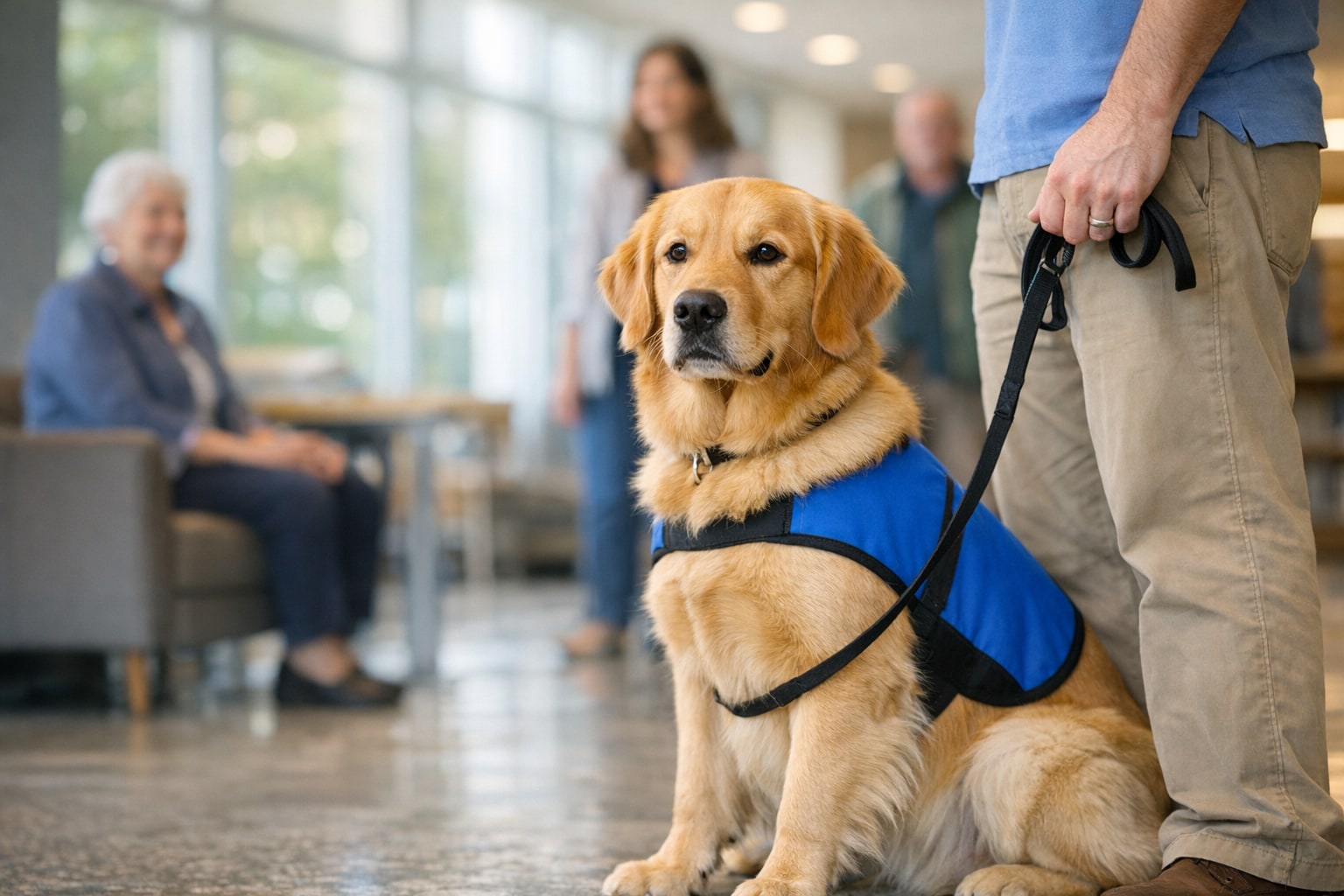
A good therapy dog can change the whole feel of a room. I have seen it happen in hospital hallways, in school libraries, out on community event grounds, and in waiting areas where nerves were stretched tight as fence wire. A steady dog steps in, leans gently into a hand, and the atmosphere softens. But that kind of work does not happen by accident. Therapy dog etiquette in public settings is what keeps those moments safe, welcome, and meaningful for everyone involved.
Folks often lump therapy dogs, service dogs, and companion dogs into one pile, but they each have their own role. A therapy dog is invited into settings to provide comfort and emotional support to other people, usually through a structured program, volunteer work, or approved visits. That means public manners matter in a big way. The dog is not there just to be admired. The dog is part of a purpose, and etiquette is what allows that purpose to be carried out with grace.
From the handler’s side, proper conduct means reading the room, reading the dog, and keeping your head on a swivel. From the dog’s side, it means calm behavior, reliable obedience, and the ability to move through busy, unpredictable environments without causing disruption. It reminds me of walking a young hunting dog through a patch of cover full of birds. Excitement may be in the air, but discipline is what gets the job done. Therapy dogs need that same kind of composure, only their field happens to be hospitals, nursing homes, schools, airports, and community gatherings.
Understanding the Role of a Therapy Dog
Before anyone can talk honestly about therapy dog etiquette, they need to understand the job. Therapy dogs are not pets tagging along for errands, and they are not service dogs performing trained tasks for a disabled handler. Their work is centered on providing comfort, connection, and emotional ease to others. Because of that, a therapy dog’s presence should never add stress, noise, confusion, or risk to a public setting.
That starts with preparation. A therapy dog should be clean, well-groomed, healthy, and emotionally ready for the outing. The handler should have control of the leash at all times and should be able to redirect the dog quickly if needed. Public therapy work is not the place to hope your dog will behave. You need to know it, the same way an old woodsman knows whether his boots will hold in wet ground before he steps into the marsh.
Why Etiquette Matters So Much
Etiquette is not about appearances alone. It protects vulnerable people, preserves access for therapy programs, and keeps the dog from being pushed past its limits. In many public settings, the people a therapy dog visits may be elderly, ill, anxious, grieving, or overwhelmed. A dog that jumps, barks, lunges, begs for food, or invades personal space can turn a comforting moment into an unsettling one in a hurry.
Good etiquette also shapes public perception. When people see a therapy dog lying quietly beside a chair, waiting patiently to be invited forward, they see professionalism and trustworthiness. When they see a handler allowing rough greetings, crowding hallways, or ignoring signs of stress in the dog, confidence erodes. One careless encounter can leave a lasting impression, and not the kind you want.
How a Therapy Dog Should Behave in Public
A therapy dog in public should be calm, responsive, and unobtrusive. That does not mean stiff or joyless. In fact, the best therapy dogs often have a warm spark to them. They enjoy people, but they are not driven wild by every voice, smell, or movement. Their energy is balanced. They can greet kindly without overwhelming, and they can settle quickly when the interaction is over.
Loose-leash walking is one of the clearest signs of good public manners. A dog that drags the handler from one person to the next is not ready for therapy work in crowded settings. The dog should pause when asked, lie down when needed, and ignore distractions such as food carts, wheelchairs, dropped items, children darting past, or another dog across the room. The goal is not perfection in a vacuum. The goal is steadiness in the real world.
Another important piece is consent. A therapy dog should not rush toward people or assume every stranger wants contact. The handler should ask before allowing interaction, especially in places where a person may be physically fragile, fearful of dogs, or simply not interested. A respectful approach keeps the experience centered on the needs of the other person, not the popularity of the dog.
Greeting Strangers the Right Way
There is a right rhythm to a therapy dog greeting. The dog approaches with the handler’s guidance, not as a free-for-all. The leash stays short enough for control but loose enough to avoid tension. The dog is positioned so the person can interact comfortably, whether that means beside a wheelchair, near a bedside, or seated quietly at someone’s feet. If the dog senses hesitation or the person seems unsure, the handler should ease back and let the moment breathe.
I have always believed that a dog with a good nose can read human feeling better than most folks give credit for. Still, instinct is not enough. Handlers need to lead. Some people want to pet a dog’s shoulders. Some want the dog’s head in their lap. Some simply want to look and smile. Therapy dog etiquette means honoring all of those responses without pressure.
The Handler’s Etiquette Matters Just as Much
People sometimes focus so much on the dog that they forget the handler is the one steering the whole exchange. In public settings, the handler should be polite, observant, and quick to advocate for the dog. If the space is crowded, the handler should avoid blocking doorways, hallways, checkout lines, or seating areas. If someone reaches too quickly or behaves roughly, the handler should step in calmly and redirect the interaction.
The best handlers know when to say no. That may sound plain, but it is one of the hardest lessons. Not every environment is right for every therapy dog, and not every person knows how to approach a dog respectfully. If the dog is tired, overstimulated, or showing subtle signs of discomfort, the handler must end the interaction before trouble starts. That kind of judgment is the mark of experience.
Reading Stress Signals Before They EscalatePublic etiquette includes protecting the dog from burnout. A therapy dog may show stress through lip licking, yawning, turning away, pinned ears, pacing, panting when the room is cool, refusing treats, or suddenly losing interest in social contact. Those signs can be quiet as snowfall, but they matter. Ignore them long enough, and even a gentle dog can become shut down or reactive.
When I watch a working dog, I pay attention the same way I would in the field when weather changes and the birds go silent. Small shifts tell a bigger story. A good handler notices those changes early and gives the dog a break, a drink of water, or an exit from the situation. There is no shame in leaving. Pushing a tired therapy dog to keep performing is poor etiquette and poor stewardship.
Special Considerations in Busy Public Spaces
Some public settings are more demanding than others. Schools may be noisy and full of fast movement. Hospitals may involve medical equipment, sharp smells, and people in pain. Community events often bring crowds, uneven footing, food on the ground, and endless attempts from strangers to call the dog over. Each environment asks something a little different from the dog and the handler.
In these places, therapy dog etiquette means keeping sessions structured. The dog should have a clear path to walk, a known place to settle, and regular breaks away from the commotion. The handler should watch for hazards, avoid tangled leashes, and prevent the dog from being surrounded too tightly. It is far better to have a few quality interactions than a long string of chaotic ones.
Children deserve special mention. Many children are wonderful with therapy dogs, but excitement can run ahead of manners. The handler may need to demonstrate how to pet gently, ask the child to approach slowly, or keep the dog in a sit or down to make the interaction more predictable. A therapy dog should never be treated like a stuffed toy, no matter how patient it seems.
Respecting the Difference Between Therapy Dogs and Service Dogs
One point of public etiquette that often gets overlooked is clear communication about what kind of dog you have. Therapy dogs and service dogs serve different purposes, and blurring those lines causes confusion. If you are handling a therapy dog, represent the dog honestly. Do not suggest the dog has service dog access rights if it does not. That hurts legitimate service dog teams and undermines trust in working dogs as a whole.
Respect goes both ways. When you are out with a therapy dog, give service dog teams space. Do not allow your dog to approach, stare, or interfere. A service dog may be actively working to guide, alert, brace, or respond to a medical need. Good therapy dog etiquette includes recognizing that another dog’s job may require far more distance and focus than your own visit does.
Building Good Manners Before the Public Visit
Most etiquette problems in public start at home or in training. A therapy dog needs more than friendliness. The dog needs repetition in real-life scenarios, with calm reinforcement and clear expectations. Practice should include waiting at doors, settling on cue, ignoring dropped food, accepting unusual sounds, and greeting politely without jumping. The dog should be exposed gradually to wheelchairs, walkers, elevators, slick floors, and crowds if those things will be part of the work.
Temperament matters every bit as much as training. Not every sweet dog enjoys the pressure of public therapy visits, and that is all right. A dog that prefers a quiet household may make a wonderful companion dog without being suited for formal therapy work. Matching the dog to the task is part of ethical handling. You cannot force steadiness into a dog that is telling you plainly it would rather be elsewhere.
Final Thoughts on Therapy Dog Etiquette in Public Settings
At the end of the day, therapy dog etiquette in public settings comes down to respect. Respect for the dog, respect for the people being visited, and respect for the spaces you enter. A therapy dog should leave behind comfort, not commotion. The handler should leave behind confidence, not concern. When both dog and human move through public life with patience and steady manners, they do real good.
I have spent enough years around dogs to know that reliable behavior is never an accident. It is built one outing, one correction, one quiet success at a time. The finest therapy dogs are not just friendly animals. They are steady partners with a job to do, and their etiquette is what makes that work possible. If you are raising, training, or simply learning about therapy dogs, remember this: calm manners open doors. In public settings, they also open hearts.
Folks often lump therapy dogs, service dogs, and companion dogs into one pile, but they each have their own role. A therapy dog is invited into settings to provide comfort and emotional support to other people, usually through a structured program, volunteer work, or approved visits. That means public manners matter in a big way. The dog is not there just to be admired. The dog is part of a purpose, and etiquette is what allows that purpose to be carried out with grace.
From the handler’s side, proper conduct means reading the room, reading the dog, and keeping your head on a swivel. From the dog’s side, it means calm behavior, reliable obedience, and the ability to move through busy, unpredictable environments without causing disruption. It reminds me of walking a young hunting dog through a patch of cover full of birds. Excitement may be in the air, but discipline is what gets the job done. Therapy dogs need that same kind of composure, only their field happens to be hospitals, nursing homes, schools, airports, and community gatherings.
Understanding the Role of a Therapy Dog
Before anyone can talk honestly about therapy dog etiquette, they need to understand the job. Therapy dogs are not pets tagging along for errands, and they are not service dogs performing trained tasks for a disabled handler. Their work is centered on providing comfort, connection, and emotional ease to others. Because of that, a therapy dog’s presence should never add stress, noise, confusion, or risk to a public setting.
That starts with preparation. A therapy dog should be clean, well-groomed, healthy, and emotionally ready for the outing. The handler should have control of the leash at all times and should be able to redirect the dog quickly if needed. Public therapy work is not the place to hope your dog will behave. You need to know it, the same way an old woodsman knows whether his boots will hold in wet ground before he steps into the marsh.
Why Etiquette Matters So Much
Etiquette is not about appearances alone. It protects vulnerable people, preserves access for therapy programs, and keeps the dog from being pushed past its limits. In many public settings, the people a therapy dog visits may be elderly, ill, anxious, grieving, or overwhelmed. A dog that jumps, barks, lunges, begs for food, or invades personal space can turn a comforting moment into an unsettling one in a hurry.
Good etiquette also shapes public perception. When people see a therapy dog lying quietly beside a chair, waiting patiently to be invited forward, they see professionalism and trustworthiness. When they see a handler allowing rough greetings, crowding hallways, or ignoring signs of stress in the dog, confidence erodes. One careless encounter can leave a lasting impression, and not the kind you want.
How a Therapy Dog Should Behave in Public
A therapy dog in public should be calm, responsive, and unobtrusive. That does not mean stiff or joyless. In fact, the best therapy dogs often have a warm spark to them. They enjoy people, but they are not driven wild by every voice, smell, or movement. Their energy is balanced. They can greet kindly without overwhelming, and they can settle quickly when the interaction is over.
Loose-leash walking is one of the clearest signs of good public manners. A dog that drags the handler from one person to the next is not ready for therapy work in crowded settings. The dog should pause when asked, lie down when needed, and ignore distractions such as food carts, wheelchairs, dropped items, children darting past, or another dog across the room. The goal is not perfection in a vacuum. The goal is steadiness in the real world.
Another important piece is consent. A therapy dog should not rush toward people or assume every stranger wants contact. The handler should ask before allowing interaction, especially in places where a person may be physically fragile, fearful of dogs, or simply not interested. A respectful approach keeps the experience centered on the needs of the other person, not the popularity of the dog.
Greeting Strangers the Right Way
There is a right rhythm to a therapy dog greeting. The dog approaches with the handler’s guidance, not as a free-for-all. The leash stays short enough for control but loose enough to avoid tension. The dog is positioned so the person can interact comfortably, whether that means beside a wheelchair, near a bedside, or seated quietly at someone’s feet. If the dog senses hesitation or the person seems unsure, the handler should ease back and let the moment breathe.
I have always believed that a dog with a good nose can read human feeling better than most folks give credit for. Still, instinct is not enough. Handlers need to lead. Some people want to pet a dog’s shoulders. Some want the dog’s head in their lap. Some simply want to look and smile. Therapy dog etiquette means honoring all of those responses without pressure.
The Handler’s Etiquette Matters Just as Much
People sometimes focus so much on the dog that they forget the handler is the one steering the whole exchange. In public settings, the handler should be polite, observant, and quick to advocate for the dog. If the space is crowded, the handler should avoid blocking doorways, hallways, checkout lines, or seating areas. If someone reaches too quickly or behaves roughly, the handler should step in calmly and redirect the interaction.
The best handlers know when to say no. That may sound plain, but it is one of the hardest lessons. Not every environment is right for every therapy dog, and not every person knows how to approach a dog respectfully. If the dog is tired, overstimulated, or showing subtle signs of discomfort, the handler must end the interaction before trouble starts. That kind of judgment is the mark of experience.
Reading Stress Signals Before They EscalatePublic etiquette includes protecting the dog from burnout. A therapy dog may show stress through lip licking, yawning, turning away, pinned ears, pacing, panting when the room is cool, refusing treats, or suddenly losing interest in social contact. Those signs can be quiet as snowfall, but they matter. Ignore them long enough, and even a gentle dog can become shut down or reactive.
When I watch a working dog, I pay attention the same way I would in the field when weather changes and the birds go silent. Small shifts tell a bigger story. A good handler notices those changes early and gives the dog a break, a drink of water, or an exit from the situation. There is no shame in leaving. Pushing a tired therapy dog to keep performing is poor etiquette and poor stewardship.
Special Considerations in Busy Public Spaces
Some public settings are more demanding than others. Schools may be noisy and full of fast movement. Hospitals may involve medical equipment, sharp smells, and people in pain. Community events often bring crowds, uneven footing, food on the ground, and endless attempts from strangers to call the dog over. Each environment asks something a little different from the dog and the handler.
In these places, therapy dog etiquette means keeping sessions structured. The dog should have a clear path to walk, a known place to settle, and regular breaks away from the commotion. The handler should watch for hazards, avoid tangled leashes, and prevent the dog from being surrounded too tightly. It is far better to have a few quality interactions than a long string of chaotic ones.
Children deserve special mention. Many children are wonderful with therapy dogs, but excitement can run ahead of manners. The handler may need to demonstrate how to pet gently, ask the child to approach slowly, or keep the dog in a sit or down to make the interaction more predictable. A therapy dog should never be treated like a stuffed toy, no matter how patient it seems.
Respecting the Difference Between Therapy Dogs and Service Dogs
One point of public etiquette that often gets overlooked is clear communication about what kind of dog you have. Therapy dogs and service dogs serve different purposes, and blurring those lines causes confusion. If you are handling a therapy dog, represent the dog honestly. Do not suggest the dog has service dog access rights if it does not. That hurts legitimate service dog teams and undermines trust in working dogs as a whole.
Respect goes both ways. When you are out with a therapy dog, give service dog teams space. Do not allow your dog to approach, stare, or interfere. A service dog may be actively working to guide, alert, brace, or respond to a medical need. Good therapy dog etiquette includes recognizing that another dog’s job may require far more distance and focus than your own visit does.
Building Good Manners Before the Public Visit
Most etiquette problems in public start at home or in training. A therapy dog needs more than friendliness. The dog needs repetition in real-life scenarios, with calm reinforcement and clear expectations. Practice should include waiting at doors, settling on cue, ignoring dropped food, accepting unusual sounds, and greeting politely without jumping. The dog should be exposed gradually to wheelchairs, walkers, elevators, slick floors, and crowds if those things will be part of the work.
Temperament matters every bit as much as training. Not every sweet dog enjoys the pressure of public therapy visits, and that is all right. A dog that prefers a quiet household may make a wonderful companion dog without being suited for formal therapy work. Matching the dog to the task is part of ethical handling. You cannot force steadiness into a dog that is telling you plainly it would rather be elsewhere.
Final Thoughts on Therapy Dog Etiquette in Public Settings
At the end of the day, therapy dog etiquette in public settings comes down to respect. Respect for the dog, respect for the people being visited, and respect for the spaces you enter. A therapy dog should leave behind comfort, not commotion. The handler should leave behind confidence, not concern. When both dog and human move through public life with patience and steady manners, they do real good.
I have spent enough years around dogs to know that reliable behavior is never an accident. It is built one outing, one correction, one quiet success at a time. The finest therapy dogs are not just friendly animals. They are steady partners with a job to do, and their etiquette is what makes that work possible. If you are raising, training, or simply learning about therapy dogs, remember this: calm manners open doors. In public settings, they also open hearts.



View all 0 comments