
Service Dogs for Vision Impairment
Steady Partners for Safer, Fuller Living
Jeff Davis | https://companiondogcentral.com
 0
0 0
0 0
0 0
0 0
0
There is a certain kind of trust a person puts in a good dog, and if you have spent enough years around working animals, you come to respect that bond in your bones. I have seen dogs read a road better than some folks read a map, and when it comes to service dogs for vision impairment, that kind of steady judgment can change a life. These dogs are not simply pets with a vest on. They are trained working partners that help people who are blind or visually impaired move through the world with greater safety, confidence, and independence.
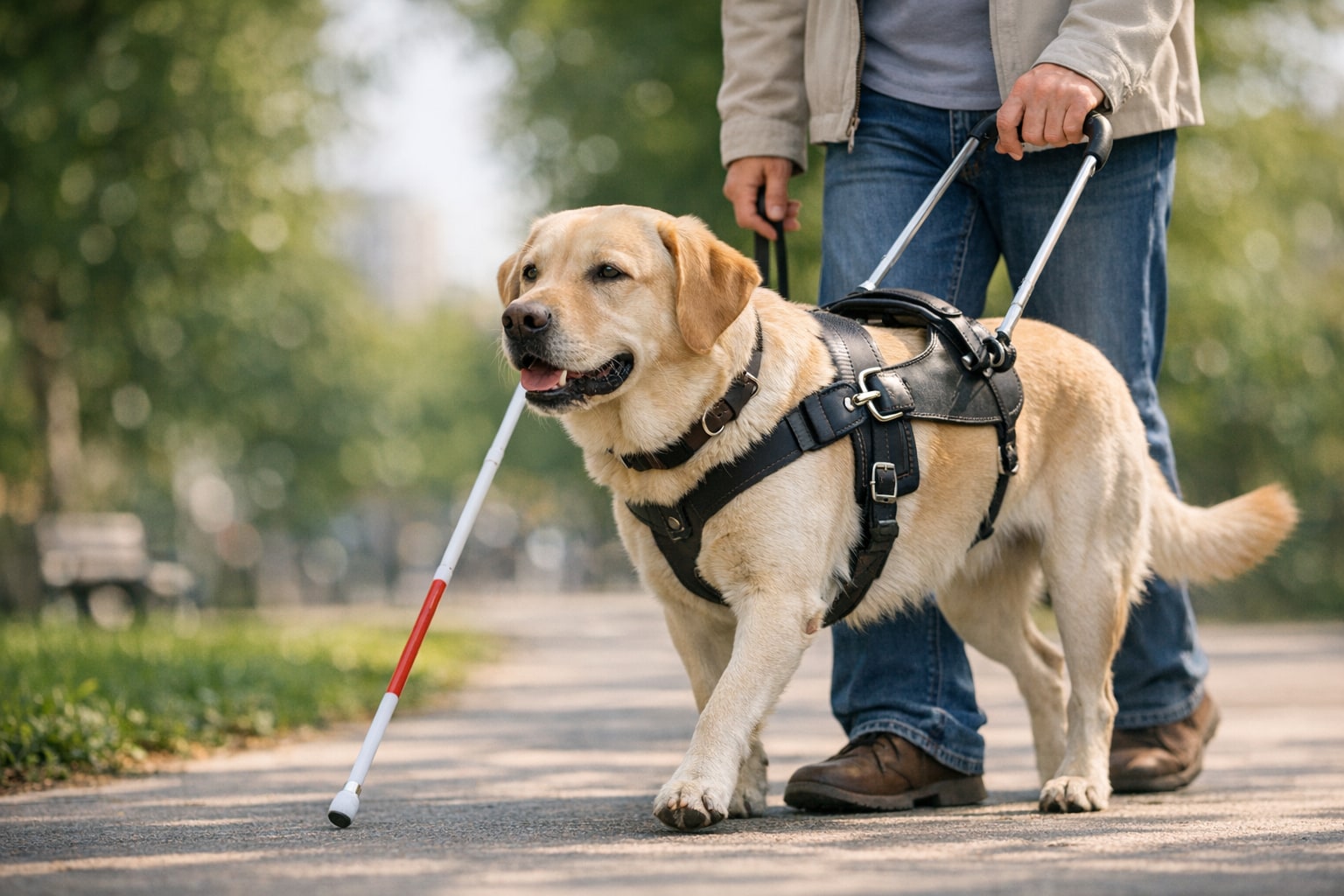
For many people, the first image that comes to mind is a dog guiding someone down a sidewalk or around a corner. That is certainly part of it, but the real story runs deeper. A well-trained guide dog helps a handler navigate obstacles, judge clear paths, stop at curbs and stairs, and maintain a reliable line of travel. Just as important, the dog offers emotional steadiness in situations that might otherwise feel uncertain or overwhelming. In that sense, these remarkable animals often serve as both practical helpers and faithful companions.
What Service Dogs for Vision Impairment Actually Do
Service dogs for vision impairment, often called guide dogs, are trained to help handlers travel safely in a wide range of environments. In a quiet neighborhood, that may mean avoiding low branches, parked bicycles, uneven pavement, or a delivery truck blocking the usual route. In a busy town center, it may mean threading through crowds, stopping at changes in elevation, and helping the handler maintain direction amid noise and distraction.
One of the finest things about a guide dog is that it is taught to think while it works. Folks unfamiliar with these dogs sometimes believe they simply follow commands like a machine. That is not how it works. A handler gives direction, but the dog must sometimes refuse that instruction if following it would be unsafe. This is known as intelligent disobedience, and it is one of the most important skills a guide dog can have. If a car is turning through a crosswalk or a hazard lies ahead, the dog has to make the right call in the moment.
That kind of judgment is not common, and it does not come cheap in terms of time, effort, or training. It is built over months of careful socialization, obedience work, exposure to traffic, and route practice in all sorts of real-life settings. A guide dog must remain calm under pressure, attentive without being nervous, and responsive without becoming dependent on constant correction.
The Qualities That Make a Great Guide Dog
Not every dog is suited for this line of work, no matter how smart or sweet it may be. A proper service dog for vision impairment needs a balanced temperament above all else. You want a dog that is confident but not pushy, focused but not brittle, and social without being distractible. In plain terms, the dog must have enough grit to handle a crowded bus station and enough sense to settle quietly under a restaurant table when the work is done.
Breeds commonly used for guide dog work often include Labrador Retrievers, Golden Retrievers, and Labrador-Golden crosses. These dogs tend to have the right mix of trainability, biddability, sound nerves, and physical stamina. That said, breed alone never tells the whole tale. The individual dog matters most. I have known many fine dogs in my life, and a good one always seems to carry itself with a sort of honest purpose. That is especially true in service work.
Temperament Matters More Than Looks
People sometimes ask whether a certain breed looks the part of a service dog. Truth be told, looks do not guide a person safely across a parking lot. Temperament does. The dog must be comfortable around children, traffic noise, shopping carts, elevators, other animals, and the endless surprises of daily life. Skittishness, overexcitement, aggression, or a strong prey drive can all interfere with reliable guide work.
Health is another major factor. Guide dogs need sound hips, elbows, eyes, and overall structure. Since these dogs work physically and mentally every day, they must be healthy enough to do the job comfortably over the long haul. Reputable guide dog programs invest heavily in breeding, screening, and early puppy development for exactly that reason.
How Training Prepares a Dog for Vision Assistance Work
A service dog for vision impairment goes through far more training than the average pet. The process usually begins early, with puppy raisers or structured developmental homes introducing the dog to household routines, public settings, and basic obedience. These early months matter. A pup that learns to stay calm in a grocery store, rest quietly during a meeting, and recover quickly from surprise noises is building the foundation for later work.
Formal guide training often starts when the dog is older and emotionally mature enough to handle the demands. Trainers teach the dog to wear a harness, walk in a straight line, avoid obstacles, stop at curbs, locate doors or seats, and respond accurately to directional cues. Over time, the dog learns how to guide its handler through both familiar routes and changing environments.
What separates great guide work from average obedience is decision-making. The dog is not just following a heel pattern in a controlled field. It is working through moving pieces in the real world, where traffic changes, sidewalks narrow, and people cut across the path without warning. That takes a dog with a clear mind and a trainer with patience, consistency, and deep experience.
Handler Training Is Part of the Equation
There is another side to this partnership that deserves respect: the human must learn too. A guide dog is not a magic answer that removes every difficulty. The handler needs orientation, mobility skills, and training on how to read the dog, care for it, and work as a team. Matching the right dog with the right person is part science, part art, and all important.
When the match is right, it can feel near seamless. The dog learns the handler’s pace, habits, and preferences. The handler learns the dog’s signals, strengths, and rhythm. Over time, that partnership grows into something strong and dependable, the kind of trust built one step at a time.
Daily Life With a Service Dog for Vision Impairment
Living with a guide dog brings both freedom and responsibility. On the one hand, many handlers find they can travel with greater speed and confidence than they could with other mobility tools alone. A guide dog can help make routine trips feel less draining and more natural. On the other hand, this is still a living animal with needs of its own. The dog needs exercise, grooming, veterinary care, downtime, and affection outside of work.
I have always believed that the best working dogs thrive when they know both duty and rest. They need clear expectations, but they also need to feel secure in the home. A service dog is not a machine parked in a corner until needed. It is a partner that shares daily life. That means handlers must be prepared for feeding schedules, bathroom breaks, ongoing reinforcement training, and the ordinary mess and joy that comes with any dog.
Public access is another part of the picture. Under the law in many places, legitimate service dogs are allowed to accompany their handlers in areas where pets are not. Even so, the public does not always understand proper etiquette. People may try to pet, call to, or distract a working dog. That can create unnecessary risk. A guide dog at work should be left alone unless the handler invites interaction.
Costs, Access, and What Future Handlers Should Know
One of the biggest questions people ask is what a service dog for vision impairment costs. The honest answer is that training a guide dog is expensive, often reaching tens of thousands of dollars when breeding, raising, veterinary care, instruction, and placement are all considered. Fortunately, many established guide dog organizations provide dogs at low cost or no direct cost to qualified handlers through donations and nonprofit support.
That does not mean the dog is free in the everyday sense. Handlers still need to budget for food, routine vet care, equipment, and long-term upkeep. They also need to think carefully about lifestyle, mobility goals, home environment, and whether they are ready for the commitment. A guide dog can be life-changing, but it is still a partnership that asks something in return.
It is also worth saying plainly that not every visually impaired person wants or needs a guide dog. Some people prefer other mobility tools, and some may not be in a position to care for a dog properly. The right choice depends on the individual. A good program will evaluate applicants carefully and honestly rather than pushing every person toward placement.
Choosing a Reputable Program
If you are exploring service dogs for vision impairment, take your time and look for organizations with strong standards, transparent training practices, and long-term support for handlers. A reputable program should care about the dog’s welfare as much as the handler’s success. It should provide clear information about eligibility, training methods, matching, follow-up services, and what happens if the partnership does not work out as planned.
Any outfit promising quick certification, instant access rights, or a fully trained guide dog through a shortcut ought to raise suspicion. Good service dog training is careful work. It cannot be rushed without cutting corners that matter. In my experience, whether you are training a bird dog, a stock dog, or a guide dog, shortcuts have a way of showing themselves at the worst possible time.
The Last Word on These Remarkable Dogs
Service dogs for vision impairment represent some of the finest qualities dogs have to offer: loyalty, composure, intelligence, and a willingness to work side by side with people they trust. They help open doors in the literal sense, but they also open up confidence, opportunity, and peace of mind. For someone who is blind or visually impaired, a good guide dog can make the world feel more navigable and less uncertain.
If you are considering one for yourself or simply trying to understand how these dogs serve, remember this: the heart of the matter is partnership. A guide dog is trained to lead, but it also listens. It works, but it also lives as part of a family. And when the match is right, the result is something steady and powerful, like a seasoned dog taking a clean line through rough country and bringing its person safely home.
For many people, the first image that comes to mind is a dog guiding someone down a sidewalk or around a corner. That is certainly part of it, but the real story runs deeper. A well-trained guide dog helps a handler navigate obstacles, judge clear paths, stop at curbs and stairs, and maintain a reliable line of travel. Just as important, the dog offers emotional steadiness in situations that might otherwise feel uncertain or overwhelming. In that sense, these remarkable animals often serve as both practical helpers and faithful companions.
What Service Dogs for Vision Impairment Actually Do
Service dogs for vision impairment, often called guide dogs, are trained to help handlers travel safely in a wide range of environments. In a quiet neighborhood, that may mean avoiding low branches, parked bicycles, uneven pavement, or a delivery truck blocking the usual route. In a busy town center, it may mean threading through crowds, stopping at changes in elevation, and helping the handler maintain direction amid noise and distraction.
One of the finest things about a guide dog is that it is taught to think while it works. Folks unfamiliar with these dogs sometimes believe they simply follow commands like a machine. That is not how it works. A handler gives direction, but the dog must sometimes refuse that instruction if following it would be unsafe. This is known as intelligent disobedience, and it is one of the most important skills a guide dog can have. If a car is turning through a crosswalk or a hazard lies ahead, the dog has to make the right call in the moment.
That kind of judgment is not common, and it does not come cheap in terms of time, effort, or training. It is built over months of careful socialization, obedience work, exposure to traffic, and route practice in all sorts of real-life settings. A guide dog must remain calm under pressure, attentive without being nervous, and responsive without becoming dependent on constant correction.
The Qualities That Make a Great Guide Dog
Not every dog is suited for this line of work, no matter how smart or sweet it may be. A proper service dog for vision impairment needs a balanced temperament above all else. You want a dog that is confident but not pushy, focused but not brittle, and social without being distractible. In plain terms, the dog must have enough grit to handle a crowded bus station and enough sense to settle quietly under a restaurant table when the work is done.
Breeds commonly used for guide dog work often include Labrador Retrievers, Golden Retrievers, and Labrador-Golden crosses. These dogs tend to have the right mix of trainability, biddability, sound nerves, and physical stamina. That said, breed alone never tells the whole tale. The individual dog matters most. I have known many fine dogs in my life, and a good one always seems to carry itself with a sort of honest purpose. That is especially true in service work.
Temperament Matters More Than Looks
People sometimes ask whether a certain breed looks the part of a service dog. Truth be told, looks do not guide a person safely across a parking lot. Temperament does. The dog must be comfortable around children, traffic noise, shopping carts, elevators, other animals, and the endless surprises of daily life. Skittishness, overexcitement, aggression, or a strong prey drive can all interfere with reliable guide work.
Health is another major factor. Guide dogs need sound hips, elbows, eyes, and overall structure. Since these dogs work physically and mentally every day, they must be healthy enough to do the job comfortably over the long haul. Reputable guide dog programs invest heavily in breeding, screening, and early puppy development for exactly that reason.
How Training Prepares a Dog for Vision Assistance Work
A service dog for vision impairment goes through far more training than the average pet. The process usually begins early, with puppy raisers or structured developmental homes introducing the dog to household routines, public settings, and basic obedience. These early months matter. A pup that learns to stay calm in a grocery store, rest quietly during a meeting, and recover quickly from surprise noises is building the foundation for later work.
Formal guide training often starts when the dog is older and emotionally mature enough to handle the demands. Trainers teach the dog to wear a harness, walk in a straight line, avoid obstacles, stop at curbs, locate doors or seats, and respond accurately to directional cues. Over time, the dog learns how to guide its handler through both familiar routes and changing environments.
What separates great guide work from average obedience is decision-making. The dog is not just following a heel pattern in a controlled field. It is working through moving pieces in the real world, where traffic changes, sidewalks narrow, and people cut across the path without warning. That takes a dog with a clear mind and a trainer with patience, consistency, and deep experience.
Handler Training Is Part of the Equation
There is another side to this partnership that deserves respect: the human must learn too. A guide dog is not a magic answer that removes every difficulty. The handler needs orientation, mobility skills, and training on how to read the dog, care for it, and work as a team. Matching the right dog with the right person is part science, part art, and all important.
When the match is right, it can feel near seamless. The dog learns the handler’s pace, habits, and preferences. The handler learns the dog’s signals, strengths, and rhythm. Over time, that partnership grows into something strong and dependable, the kind of trust built one step at a time.
Daily Life With a Service Dog for Vision Impairment
Living with a guide dog brings both freedom and responsibility. On the one hand, many handlers find they can travel with greater speed and confidence than they could with other mobility tools alone. A guide dog can help make routine trips feel less draining and more natural. On the other hand, this is still a living animal with needs of its own. The dog needs exercise, grooming, veterinary care, downtime, and affection outside of work.
I have always believed that the best working dogs thrive when they know both duty and rest. They need clear expectations, but they also need to feel secure in the home. A service dog is not a machine parked in a corner until needed. It is a partner that shares daily life. That means handlers must be prepared for feeding schedules, bathroom breaks, ongoing reinforcement training, and the ordinary mess and joy that comes with any dog.
Public access is another part of the picture. Under the law in many places, legitimate service dogs are allowed to accompany their handlers in areas where pets are not. Even so, the public does not always understand proper etiquette. People may try to pet, call to, or distract a working dog. That can create unnecessary risk. A guide dog at work should be left alone unless the handler invites interaction.
Costs, Access, and What Future Handlers Should Know
One of the biggest questions people ask is what a service dog for vision impairment costs. The honest answer is that training a guide dog is expensive, often reaching tens of thousands of dollars when breeding, raising, veterinary care, instruction, and placement are all considered. Fortunately, many established guide dog organizations provide dogs at low cost or no direct cost to qualified handlers through donations and nonprofit support.
That does not mean the dog is free in the everyday sense. Handlers still need to budget for food, routine vet care, equipment, and long-term upkeep. They also need to think carefully about lifestyle, mobility goals, home environment, and whether they are ready for the commitment. A guide dog can be life-changing, but it is still a partnership that asks something in return.
It is also worth saying plainly that not every visually impaired person wants or needs a guide dog. Some people prefer other mobility tools, and some may not be in a position to care for a dog properly. The right choice depends on the individual. A good program will evaluate applicants carefully and honestly rather than pushing every person toward placement.
Choosing a Reputable Program
If you are exploring service dogs for vision impairment, take your time and look for organizations with strong standards, transparent training practices, and long-term support for handlers. A reputable program should care about the dog’s welfare as much as the handler’s success. It should provide clear information about eligibility, training methods, matching, follow-up services, and what happens if the partnership does not work out as planned.
Any outfit promising quick certification, instant access rights, or a fully trained guide dog through a shortcut ought to raise suspicion. Good service dog training is careful work. It cannot be rushed without cutting corners that matter. In my experience, whether you are training a bird dog, a stock dog, or a guide dog, shortcuts have a way of showing themselves at the worst possible time.
The Last Word on These Remarkable Dogs
Service dogs for vision impairment represent some of the finest qualities dogs have to offer: loyalty, composure, intelligence, and a willingness to work side by side with people they trust. They help open doors in the literal sense, but they also open up confidence, opportunity, and peace of mind. For someone who is blind or visually impaired, a good guide dog can make the world feel more navigable and less uncertain.
If you are considering one for yourself or simply trying to understand how these dogs serve, remember this: the heart of the matter is partnership. A guide dog is trained to lead, but it also listens. It works, but it also lives as part of a family. And when the match is right, the result is something steady and powerful, like a seasoned dog taking a clean line through rough country and bringing its person safely home.



View all 0 comments