Basic Obedience for Companion Dogs
Building a Steady, Trustworthy Partner
Jeff Davis | https://companiondogcentral.com
 0
0 0
0 0
0 0
0 0
0
A good companion dog is not made by luck. I have spent enough mornings in the field, enough quiet evenings on the porch, and enough long walks behind a steady dog to know that obedience is what turns a promising animal into a dependable partner. Whether a dog is meant to be a daily companion, a future therapy dog, or a service dog prospect, the foundation starts in the same place: simple, consistent obedience taught with patience and backed by trust.
Folks sometimes hear “basic obedience” and think of a handful of commands rattled off in a training class. Sit. Stay. Come. Heel. Down. Those matter, sure enough, but real obedience runs deeper than that. It is the habit of paying attention. It is the dog looking to you when the world gets noisy. It is the calm choice made in the yard, at the front door, in a waiting room, or along a busy sidewalk. A companion dog does not need to be flashy. It needs to be steady.
That steadiness is especially important for people searching for information about companion dogs, therapy dogs, and service dogs. In every one of those roles, obedience is what allows a dog to move through life with confidence instead of confusion. A dog that knows what is expected can relax. A dog that trusts its handler can settle. And a dog that has practiced the basics until they are second nature is far more likely to be safe, welcome, and truly helpful in the real world.
Why Basic Obedience Matters for Companion Dogs
Years ago, I watched a young dog in a crowded parking lot come to the end of a loose leash, pause, and look back at his owner instead of lunging ahead. It was not dramatic, but it told me everything I needed to know. Somebody had put in the work. That dog had learned that checking in paid off. In my experience, that one habit can prevent more trouble than almost any other single piece of training.
Basic obedience gives a companion dog structure. Dogs are creatures of habit and pattern. When they understand what earns praise, access, play, and freedom, they settle into that rhythm. Without that guidance, many dogs start making their own decisions, and not all of those decisions suit life in a home, an apartment, a clinic, or a public setting.
Obedience also strengthens the bond between dog and handler. Training done well is not about intimidation. It is about clarity. The dog learns your voice, your timing, your expectations, and your fairness. In return, you learn the dog’s pace, what motivates it, when it is confused, and when it is ready to advance. That back-and-forth is the heart of a reliable companion dog.
The Core Commands Every Companion Dog Should Know
Sit and Down
Sit and down are often the first behaviors people teach, and for good reason. They are simple ways to ask a dog for self-control. A sit at the door can prevent bolting. A down beside a chair can help a dog settle in public or at home when company comes over. These cues are not just tricks; they are useful pauses that help a dog move from excitement to composure.
When teaching them, I prefer short sessions with clean timing. Reward the moment the dog makes the right choice. Keep your words clear and your expectations fair. If a dog is slow to learn, that is not a sign to get louder. Most often, it means the lesson needs to be broken into smaller pieces.
Stay and Place
Stay teaches duration and patience. A dog that can remain in position while life moves around it is easier to manage and safer to bring into more situations. Place, whether on a bed, mat, or platform, is another valuable obedience skill for companion dogs. It gives the dog a defined spot to settle, which can make a tremendous difference in busy households or during visits with guests.
Start with very short stays and build gradually. Too many handlers ask for too much too soon, then blame the dog for breaking position. Obedience grows through repetition and small wins. A few solid seconds are better than a sloppy minute.
Come When Called
If I had to pick one command that can save the most headaches and perhaps a dog’s life, it would be recall. A dependable come command matters in backyards, parks, trails, and everyday mishaps when a gate gets left open. For companion dogs, recall also builds the habit of reorienting toward the handler, which is useful in nearly every environment.
Never make coming to you feel like a punishment. If the dog comes, reward that decision. Make yourself worth returning to. In the early stages, practice in low-distraction settings before expecting reliability around squirrels, strangers, or exciting smells.
Loose-Leash Walking and Heel
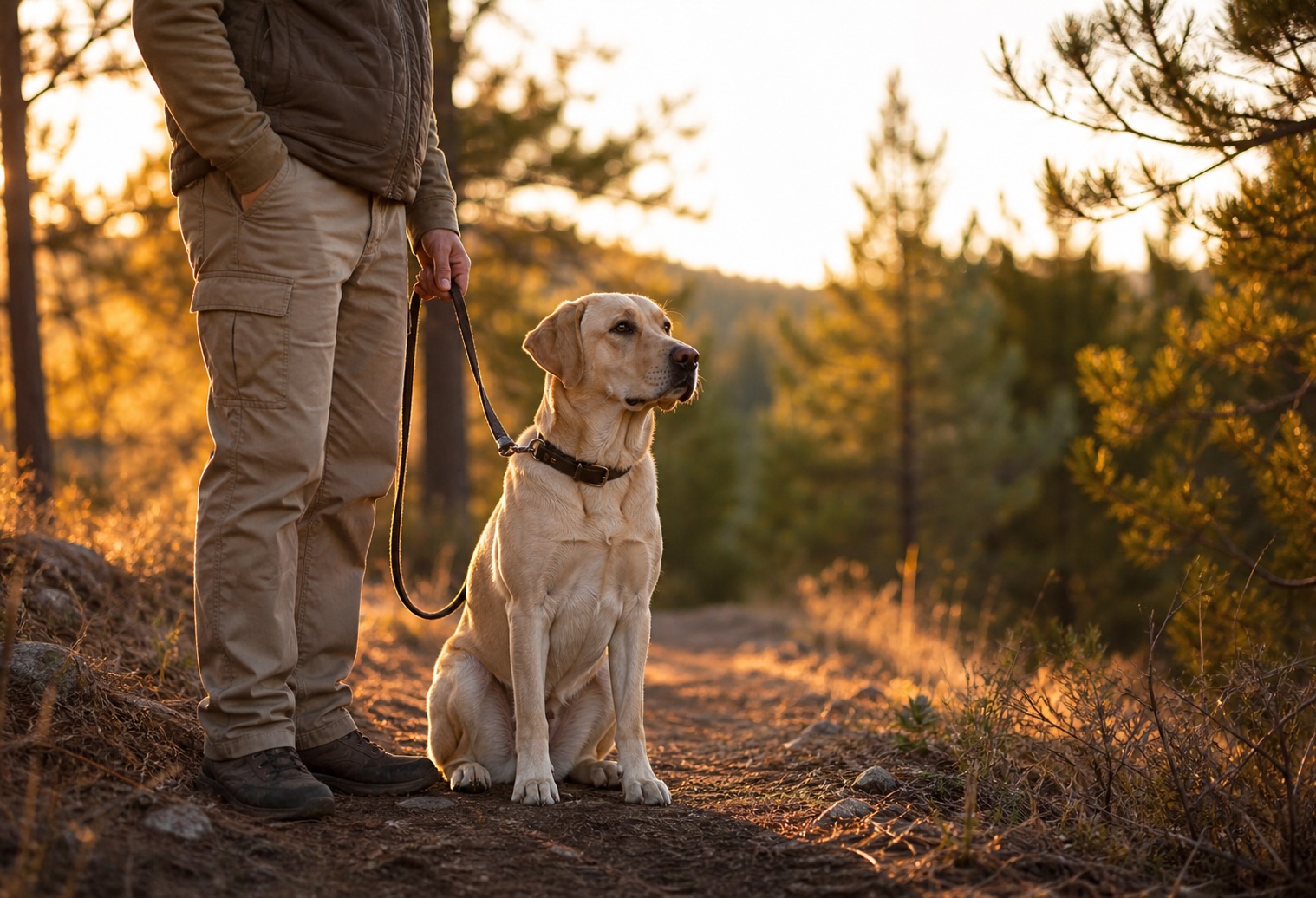
There is a world of difference between a dog that drags its owner down the sidewalk and one that moves with purpose and awareness. Loose-leash walking is one of the most practical forms of obedience a companion dog can learn. It makes walks safer, calmer, and more enjoyable. For therapy and service dog prospects, it is not optional. Public manners begin on the leash.
Some folks use heel to mean the dog stays closely aligned with the handler’s leg, while loose-leash walking allows a bit more freedom as long as the leash remains slack. Both have value. I like a dog to understand each picture. There is a time to move neatly at my side, and there is a time to wander within reason. The dog should know the difference.
How to Train Basic Obedience Without Confusing Your Dog
The best obedience training is plain, consistent, and honest. Dogs do not benefit from changing rules every other day. If jumping on visitors is allowed when you are in a good mood but punished when you are tired, the dog learns uncertainty instead of obedience. Set clear expectations and keep them.
Short sessions work better than marathon drills. Five focused minutes can do more good than half an hour of repetition after the dog has mentally checked out. End on success whenever possible. Let the dog carry that confidence into the next session.
Timing matters too. Reward the behavior you want when it happens, not long afterward. Correct gently and clearly when needed, but do not nag. Constant chatter dulls meaning. A companion dog learns best from cues that are consistent and consequences that make sense.
Socialization should also go hand in hand with obedience. A dog may perform beautifully in the kitchen and forget everything in a hardware store parking lot. That is not stubbornness as often as it is a lack of generalization. Practice the basics in different places, with different distractions, and at a pace the dog can handle without unraveling.
Common Obedience Mistakes New Dog Owners Make
One of the biggest mistakes is expecting maturity before the dog has earned it. Puppies and young dogs, even bright ones, do not come preloaded with impulse control. They need repetition, guidance, and time. Another common misstep is moving too quickly from easy settings to hard ones. If your dog cannot hold a sit in the living room, asking for it in a crowded public space is setting both of you up for frustration.
I also see handlers repeat commands over and over until the word loses all weight. Say it once, help the dog succeed, and reward the right response. If you find yourself chanting “sit, sit, sit,” the problem usually is not the dog ignoring you out of spite. More likely, the cue has become background noise.
Then there is inconsistency in the home. Everybody in the family needs to handle the dog with roughly the same standards. A companion dog cannot learn a clean picture if one person allows pulling, another allows furniture climbing, and a third expects polished manners at all times.
Basic Obedience and the Path to Therapy or Service Work
Not every companion dog will become a therapy dog or service dog, but every dog headed in that direction needs a sound obedience base. Before a dog can offer comfort in a hospital, remain settled in a counseling office, or assist a handler with daily tasks, it must know how to regulate itself. That starts with the basics.
A therapy dog needs calm public behavior and reliable responses in changing environments. A service dog prospect needs even greater precision, neutrality, and resilience. In both cases, early obedience work teaches the dog to focus, recover from distraction, and work as part of a team. If the basics are shaky, advanced work will wobble too.
For that reason, obedience should never be treated as a box to check and forget. It is living training. A wise handler refreshes it regularly, polishes it in new places, and keeps it tied to trust rather than pressure.
Making Obedience Part of Everyday Life
The finest-trained dogs I have known were not just drilled during formal sessions. They lived obedience in small moments. They sat before meals, waited at thresholds, came when called in the yard, and settled quietly when the day called for stillness. That kind of dog is built through daily habits, not occasional effort.
You can ask for a sit before clipping on the leash, a down while you answer the door, or a recall across the backyard before play resumes. These little repetitions stack up. They teach the dog that listening is woven into ordinary life and not reserved for training hour alone.
And just as important, keep room for warmth. Praise your dog. Let obedience be something that strengthens the relationship rather than hardens it. A true companion dog is not a machine. It is a living partner that feels safest when guidance and goodwill travel together.
Final Thoughts on Basic Obedience for Companion Dogs
Basic obedience for companion dogs is not fancy work, but it is noble work. It is the sort of steady investment that pays off in quiet ways for years to come. A dog that can walk politely, settle calmly, come when called, and look to its handler for direction is a pleasure to live with and a credit to the training behind it.
If you are considering a companion dog, researching a therapy dog, or exploring whether a service dog may fit your life, start by respecting the basics. Train with patience. Keep your standards clear. Build trust before pressure. In time, those simple lessons become the backbone of a dog you can depend on in the house, in town, and anywhere life leads the two of you.
Folks sometimes hear “basic obedience” and think of a handful of commands rattled off in a training class. Sit. Stay. Come. Heel. Down. Those matter, sure enough, but real obedience runs deeper than that. It is the habit of paying attention. It is the dog looking to you when the world gets noisy. It is the calm choice made in the yard, at the front door, in a waiting room, or along a busy sidewalk. A companion dog does not need to be flashy. It needs to be steady.
That steadiness is especially important for people searching for information about companion dogs, therapy dogs, and service dogs. In every one of those roles, obedience is what allows a dog to move through life with confidence instead of confusion. A dog that knows what is expected can relax. A dog that trusts its handler can settle. And a dog that has practiced the basics until they are second nature is far more likely to be safe, welcome, and truly helpful in the real world.
Why Basic Obedience Matters for Companion Dogs
Years ago, I watched a young dog in a crowded parking lot come to the end of a loose leash, pause, and look back at his owner instead of lunging ahead. It was not dramatic, but it told me everything I needed to know. Somebody had put in the work. That dog had learned that checking in paid off. In my experience, that one habit can prevent more trouble than almost any other single piece of training.
Basic obedience gives a companion dog structure. Dogs are creatures of habit and pattern. When they understand what earns praise, access, play, and freedom, they settle into that rhythm. Without that guidance, many dogs start making their own decisions, and not all of those decisions suit life in a home, an apartment, a clinic, or a public setting.
Obedience also strengthens the bond between dog and handler. Training done well is not about intimidation. It is about clarity. The dog learns your voice, your timing, your expectations, and your fairness. In return, you learn the dog’s pace, what motivates it, when it is confused, and when it is ready to advance. That back-and-forth is the heart of a reliable companion dog.
The Core Commands Every Companion Dog Should Know
Sit and Down
Sit and down are often the first behaviors people teach, and for good reason. They are simple ways to ask a dog for self-control. A sit at the door can prevent bolting. A down beside a chair can help a dog settle in public or at home when company comes over. These cues are not just tricks; they are useful pauses that help a dog move from excitement to composure.
When teaching them, I prefer short sessions with clean timing. Reward the moment the dog makes the right choice. Keep your words clear and your expectations fair. If a dog is slow to learn, that is not a sign to get louder. Most often, it means the lesson needs to be broken into smaller pieces.
Stay and Place
Stay teaches duration and patience. A dog that can remain in position while life moves around it is easier to manage and safer to bring into more situations. Place, whether on a bed, mat, or platform, is another valuable obedience skill for companion dogs. It gives the dog a defined spot to settle, which can make a tremendous difference in busy households or during visits with guests.
Start with very short stays and build gradually. Too many handlers ask for too much too soon, then blame the dog for breaking position. Obedience grows through repetition and small wins. A few solid seconds are better than a sloppy minute.
Come When Called
If I had to pick one command that can save the most headaches and perhaps a dog’s life, it would be recall. A dependable come command matters in backyards, parks, trails, and everyday mishaps when a gate gets left open. For companion dogs, recall also builds the habit of reorienting toward the handler, which is useful in nearly every environment.
Never make coming to you feel like a punishment. If the dog comes, reward that decision. Make yourself worth returning to. In the early stages, practice in low-distraction settings before expecting reliability around squirrels, strangers, or exciting smells.
Loose-Leash Walking and Heel
There is a world of difference between a dog that drags its owner down the sidewalk and one that moves with purpose and awareness. Loose-leash walking is one of the most practical forms of obedience a companion dog can learn. It makes walks safer, calmer, and more enjoyable. For therapy and service dog prospects, it is not optional. Public manners begin on the leash.
Some folks use heel to mean the dog stays closely aligned with the handler’s leg, while loose-leash walking allows a bit more freedom as long as the leash remains slack. Both have value. I like a dog to understand each picture. There is a time to move neatly at my side, and there is a time to wander within reason. The dog should know the difference.
How to Train Basic Obedience Without Confusing Your Dog
The best obedience training is plain, consistent, and honest. Dogs do not benefit from changing rules every other day. If jumping on visitors is allowed when you are in a good mood but punished when you are tired, the dog learns uncertainty instead of obedience. Set clear expectations and keep them.
Short sessions work better than marathon drills. Five focused minutes can do more good than half an hour of repetition after the dog has mentally checked out. End on success whenever possible. Let the dog carry that confidence into the next session.
Timing matters too. Reward the behavior you want when it happens, not long afterward. Correct gently and clearly when needed, but do not nag. Constant chatter dulls meaning. A companion dog learns best from cues that are consistent and consequences that make sense.
Socialization should also go hand in hand with obedience. A dog may perform beautifully in the kitchen and forget everything in a hardware store parking lot. That is not stubbornness as often as it is a lack of generalization. Practice the basics in different places, with different distractions, and at a pace the dog can handle without unraveling.
Common Obedience Mistakes New Dog Owners Make
One of the biggest mistakes is expecting maturity before the dog has earned it. Puppies and young dogs, even bright ones, do not come preloaded with impulse control. They need repetition, guidance, and time. Another common misstep is moving too quickly from easy settings to hard ones. If your dog cannot hold a sit in the living room, asking for it in a crowded public space is setting both of you up for frustration.
I also see handlers repeat commands over and over until the word loses all weight. Say it once, help the dog succeed, and reward the right response. If you find yourself chanting “sit, sit, sit,” the problem usually is not the dog ignoring you out of spite. More likely, the cue has become background noise.
Then there is inconsistency in the home. Everybody in the family needs to handle the dog with roughly the same standards. A companion dog cannot learn a clean picture if one person allows pulling, another allows furniture climbing, and a third expects polished manners at all times.
Basic Obedience and the Path to Therapy or Service Work
Not every companion dog will become a therapy dog or service dog, but every dog headed in that direction needs a sound obedience base. Before a dog can offer comfort in a hospital, remain settled in a counseling office, or assist a handler with daily tasks, it must know how to regulate itself. That starts with the basics.
A therapy dog needs calm public behavior and reliable responses in changing environments. A service dog prospect needs even greater precision, neutrality, and resilience. In both cases, early obedience work teaches the dog to focus, recover from distraction, and work as part of a team. If the basics are shaky, advanced work will wobble too.
For that reason, obedience should never be treated as a box to check and forget. It is living training. A wise handler refreshes it regularly, polishes it in new places, and keeps it tied to trust rather than pressure.
Making Obedience Part of Everyday Life
The finest-trained dogs I have known were not just drilled during formal sessions. They lived obedience in small moments. They sat before meals, waited at thresholds, came when called in the yard, and settled quietly when the day called for stillness. That kind of dog is built through daily habits, not occasional effort.
You can ask for a sit before clipping on the leash, a down while you answer the door, or a recall across the backyard before play resumes. These little repetitions stack up. They teach the dog that listening is woven into ordinary life and not reserved for training hour alone.
And just as important, keep room for warmth. Praise your dog. Let obedience be something that strengthens the relationship rather than hardens it. A true companion dog is not a machine. It is a living partner that feels safest when guidance and goodwill travel together.
Final Thoughts on Basic Obedience for Companion Dogs
Basic obedience for companion dogs is not fancy work, but it is noble work. It is the sort of steady investment that pays off in quiet ways for years to come. A dog that can walk politely, settle calmly, come when called, and look to its handler for direction is a pleasure to live with and a credit to the training behind it.
If you are considering a companion dog, researching a therapy dog, or exploring whether a service dog may fit your life, start by respecting the basics. Train with patience. Keep your standards clear. Build trust before pressure. In time, those simple lessons become the backbone of a dog you can depend on in the house, in town, and anywhere life leads the two of you.